
Positioning & brand
Make your offer clear to decision-makers with messaging, brand identity and sales narratives.
Alongside our healthcare practice, B2B is our other business category. It operates with a separate, dedicated team focused on business buyers, buying committees and longer sales cycles.
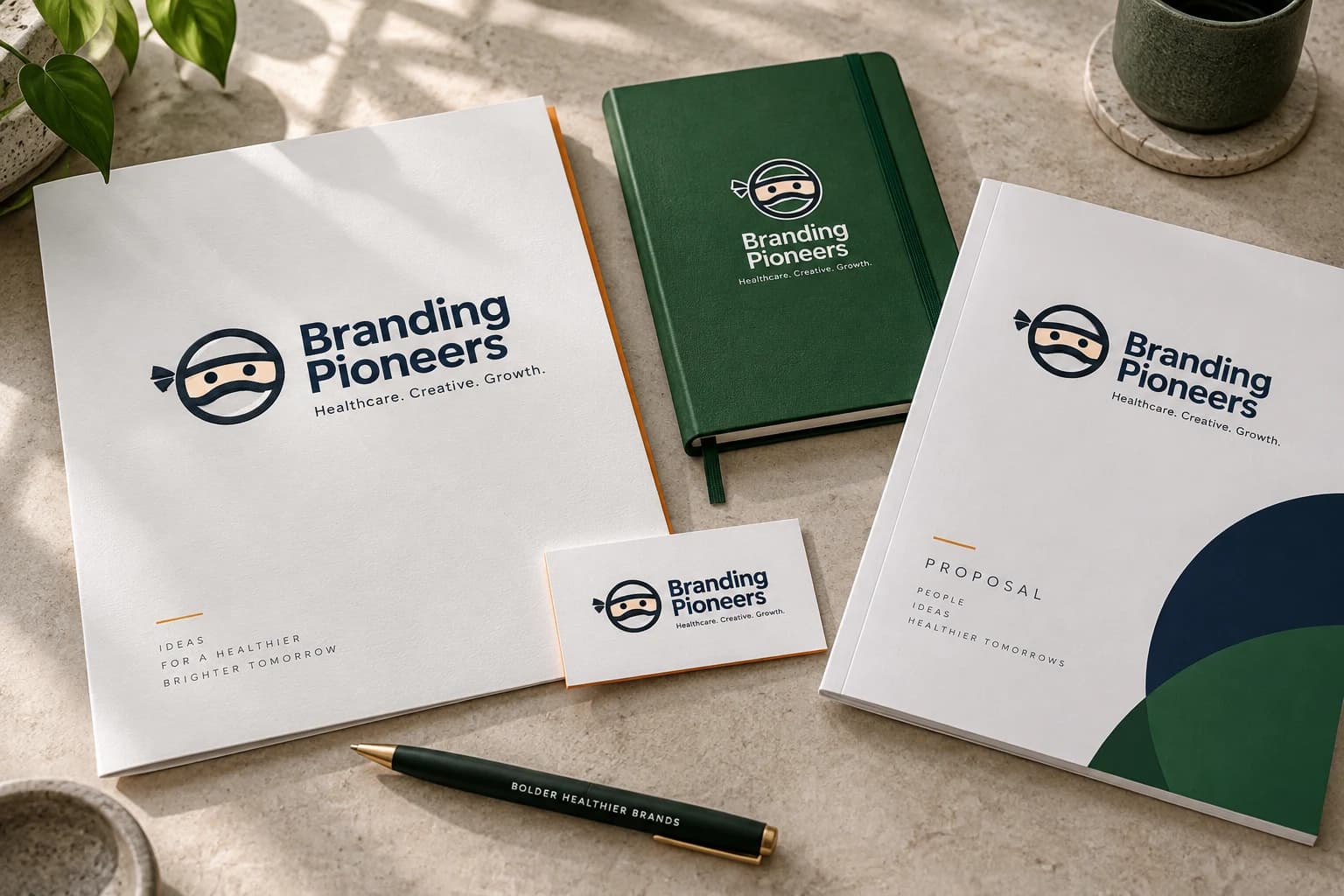
Make your offer clear to decision-makers with messaging, brand identity and sales narratives.
Build a digital presence that explains your solution, answers buyer questions and captures qualified enquiries.
Connect search, paid campaigns and content to the needs of your target accounts.
Equip your team with presentations, product videos, case studies and follow-up content.
Your B2B brief is handled by our B2B team, with its own strategy, delivery and business focus. Tell us what you sell, who buys it and how your sales process works; we will shape the engagement around those priorities.

Free executive download
A 90-day plan from first search to booked appointment.
17 pages · Built from our work with 350+ healthcare clients · Updated for AI search
Free · 30 min · no commitment
Why choose us
Six reasons hospitals, clinics, and doctors pick a healthcare-only firm over a generalist agency.
It's all we do. No retail, no fintech — the whole team thinks in patient journeys, clinical trust, and the way people actually choose a doctor.
Receptionists, WhatsApp triage, and attribution built in-house — we answer patients in seconds and tie every click to a booked appointment.
HIPAA-aware handling, ASCI-reviewed creative, and GDPR/DPDP sign-off on every campaign — our standard, not an upcharge or an afterthought.
The senior who pitched you stays on the engagement. No bait-and-switch to juniors learning on your budget.
Patient-level attribution across calls, forms, and walk-ins. Monthly reports show booked patients — not just clicks and impressions.
We name our clients and show the work. Quarterly reviews with the numbers attached, every cycle.

Healthcare-only · since 2016
A team that does one thing well.
Keep going
Adjacent services, problems we’re asked about most often, and the case files that show how we work.
How we run it for practices like yours
Inside Healthcare SEO
Inside Healthcare SEO
Inside Healthcare SEO
Pairs with this engagement
Pairs with this engagement
Common issue in this segment
Common issue in this segment
TMS patient-growth programme · 5 mo
Local SEO tampa market · 11 mo
Three page-experience metrics Google tracks: LCP for loading speed, INP for interactivity, and CLS for visual …
Optimizing a business's online presence so it surfaces in location-based searches — Google Maps and the local …
Long-form playbook
Both are essential but serve different timelines. PPC (Google Ads) delivers leads in 1-2 weeks but costs $15-1…
Local SEO + media buying in Riyadh
Local SEO + media buying in Jeddah
Where healthcare and B2B meet
Much of our B2B work is for companies that sell into healthcare. Medical device marketing and healthcare SaaS depend on reaching hospital buyers, which is where LinkedIn ads and demand generation come in.
Positioning starts with brand strategy, and the website usually needs lead capture forms wired into a CRM. For pharmaceutical brands, the pharma marketing guide covers the rules, and agencies can buy the same capability through our white-label programme.
Practical notes & supporting evidence
Start hereBuilt for businesses selling to businesses.
Establish contextUse the published scope and relevant source material
Choose the next stepFollow the linked resource and assign an owner
Healthcare B2B marketing often addresses several decision makers within the same organisation. Identify who evaluates the offering, who uses it and who approves its purchase. A clear brief should distinguish product information, commercial qualification and implementation questions rather than treating every business contact as an immediate sales opportunity.
Begin with the question you need to answer, then choose the most appropriate destination in this collection. A guide explains a method, a checklist supports a repeatable review, a calculator explores assumptions and a case file documents a particular engagement. Reading them as interchangeable resources can create confusion. If you need to brief a supplier, start with the relevant service or framework. If you need to assess evidence, start with the source reports and the limits stated alongside the example.
Use the collection to narrow the investigation rather than adding every possible task to a marketing plan. Identify the stage where progress is blocked: discovery, understanding the service, making contact, arranging an appointment or following up. Choose a resource that addresses that stage and keep a short note of the evidence you need. A focused review is easier to act on than a long list of unrelated recommendations, particularly when clinical approvals and operational changes involve different people.
Document the local conditions before adopting an example. Include the service mix, available clinicians, languages, appointment process and existing digital assets. A method used by a hospital network may need to be simplified for a solo practice; a single-clinic process may need explicit location ownership when used by a chain. Keep those adaptations visible in the brief. The resource provides a way to organise the work, while your own records establish whether its assumptions fit.
Assign a person to each next action and define how completion will be checked. Editorial tasks need content and approval ownership, technical tasks need a release review and measurement tasks need a named source account. Keep evidence attached to the relevant decision instead of relying on a general claim that the programme is performing well. Revisit the plan when the service, market or operational capacity changes. The related links on this page let you move from an overview into the detail needed for that next action.
Describe the practice, the services you want to grow and the locations you serve. Explain what is happening now and the decision you need to make. Useful starting information includes the current website, active marketing channels, available appointment capacity and the team handling calls or messages. You do not need to supply identifiable patient records to discuss an initial marketing brief. Aggregate information and a clear explanation of the problem are enough to establish what should be examined next.
If you have reports, keep their dates and definitions attached. Separate enquiries from bookings and attended consultations. Explain whether a budget figure includes media spend, management, content production or website work. Where records are incomplete, identify the gap rather than filling it with an optimistic estimate. This lets the first discussion distinguish a visibility problem from a measurement or follow-up problem, and it makes a subsequent proposal easier to assess against your actual situation.