
Only a few departments get found
Cardiology ranks; urology, ENT and physiotherapy are invisible.
Our fix: A page and search plan for every department and doctor.
One strategy across departments, doctors and locations: search, ads, content and follow-up that brings the right patients to each service line.





30-minute call with a healthcare strategist
Why hospital marketing is different
Cardiology ranks; urology, ENT and physiotherapy are invisible.
Our fix: A page and search plan for every department and doctor.
Ads run hospital-wide, so costly treatments subsidise cheap clicks.
Our fix: Budgets and campaigns set per service line.
Calls, WhatsApp and web forms land with different teams.
Our fix: Pioneer CRM routes every enquiry with its source.
Free website & SEO audit
The patient journey
We build a page, ad or answer for every stage — so you are there from the first worried search to “near me”.
Example searches for illustration, not tracked rankings.
What we do
Condition, treatment and doctor pages for every service line.
Google and Meta campaigns budgeted per department.
Fast, multi-location sites with booking on every page.
Doctor-led patient education that ranks on YouTube.
Google Business profiles and review requests per branch.
One pipeline for calls, forms and chats.
See what this looks like for your hospital practice.
Get my free planHospitals portfolio
Items marked “Concept” are original concept work by our studio; mockups are AI-staged presentations of real artwork.
Results across our clients
Local and specialty searches captured from our portfolio, plus original Search Console reports from websites we built and optimised.
Portfolio captureHistorical captures; capture dates and locations are not recorded. They show visibility at the time, not current positions or a ranking guarantee.
Proof from the dashboards
Unedited screenshots from client accounts and our portfolio — Search Console, Google Ads, YouTube Studio, Google Business Profile and live Google results. Growth moments are highlighted.
Daily clicks rose from under 100 to around 300 across the year.
Client names appear only where they are visible in the screenshot itself or the source folder. Other accounts are shown anonymously.
Credibility, checked
In the press
 Forbes India · Brand ConnectFounders building India’s most iconic brands(opens in a new tab)
 YourStory · Company profileMeet Branding Pioneers(opens in a new tab)
 The Eastern Herald · Founder featureEthical AI adoption and practice growth for doctors(opens in a new tab)
 Lokmat Times · Doctors’ DayCelebrating the doctors who make a difference(opens in a new tab)
Check us out independently
Our evidence standard
Client videos
Real results, real accounts — want the same review for yours?
Book a free callTrust & compliance

 Founder-led since 2016. Nishu Sharma and Arush Thapar review strategy for every new engagement.
Why us
| Criterion | Branding Pioneers | Generalist agency |
|---|---|---|
| Focus | ✓ Healthcare only, since 2016 | Many industries |
| Medical content | ✓ Written with your doctors | Generic copywriters |
| Ad policies | ✓ Built for healthcare rules | Learning as they go |
| Follow-up | ✓ Pioneer CRM & WhatsApp included | Leads handed over |
| Reporting | ✓ Enquiries and appointments | Clicks and impressions |
| Ownership | ✓ Your accounts and data | Often agency-owned |
| Multi-department plans | ✓ Budget and pages per service line | One campaign for everything |
Hospitals
Pioneer CRM & apps
Every enquiry from ads, search, WhatsApp and your website lands in one place — with a clear next step for your front desk.
Our applications
Try them below — every screen is interactive.
Enquiries from ads, Google, WhatsApp and client websites flow into Pioneer CRM. When the feed is connected, this panel reads the aggregate totals in real time.
Pricing
Prices exclude GST. Advertising spend and third-party software are billed separately. Full pricing
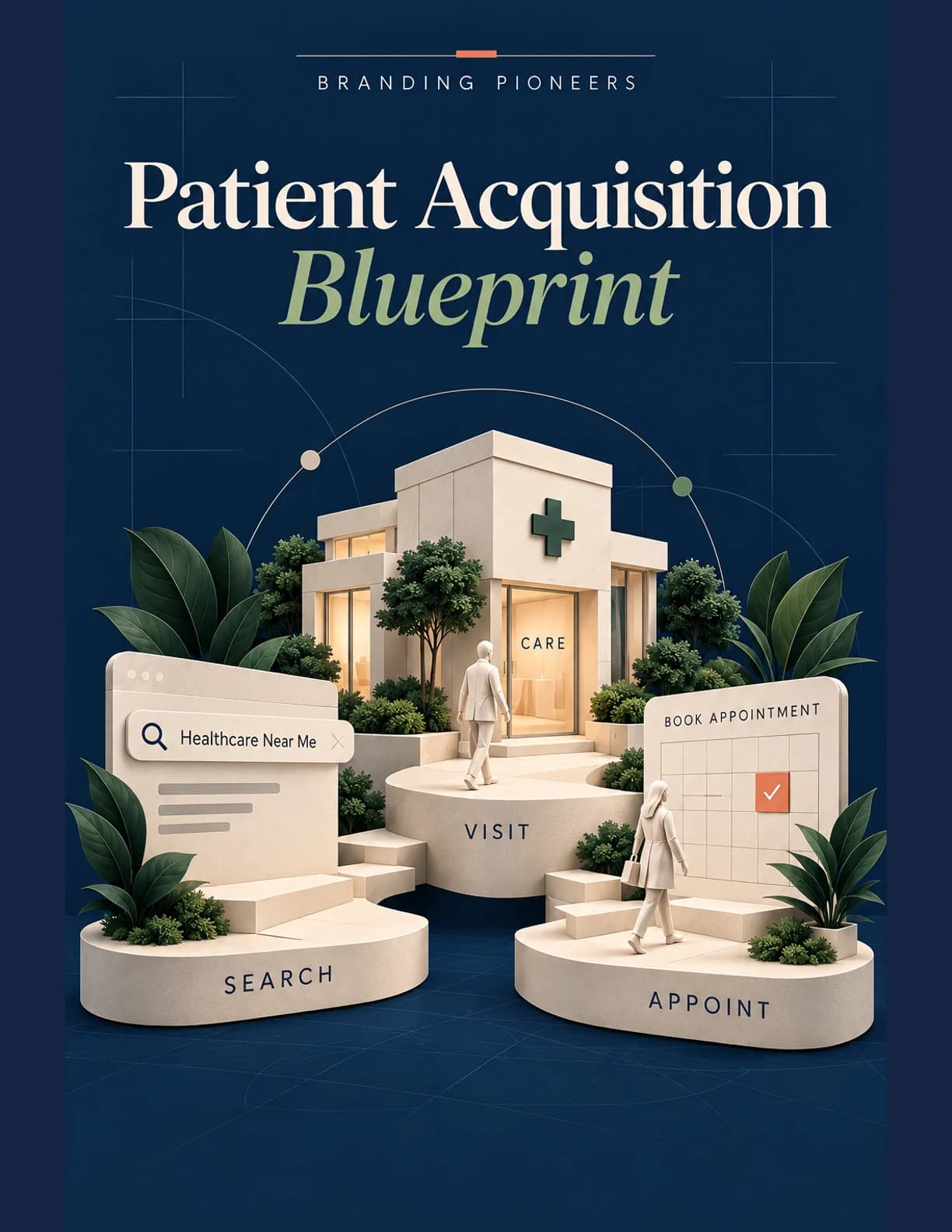
Free guide
The Patient Acquisition Blueprint
Ask anything — pricing, timelines, whether we have worked in your specialty.
Start a WhatsApp chatDeeper briefing
A multi-specialty hospital is really a dozen businesses sharing one site, one name, and one patient system. Cardiology patients book in days. Oncology takes months. Emergency runs around the clock. The marketing behind all of them has to handle every one of those speeds while still showing patients a single, consistent hospital.
Most hospital marketing — whether from an agency or an in-house team — squeezes all of this into one funnel. They run generic "hospital ads". They build a website where every department page looks the same. They report on clicks lumped together across departments. The result: cardiology is starved of ad budget while oncology overspends, emergency is invisible on Google because its pages were never built, and when patient numbers dip mid-quarter, no one can say why.
We don't treat hospital marketing as one funnel. We run it as a dozen connected but separate programmes, each tuned to how that department earns patients, how long they take to decide, and what makes them trust you.
A typical 12-month programme covers: search pages built for the hundreds of things patients actually look for in each department; ads tuned line by line (cardiology, oncology, and emergency each bid differently); a smart receptionist that sends every enquiry to the right desk quickly; a reputation system that grows reviews across all your locations; brand-building for your leading doctors; and an international patient pathway for people who fly in for heart, cancer, and orthopaedic care.
The patient-handling piece matters most. Many hospitals lose a big share of enquiries simply to slow follow-up — calls not answered, leads sent to the wrong department, no one circling back. The first six months of every engagement fix the operations as much as they grow traffic, because the numbers don't add up otherwise.
After a year of full hospital marketing, you can expect steady growth in patient enquiries from search across departments, a stronger spot in Google's local map results for every major specialty in your area, a lower cost per booked consultation, and more referrals between departments through better patient handling — with every figure taken from your own analytics and shared privately under NDA, not guessed at here.
These results assume the work is done well. Hospitals that stitch the same plan together from several small agencies usually pay for all the coordination an integrated team avoids.
Healthcare marketing has shifted sharply toward specialists. Google's recent updates push down thin, generic healthcare content, and its AI answers favour deep pages written by genuine experts. Advertising watchdogs like ASCI and the FDA have tightened the rules on hospital claims. Generalist agencies that treated hospital marketing as just another category are losing budget to teams who understand both clinical care and what makes patients book.
Go deeper
How we run it for practices like yours
Inside Healthcare SEO
Inside Healthcare SEO
Inside Healthcare SEO
Pairs with this engagement
Pairs with this engagement
Common issue in this segment
Common issue in this segment
Launch service launch plan · 9 mo
Doctor brand ivf growth programme · 6 mo
Structured data code, added behind the scenes of a page, that spells out the content for search engines. Healt…
Three page-experience metrics Google tracks: LCP for loading speed, INP for interactivity, and CLS for visual …
Long-form playbook
Both are essential but serve different timelines. PPC (Google Ads) delivers leads in 1-2 weeks but costs $15-1…
Local SEO + media buying in Los Angeles
Local SEO + media buying in Chicago
Questions
Yes. We prioritise departments by capacity and margin, then roll out pages, campaigns and content in waves.
Yes. We can run strategy and specialist work while your team handles approvals and day-to-day posting.
Monthly reports split visibility, enquiries and appointments by department wherever your tracking allows.
Yes — separate listings, local pages and targets for each branch under one shared view.
Six months on the Hospital tier, then month to month with 30 days’ notice.
A hospital is a dozen businesses sharing the same building. Each department has its own patient journey, its own economics, and its own trust signals — cardiology books in days, oncology in months, emergency runs around the clock. Treat all of them the same way and every one of them underperforms. We run them as connected but separate programmes.
Large multi-specialty hospitals usually invest more because they run several departments; smaller hospitals invest less. Supporting multiple departments needs a baseline budget for each one. We scope the work against your actual goals before we quote.
First wins in 30 to 60 days (a better Google Business Profile, paid search live, more reviews coming in). Real growth in search traffic in 90 to 180 days. Rankings and authority that keep building over 6 to 18 months. If bookings haven't moved by month four, the problem is almost always in operations — how calls are handled, how enquiries are routed, how fast you reply. We check and fix that before spending more.
Yes, for your leading doctors. Done right, a doctor's personal brand strengthens the hospital's name rather than competing with it. The one exception is when a doctor's content clashes with hospital messaging; we keep everyone aligned with a shared content calendar.
We clear content for compliance before it goes live, not after. Every claim is checked against ASCI guidelines, NABH advertising rules, and the MCI medical ethics code. Hospital case studies need named patient consent. Any outcome figures must come from peer-reviewed methods. We work with your medical director and legal team to clear everything before it publishes.
A real opportunity for large multi-specialty hospitals. Content in patients' own languages, visa help built in, and secure, trusted payment are all essential. We've built international patient pathways for heart, cancer, and orthopaedic departments across many source countries.
Hospitals
Three quick questions. We come prepared with a plan for your specialty and city.

 You’ll speak with a senior strategist
hospitals · Portfolio

