Hospitals don't lose to competitors. They lose to latency.
A multi-specialty hospital is twelve businesses sharing one campus, one brand, and one CRM. Cardiology converts in days. Oncology takes months. Emergency runs 24/7. The marketing system that supports all twelve has to speak twelve different timescales while presenting one coherent hospital brand to the patient.
Most hospital marketing programmes — agency-led or in-house — collapse this complexity into a single funnel. They run "hospital ads" with generic creative. They build a website with department pages that all look the same. They report on impressions and clicks aggregated across lines. The result: cardiology is starved of paid budget while oncology over-spends, emergency is invisible on Google because it has the worst SEO, and the OPD shows mid-quarter to find the marketing team has no answer for why footfall is down 18%.
The standard 12-month hospital programme
We don't run hospital marketing as a single funnel. We run it as twelve interlinked but distinct programmes — each tuned to its line's economics, patient acquisition cycle, and trust signals.
The standard 12-month hospital programme runs department-aware SEO built on a keyword map per campus, paid acquisition tuned per line (cardiology bidding ≠ oncology bidding ≠ emergency bidding), an AI receptionist that routes enquiries to the right desk, a reputation engine that compounds reviews across all locations, doctor brand-building for the consultants the hospital nominates, and an international intake funnel for patients who travel in for cardiac, oncology and orthopaedic procedures.
CRM operations are decisive
The CRM piece is the difference-maker. Hospitals lose enquiries to operational latency — calls not answered, leads not routed to the right department, follow-up never happening. We size that leakage from the hospital's own call logs and CRM before we plan any spend, because buying more enquiries into a leaking intake is the most expensive mistake in hospital marketing. The first six months of an engagement usually focus as much on the operational fix as on traffic.
Department-line specifics
Cardiology — bimodal patient intent (urgent acute + elective preventive). Different funnels, different CPCs, different conversion targets. Generic hospital marketing collapses these and underperforms on both.
Oncology — a long, trust-led consideration cycle taken with the family. Second-opinion funnels are decisive, and most hospital oncology marketing under-invests in them.
Emergency — 24/7 search behaviour. Map pack ranking + GBP optimisation + paid search on "ER near me" + local citation consistency. Operational SLA on response (sub-3-minute pickup) is non-negotiable.
Multi-line aggregation — each line gets its own marketing programme that compounds with the hospital-level brand. Done correctly, the lines reinforce each other; done poorly, they cannibalise.
What good looks like in 12 months
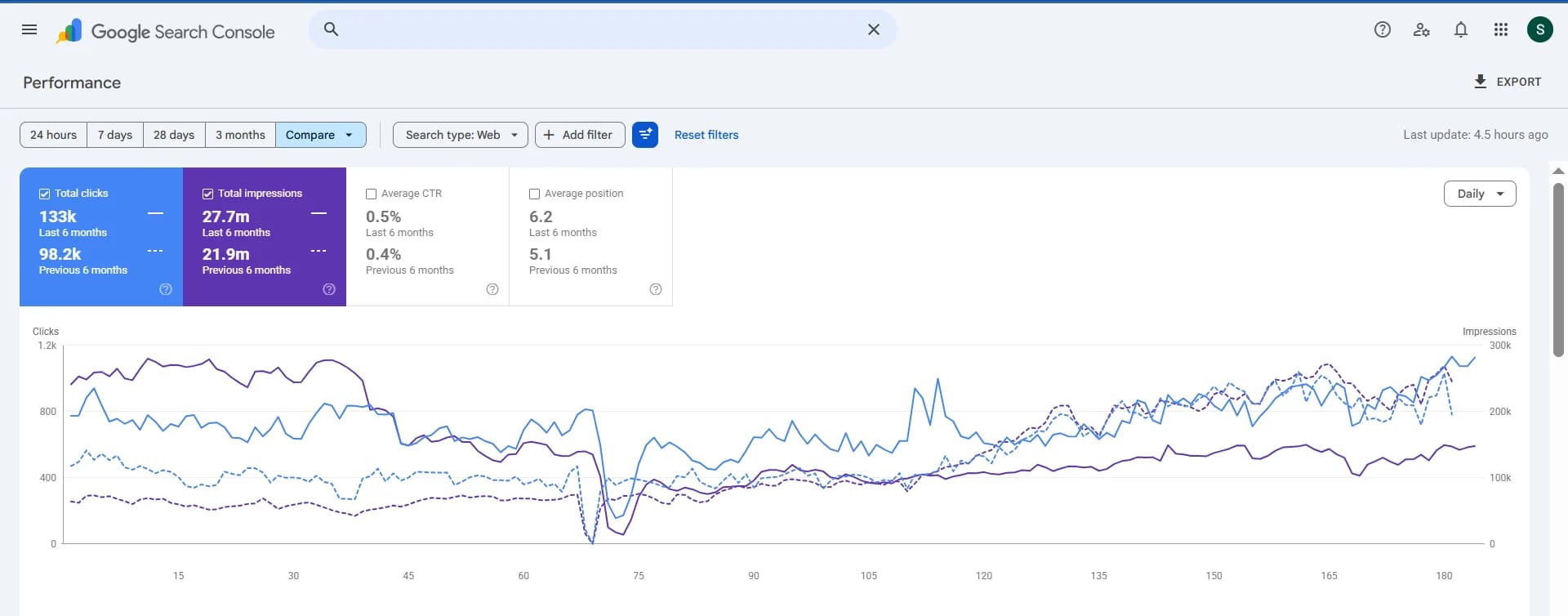
A full hospital engagement targets: organic enquiry growth in every department rather than the brand line alone, map-pack presence in the catchment for each major specialty, a lower cost per booked consultation than the starting baseline, cross-line referrals that the CRM can actually attribute, and a measurable international enquiry volume where the hospital wants one. The numbers are reported from the hospital's own Search Console, ad accounts and CRM — we publish figures only where the client has agreed to it, as on the case files in the ledger.
These outcomes assume executional discipline. Hospitals that assemble the stack from several boutique agencies carry the coordination overhead themselves, and in our experience the integrated stack outperforms the assembled one.