Your assumption, not our forecast. Every figure below is derived from it.
This is a scenario model, not a prediction. It takes the numbers you enter, spreads your growth assumption across a curve that starts slow and accelerates, and holds your conversion rate and patient value constant. What SEO actually returns depends on your competition, site history, content and market.
How it works
Three steps, no guesswork.
Step 01
Inputs
Specialty · current organic traffic · current rankings
Step 02
Processing
Live calculation in your browser. Nothing sent to us. No tracking on the inputs.
Step 03
Output
M01–M12 projection · breakeven month · 12-mo cumulative ROI
Tools are great for benchmarking. For your situation, the conversation is faster. No pitch.
A 30-minute call with a healthcare specialist
Your top three growth opportunities, in writing
Honest advice — even if that means not hiring us
No obligation and no hard sell
You’ll speak with a senior strategist Consultations are hosted by Arush Thapar’s team.
Step 1 of 3Takes 30 seconds
What do you want to improve first?
Details stay privateNo obligationReply within 1 working day
Behind the forecast
What drives SEO returns, and when.
A forecast depends on timing as much as traffic. How long healthcare SEO takes explains the curve, and healthcare SEO benchmarks show typical numbers by specialty.
Costs come next: healthcare SEO cost breaks down the retainer, and how much healthcare SEO costs answers it plainly. SEO vs PPC compares the payback with paid search.
To see what produces the gains, read the healthcare SEO guide, then run the healthcare SEO audit to find your starting point. The healthcare SEO agency page explains how we run it.
Practical notes & supporting evidence
More detail for your next decision.
Published by Branding Pioneers · Published page information and practical marketing guidance
A practical reference for this page
01
PrepareSpecialty · current organic traffic · current rankings
02
InspectM01–M12 projection · breakeven month · 12-mo cumulative ROI
03
ValidateCheck the assumptions against your source records
Working with the seo roi forecaster
The model we use ourselves. Tell us where you start; it projects M03, M06 and M12 — a projection, not a promise. The published input requirements are Specialty · current organic traffic · current rankings. The output is described as M01–M12 projection · breakeven month · 12-mo cumulative ROI. Prepare those inputs from records with an explicit reporting period. If you do not have the required information, document the missing input before interpreting the result.
The tool is categorised as a estimator. The page provides a request route for the described resource; a request is different from an instant automated assessment. The deliverable is described as Month-by-month organic traffic + lead projection · revenue model. Keep that description alongside the result so readers understand what the tool was designed to produce.
A hospital programme needs department and location ownership
Multi-specialty providers need a consistent brand while preserving accurate department, clinician and location information. Map the enquiry to the department capable of answering it and identify who maintains those details. A central publishing system is useful only when local service changes can be reflected reliably. For an initial review, test the journey for a small number of high-priority departments before treating the homepage as representative of the whole hospital experience.
Search visibility starts with the right page
Separate the searches that ask for information from the searches that ask for an appointment. A person comparing treatments needs an explanation of options, suitability and the questions to ask a clinician. A person searching for a named specialist needs a current profile, the locations where that doctor consults and an obvious contact route. Sending both visitors to a generic homepage makes the next step harder to find. Build a small intent map before commissioning another batch of articles, and check whether an existing page already answers each question.
For a search review, keep the query, landing page, reporting period and search type together. Impressions describe exposure in the report; clicks describe visits from that search surface. Neither measures attended appointments. A useful investigation also checks indexing, canonical URLs, internal links and the mobile page experience. Compare equivalent periods and annotate significant website changes. A different service mix or a seasonal campaign can change demand without any change in the quality of the SEO work.
Make expertise visible where the question is answered
Medical explanations should identify the clinician responsible for checking clinical statements and provide a way to verify relevant qualifications. Marketing advice has a different authoring requirement: explain who publishes it, what evidence supports examples and which assumptions limit a recommendation. A professional biography belongs beside the relevant material or within an easy link, rather than being hidden in a general team directory. Only attach a review attribution after that review actually happens.
Keep the main heading descriptive and let subheadings follow the reader’s decision. Use links that name the destination, such as a treatment guide or a specialist profile. Images need nearby explanation and accurate alternative text; adding keywords to an unrelated picture does not make it supporting evidence. The same principle applies to structured data: markup should describe what readers can verify on the page. Keep page titles, descriptions and canonical URLs consistent with the page’s actual topic.
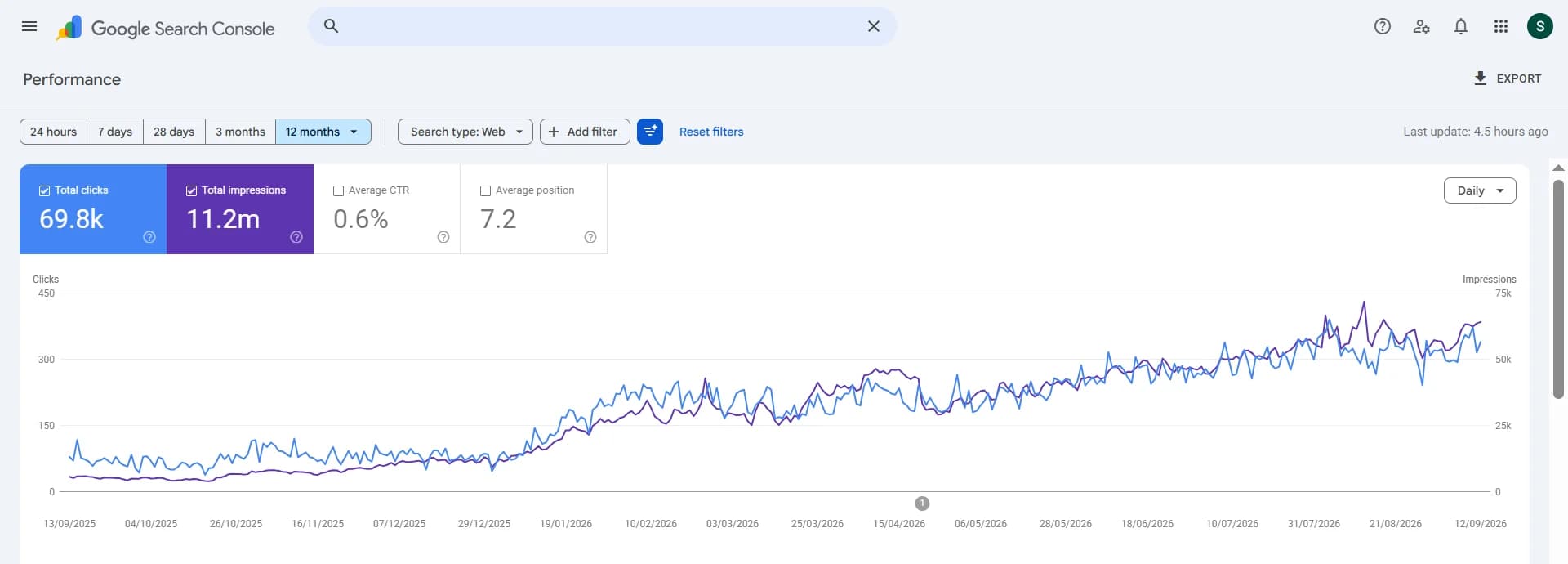
Supporting client example: Vision Eye Centre · 69.8K. See the linked case file for the source context.