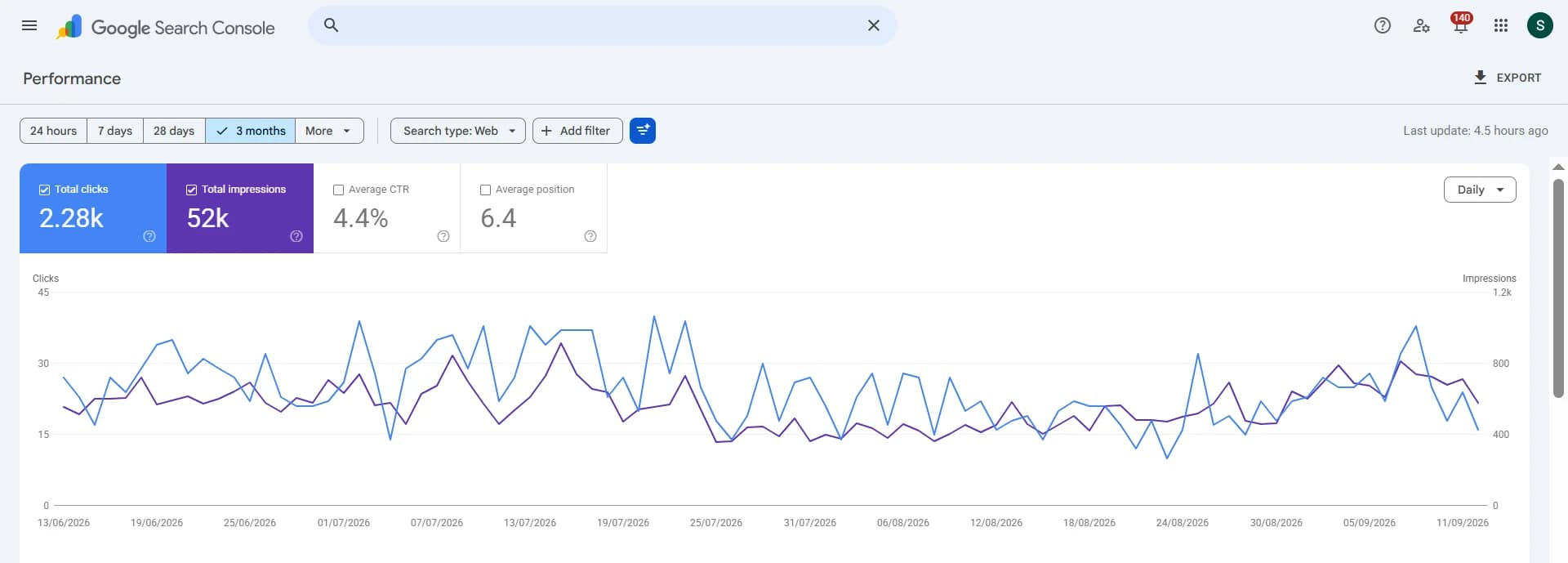
This healthcare SEO guide is for doctors, clinic owners and hospital marketing teams who want patients to find them on Google without paying for every click. It is also a working medical SEO reference for anyone who has to brief, check or manage an SEO agency.
Healthcare SEO is harder than most niches. Google treats health information as "Your Money or Your Life" content, competitors include large hospital chains and health publishers, and local results are decided as much by your Google Business Profile as by your website. The good news is that the work is predictable. If you do the fundamentals well and keep doing them, rankings follow.
Across ten chapters you will learn how to research the terms patients actually use, structure service and condition pages, win the map pack, build credible links, fix technical problems, demonstrate medical expertise, and measure results in booked patients rather than vanity rankings. Each chapter ends with steps you can act on this month.
Healthcare SEO Fundamentals
Search engine optimisation is the work of making your website and online profiles the most useful, credible answer to what patients search for. For a clinic or hospital, that means showing up in three places: the local map pack, the organic results below it, and increasingly the AI-generated answers at the top of the page.
How Google ranks healthcare results
Three broad factors decide where you appear:
- Relevance: does your page clearly answer the query? A page about "knee replacement surgery in Pune" beats a generic orthopaedics page for that search.
- Authority and trust: do other reputable sites reference you, and does your content show real medical expertise?
- Proximity and prominence (for local results): how close you are to the searcher, and how well known your practice is, measured partly through reviews and citations.
Why medical sites face a higher bar
Google's quality guidelines classify health topics as "Your Money or Your Life", meaning poor information could harm someone. Pages need clear authorship by qualified people, accurate and current information, and no exaggerated claims. Thin, generic or AI-generated pages with no clinical review tend to struggle.
What healthcare SEO is not
It is not a one-time project, and it is not keyword stuffing. It is also not a substitute for running a good practice: a clinic with poor reviews and an unanswered phone will find SEO gains turn into very few patients.
Realistic timelines
New websites and competitive specialties in big cities take longest. Local improvements from Google Business Profile work can appear within weeks; organic rankings for competitive treatment terms usually take several months of consistent work.
Fundamentals checklist
- Website is indexable, secure and mobile-friendly
- Google Business Profile claimed, verified and complete
- One page per priority service and location
- Each medical page names its author or reviewer
- Search Console and GA4 set up and checked monthly
Keyword Research for Medical Practices
Keyword research tells you what patients type, in their own words, before they become your patients. It is the foundation for every page you write and every service you prioritise.
Think in patient language
Doctors write "cholecystectomy". Patients search "gallbladder removal surgery", "gallstone operation cost" and "pain in right side after eating". Your keyword list should include clinical terms, plain-language terms and symptom-based queries, plus regional language searches where relevant, such as Hindi transliterations in north India or Arabic in the GCC.
Group keywords by intent
| Intent | Example query | Page type |
|---|---|---|
| Urgent local | "dentist open now near me" | Google Business Profile, location page |
| Treatment research | "LASIK vs SMILE surgery" | Service page, comparison article |
| Cost research | "IVF cost in Hyderabad" | Service page with cost guidance |
| Symptom | "why does my heel hurt in the morning" | Condition or blog article |
| Doctor search | "best cardiologist in Kochi" | Doctor profile page |
Matching each intent to the right page type prevents the common mistake of trying to rank one page for everything.
Where to find keywords
Start with Google Search Console if your site already has traffic: it shows queries you appear for. Add Google's autocomplete and "People also ask" boxes, competitor service pages, and, most valuable of all, the questions your reception team hears every day. Keyword tools give search volume estimates, but treat volumes as rough guides, especially for local and regional terms.
Prioritise ruthlessly
Score each keyword cluster by business value (margin and capacity for that service), intent (how close to booking), and realistic difficulty. A low-volume query like "hip replacement surgeon in Indore" can be worth more than a high-volume informational query that brings readers from across the country.
Avoid cannibalisation
Assign each keyword cluster to one page. If three blog posts and a service page all target "PCOS treatment", they compete with each other. If you want help with this step, our medical keyword research service builds the full map.
On-Page SEO for Healthcare
On-page SEO is everything you control on the page itself: the words, headings, structure, images and code. It is where most clinic websites lose easy ground.
Title tags and meta descriptions
Each page needs a unique title of roughly 50–60 characters that includes the main treatment and location, for example "Knee Replacement Surgery in Jaipur | Dr Name, Orthopaedic Surgeon". Meta descriptions do not directly affect rankings, but a clear one improves click-through: say what the patient gets and how to book.
Headings that follow patient questions
Use one H1 per page, then H2s and H3s that mirror what patients want to know: what the treatment is, who it is for, the procedure, recovery, risks, cost factors, and the doctor's credentials. This structure helps both readers and search engines.
Write enough, but write for people
A service page that covers a treatment properly will usually run to several hundred words or more, but length is not the goal. Answer the questions fully, cut repetition, and use plain language a worried patient can follow. Add an FAQ section that answers real questions from your front desk.
Doctor attribution
Every medical page should show who wrote or medically reviewed it, with a link to their profile listing qualifications, registration details and experience. Add a "last reviewed" date and keep it honest.
Internal linking
Link condition pages to the relevant treatment pages, treatment pages to the doctors who perform them, and doctor pages back to services. This helps Google understand your site and helps patients move towards booking.
Images and media
Use real photographs of your facility and team, compress them, and write descriptive alt text. Avoid stock images of models in white coats; patients notice.
Structured data
Add schema markup for your organisation type (for example MedicalClinic or Hospital), physicians, locations and FAQs where appropriate. Schema does not guarantee rich results, but it helps search engines interpret your pages correctly.
On-page checklist
- Unique title and meta description per page
- Treatment and location in the H1 where natural
- Named medical author or reviewer and review date
- FAQ section based on real patient questions
- Clear call to book above the fold on mobile
Local SEO & Google Maps
For most clinics, local SEO matters more than any other part of healthcare SEO. When someone searches "gynaecologist near me" or "child specialist in Andheri", Google shows a map with three practices before any website appears. Being in those three is often worth more than ranking first organically.
The three local ranking factors
Google states that local results are based on relevance, distance and prominence. You cannot move your clinic, so focus on the other two:
- Relevance: the right categories, services and descriptions on your Google Business Profile, backed by matching pages on your website
- Prominence: reviews, citations on reputable directories, links from local sites, and general web presence
NAP consistency
Your name, address and phone number should be identical everywhere: your website, Google, Practo, Justdial, Bing, Apple Maps, insurance directories and hospital affiliations. Inconsistent details confuse search engines and patients. See what NAP consistency is for a fuller explanation.
Location pages
If you have more than one clinic, give each its own page with the full address, timings, map, parking or transport notes, doctors who practise there and services offered at that site. Do not create pages for areas where you have no physical presence; Google treats these as doorway pages.
Local links and mentions
Sponsorship of local events, health camps reported by local news, partnerships with schools or corporate offices, and listings with local business associations all build local prominence honestly.
Track local visibility properly
Rankings vary by the searcher's exact location. Checking from your own office tells you little. Use a grid-based rank tracker or Search Console's queries to understand visibility across your catchment area.
What to avoid
- Adding keywords to your business name on Google ("Smile Dental Clinic Best Dentist Delhi") breaches Google's guidelines and risks suspension
- Using a virtual office or co-working address you do not staff
- Creating duplicate listings for the same location
Our local SEO service covers this work if you prefer it handled for you.
Google Business Profile Mastery
Your Google Business Profile is often the first thing a patient sees, before your website. Many will call directly from it without ever visiting your site. Treat it as your most important page.
Get the basics exactly right
- Business name: your real-world name as it appears on your signage, nothing added
- Primary category: the most specific accurate option, such as "Dermatologist" rather than "Doctor"
- Secondary categories: only those that genuinely apply
- Address and service area: accurate, with the pin placed on your actual entrance
- Hours: including holiday hours and separate hours for emergency services where offered
- Phone and website: a local number, with the website link pointing to the relevant location page
Practitioner and practice profiles
Google allows individual practitioner profiles as well as practice profiles. If a solo doctor practises under their own name, Google's guidelines generally suggest a single shared profile. In multi-doctor practices, practitioners can have their own profiles. Read Google's current guidelines for practitioners before creating any.
Services, products and attributes
List each service with a short description. Fill in attributes such as wheelchair accessibility and online appointments where they apply.
Photos
Upload real photographs of your exterior (so patients recognise the building), reception, consultation rooms, equipment and team. Refresh them periodically.
Reviews
Reviews influence both rankings and patient choice. Ask every patient after their visit, make it easy with a direct link, and reply to every review professionally. Never offer incentives for reviews, and never ask only happy patients (known as review gating); both breach Google's policies.
Posts and public edits
Google Posts let you share updates, health camps and new services. Use them consistently, and check your profile regularly for edits suggested by the public, which can change your details without warning.
Booking links
Add an appointment link that goes to a booking page or WhatsApp, not the homepage.
The full detail on categories, review systems, suspensions and multi-location management is in our Google Business Profile guide.
Content Strategy
Content is how you rank for the thousands of questions patients ask before they are ready to book, and how you prove expertise to Google. Done badly, it is also the biggest waste of SEO budget in healthcare.
Build around topic clusters
Pick a priority service, say cataract surgery. Your cluster might include:
- Pillar: the cataract surgery service page
- Supporting pages: cataract symptoms, types of lens implants, cataract surgery recovery, cataract surgery cost factors, cataract surgery for diabetics, preparing for surgery
- Doctor pages: profiles of the surgeons who perform it
Each supporting page links to the pillar, and the pillar links back. This shows depth on a topic rather than scattered articles on everything.
Write what patients ask
The best topics come from your own consultations. Ask doctors and reception staff to list the ten questions they answer most often for each service. Those questions, answered properly, make better content than anything a keyword tool suggests.
Quality over volume
Publishing four strong, doctor-reviewed articles a month beats twenty thin ones. Each piece should:
- Answer one main question thoroughly
- Be written or reviewed by a qualified clinician, who is named
- Cite reputable sources where you make medical statements
- Link to the relevant service page and make booking easy
- Avoid promises of results and exaggerated claims
AI-written content
AI tools can help with outlines and first drafts, but publishing unreviewed AI medical content is risky. Errors can harm patients and damage trust, and generic text adds nothing Google does not already have. Have a clinician check every factual statement.
Update existing content
Refreshing and improving an older article that already ranks on page two is often faster than writing something new. Review your top pages at least once a year, and whenever clinical guidance changes.
For the full approach to planning, writing and distributing medical content, see our healthcare content marketing guide.
Link Building for Healthcare
Links from other websites remain one of the strongest signals of authority. In healthcare, the quality and relevance of those links matter far more than the number.
Links worth earning
- Professional associations: memberships of specialty bodies and medical associations often include a directory listing
- Hospital affiliations: hospitals where your doctors consult usually list them with a profile
- Medical directories: reputable healthcare directories and insurance network listings
- Local news and media: health camps, community initiatives, new services and doctor commentary on seasonal health topics
- Universities and medical colleges: faculty pages, guest lectures, research collaborations
- Conferences: speaker pages at medical conferences
- Corporate partnerships: companies whose employees use your health check packages
Doctor-led PR
Journalists regularly need expert comment on health stories: monsoon infections, heatwaves, air pollution, festival-season health. A doctor who is available, quotable and accurate can earn coverage and links from respected publications. Build relationships with health reporters in your city.
Create things worth linking to
Patient guides, condition explainers, calculators and original resources (for example, a clear guide to preparing for a procedure) attract links naturally over time, especially when they are better than what already exists.
Links to avoid
- Paid link packages and private blog networks
- Irrelevant guest posts on sites that publish anything for a fee
- Link exchanges with unrelated businesses
- Comment and forum spam
These tactics risk a manual penalty, and in a YMYL field Google is particularly unforgiving. A handful of strong, relevant links usually outweighs hundreds of weak ones.
Track and audit
Use Search Console's links report to see who links to you. Check periodically for spammy links pointing at your site, and only consider disavowing links if you have a clear problem, such as a past campaign of purchased links.
Our article on white-hat healthcare link building gives more examples.
Technical SEO
Technical SEO makes sure search engines can find, crawl, understand and index your pages, and that patients get a fast, stable experience. Many clinic websites have serious technical problems nobody has noticed.
Indexing and crawling
- Check Google Search Console's page indexing report for pages that are excluded and why
- Make sure important pages are not blocked by robots.txt or carrying a noindex tag by mistake
- Submit an XML sitemap that lists only pages you want indexed
- Fix broken links and redirect old URLs properly with 301 redirects when you restructure the site
Speed and Core Web Vitals
Patients search on phones, often on patchy mobile data. Google's Core Web Vitals measure loading speed, responsiveness and visual stability. Common fixes include compressing images, removing unused plugins and scripts, using modern image formats, lazy-loading below-the-fold media and choosing reliable hosting.
Mobile experience
Test every key page on an actual phone. Buttons should be easy to tap, text readable without zooming, and pop-ups should not cover the content. Google uses the mobile version of your site for indexing.
Site structure
Keep a logical hierarchy: home, then services, then individual treatments; locations; doctors; resources. Most pages should be reachable within three clicks of the homepage. Use clean, descriptive URLs such as /services/knee-replacement rather than /page?id=123.
Duplicate content
Multi-location sites often duplicate the same service text across every location page. Write genuinely different content for each, or consolidate. Use canonical tags where the same content must appear at more than one URL.
Security and privacy
Use HTTPS throughout. Be careful with third-party scripts on pages and forms that handle health information; in the US this connects to HIPAA obligations, and in India to the DPDP Act. Check with counsel if you are unsure what your tracking setup collects.
Technical audit checklist
- Search Console set up with no unexplained indexing drops
- Sitemap submitted and clean
- No accidental noindex on key pages
- Core Web Vitals passing on mobile for main templates
- Structured data validated
- Redirects in place for any old URLs
The free healthcare SEO audit tool gives a quick first check, and our technical SEO audit service goes deeper.
E-E-A-T for Medical Sites
E-E-A-T stands for Experience, Expertise, Authoritativeness and Trustworthiness. It comes from Google's guidelines for the human raters who evaluate search quality. It is not a single ranking factor you can switch on, but the signals behind it affect how Google treats medical content. Our glossary explains E-E-A-T in more detail.
Experience
Show that the people behind your content have first-hand experience. A surgeon describing what patients typically experience during recovery, in their own words, carries more weight than a generic description. Real photographs of your facility and team support this.
Expertise
- Name the author or medical reviewer on every clinical page
- Link to a detailed doctor profile with qualifications, specialty training, registration details, years of practice and areas of interest
- Make sure content is accurate and current; outdated advice is a red flag
Authoritativeness
Authority comes from recognition by others: mentions and links from medical associations, hospitals, universities, reputable media and conferences. Published research, speaking engagements and professional memberships all contribute, and they should be listed on doctor profiles.
Trustworthiness
Trust is the most important element. It includes:
- Clear contact details, physical address and registration information
- Transparent information about costs, or at least what affects cost
- Honest descriptions of risks and recovery, not only benefits
- Privacy policy and terms that reflect how you actually handle data
- A professional, consistent presence on Google with genuine reviews
- No exaggerated claims or guaranteed outcomes
Practical steps this month
- Audit your top 20 pages and add named authors or reviewers where missing.
- Build or improve profiles for every doctor.
- Add "medically reviewed by" and "last updated" lines to clinical content.
- Remove superlatives and outcome guarantees from your copy.
- Add references to reputable sources for medical statements.
These changes also help patients decide, which is the real point. A page that a careful patient trusts is usually a page Google trusts too.
Measuring SEO Results
Rankings are a means, not an end. The question your SEO reporting must answer is: how many patients did organic search bring, and what did they cost?
The metrics that matter
| Metric | Why it matters | Source |
|---|---|---|
| Organic enquiries (calls, forms, WhatsApp) | Closest measure of patient demand | GA4, call tracking, CRM |
| Booked appointments from organic | Proves real value | CRM or practice software |
| Google Business Profile calls and direction requests | Local demand, often missed | GBP performance report |
| Non-brand clicks and impressions | Shows reach beyond people who already know you | Search Console |
| Rankings for priority terms | Leading indicator | Rank tracker, Search Console |
Brand searches (people typing your clinic's name) mostly reflect existing reputation. Growth in non-brand searches shows whether SEO is reaching new patients.
Set up tracking properly
- Connect Google Search Console and GA4.
- Track phone calls from the website with a call tracking number dedicated to organic traffic, or at least track click-to-call events.
- Track form submissions and WhatsApp clicks as conversions.
- Record the source of each enquiry in your CRM, and tie it to whether the patient booked and attended.
Reporting rhythm
Monthly reports should show trends, not just a snapshot: enquiries, bookings, top pages and visibility for priority services, compared with the previous period and the same month last year where seasonality matters. Ask your agency what work was done and what it is expected to influence.
Judge over the right timeframe
SEO results build slowly. Judge strategy over six to twelve months, not week to week, and watch leading indicators such as impressions and rankings on new pages in the meantime.
Red flags in SEO reports
- Only rankings, with no enquiries or bookings
- Rankings for terms nobody searches or that do not match your services
- Large numbers of new backlinks with no explanation of where they came from
If you want a team to run healthcare SEO and report on booked patients, see Branding Pioneers' SEO services.