
Healthcare SEO
Local 3-pack ownership. NAP/schema/GBP playbooks. Content engines that rank.
Not vendor blogs disguised as content. Not generic agency posts. Tactical guides written by the senior strategists who run our healthcare engagements — for the CMOs and clinic founders who need decision-grade tactics.
Free PDFs · instant download · no drip-spam
The library
Pick the playbook for the problem in front of you. Each one opens with what’s inside before you download.
 Strategy · 17 pages
 SEO · 17 pages
 PPC · 14 pages
 AI · 15 pages
 Social · 15 pages
 Web & CRO · 15 pages
 AI SEO · 13 pages
 Medical Tourism · 15 pages
 Reputation · 11 pages
 Strategy · 13 pages
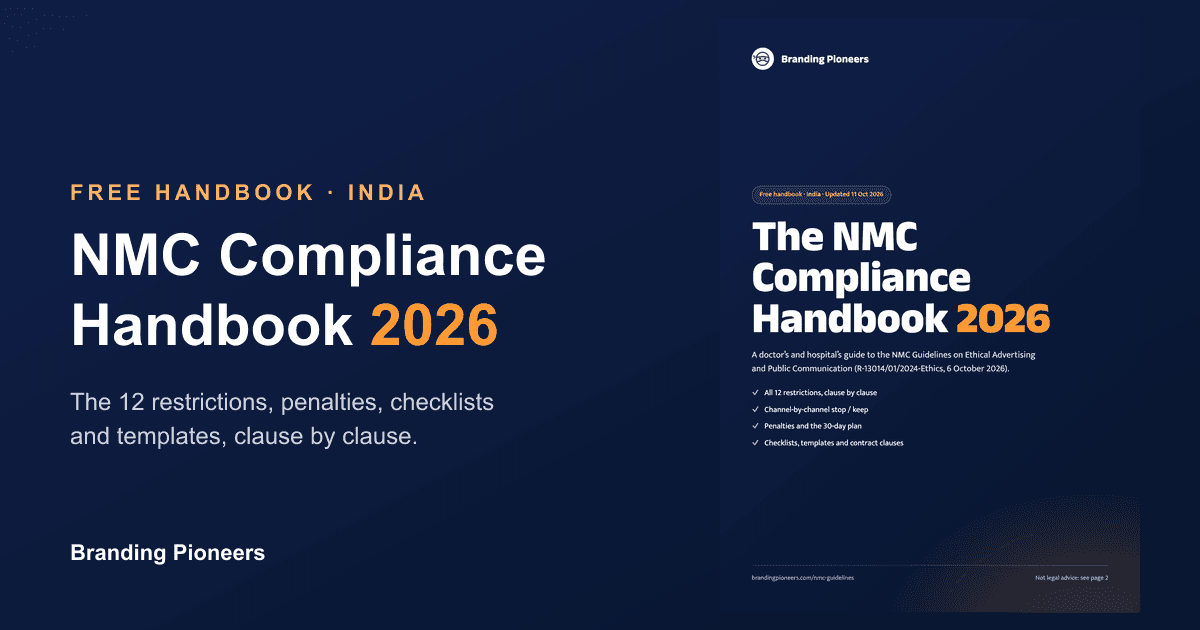 Compliance · 20 pages
Conference calendars
Dates, host cities and deadlines for every announced congress, each sourced from the organiser.
Topics
Local 3-pack ownership. NAP/schema/GBP playbooks. Content engines that rank.
Google Ads, Meta, LinkedIn for healthcare. Compliance-clean creative. CPA → ROAS.
Deployment patterns, language coverage, safe escalation. WhatsApp + voice + web.
Healthcare-aware web architecture. CWV-first builds. Multilingual, multi-clinic.
Editorial-grade visual systems. Brand-vs-performance balance. Multi-location cohesion.
CRM stitching, attribution, reporting cadence, compliance ops. The unsexy compounding work.
Selected work
Yes. Every guide is a free PDF. Open a guide, leave your name, email and mobile number, and the download starts straight away — no drip-spam and no sales chase.
The senior strategists who run our healthcare engagements. They are tactical guides for CMOs and clinic founders who need decision-grade tactics — not vendor blogs disguised as content.
Healthcare SEO, performance media, AI receptionists, web and product, brand and identity, and marketing operations.
Yes. Email research@brandingpioneers.com — we publish what readers ask for, and subscribers to The Brief get their topic requests in first.
Topic requests
Email research@brandingpioneers.com. We publish what readers ask for. Subscribe to The Brief and your topic request lands first.
Practical notes & supporting evidence
Start hereSenior practitioners, writing for senior practitioners.
Establish contextUse the published scope and relevant source material
Choose the next stepFollow the linked resource and assign an owner
Choose a guide based on the decision you need to make rather than reading every resource at once. Follow its steps using your own accounts, content and operating process. Keep a note of assumptions and unresolved questions so the guide becomes a working document for your team.
Start with the task a visitor needs to complete. Finding a treatment, checking a clinician’s background, identifying a location and asking for an appointment are related tasks, but they need different information. Make those paths visible in the navigation and on the relevant service pages. A good brief includes the content and the operational destination of each action: who receives the form, what happens after submission and how a visitor obtains help when the first contact route fails.
Desktop screens help explain page hierarchy, but they cannot establish the quality of the mobile experience. Check readable text, tap targets, menu behaviour and form validation on a phone. Long doctor biographies and treatment descriptions should remain easy to scan without hiding important details in decorative interactions. When a collection shows both desktop and mobile artwork, compare the priority of information across them. The mobile layout should preserve useful content rather than simply shrink the desktop composition.
A launch review should cover content ownership, approved contact information, working forms, redirects and the URLs that search engines are expected to index. If a site replaces an existing website, map important old pages to appropriate new destinations. Check titles, descriptions, canonicals and internal links against the actual released URLs. Keep the review list separate from the visual approval: a polished mockup does not prove that a live booking form, analytics event or redirect behaves correctly.
Document the difference between a design study, a delivered website and a live capture. A design study explains a proposed experience. A live capture records what the site looked like when it was captured. Neither alone establishes an improvement in appointment conversion. For an outcome comparison, use a defined period and consistent event definitions, then reconcile digital enquiries with attended appointments where the practice can do so. Performance and accessibility checks should be repeatable after future content edits, not only at the first launch.

Client portfolio · Healthcare websites