
Stigma stops the first step
People search quietly and leave if anything feels clinical or salesy.
Our fix: Warm, plain-language pages and anonymous chat.
Calm, stigma-free content and a gentle enquiry path for psychiatry, therapy and rehabilitation centres.





30-minute call with a healthcare strategist
Why mental health marketing is different
People search quietly and leave if anything feels clinical or salesy.
Our fix: Warm, plain-language pages and anonymous chat.
Admissions need information for the whole family.
Our fix: Guides for families, costs and what to expect.
Mental-health ads face strict platform rules.
Our fix: Policy-safe campaigns and strong organic search.
Free website & SEO audit
The patient journey
We build a page, ad or answer for every stage — so you are there from the first worried search to “near me”.
Example searches for illustration, not tracked rankings.
What we do
Condition and family-guide pages that rank.
Calm design with private enquiry options.
Careful campaigns within platform rules.
Articles and videos from your team.
Discreet call-backs and WhatsApp.
Review programmes with confidentiality.
See what this looks like for your mental health practice.
Get my free planMental health portfolio
Items marked “Concept” are original concept work by our studio; mockups are AI-staged presentations of real artwork.
Results across our clients
Local and specialty searches captured from our portfolio, plus original Search Console reports from websites we built and optimised.
Portfolio captureHistorical captures; capture dates and locations are not recorded. They show visibility at the time, not current positions or a ranking guarantee.
Proof from the dashboards
Unedited screenshots from client accounts and our portfolio — Search Console, Google Ads, YouTube Studio, Google Business Profile and live Google results. Growth moments are highlighted.
Daily clicks rose from under 100 to around 300 across the year.
Client names appear only where they are visible in the screenshot itself or the source folder. Other accounts are shown anonymously.
Credibility, checked
In the press
 Forbes India · Brand ConnectFounders building India’s most iconic brands(opens in a new tab)
 YourStory · Company profileMeet Branding Pioneers(opens in a new tab)
 The Eastern Herald · Founder featureEthical AI adoption and practice growth for doctors(opens in a new tab)
 Lokmat Times · Doctors’ DayCelebrating the doctors who make a difference(opens in a new tab)
Check us out independently
Our evidence standard
Client videos
Real results, real accounts — want the same review for yours?
Book a free callTrust & compliance

 Founder-led since 2016. Nishu Sharma and Arush Thapar review strategy for every new engagement.
Why us
| Criterion | Branding Pioneers | Generalist agency |
|---|---|---|
| Focus | ✓ Healthcare only, since 2016 | Many industries |
| Medical content | ✓ Written with your doctors | Generic copywriters |
| Ad policies | ✓ Built for healthcare rules | Learning as they go |
| Follow-up | ✓ Pioneer CRM & WhatsApp included | Leads handed over |
| Reporting | ✓ Enquiries and appointments | Clicks and impressions |
| Ownership | ✓ Your accounts and data | Often agency-owned |
| Tone of voice | ✓ Stigma-free, clinician-reviewed | Sales-led copy |
Mental health
Enquiries from ads, Google, WhatsApp and client websites flow into Pioneer CRM. When the feed is connected, this panel reads the aggregate totals in real time.
Pricing
Prices exclude GST. Advertising spend and third-party software are billed separately. Full pricing
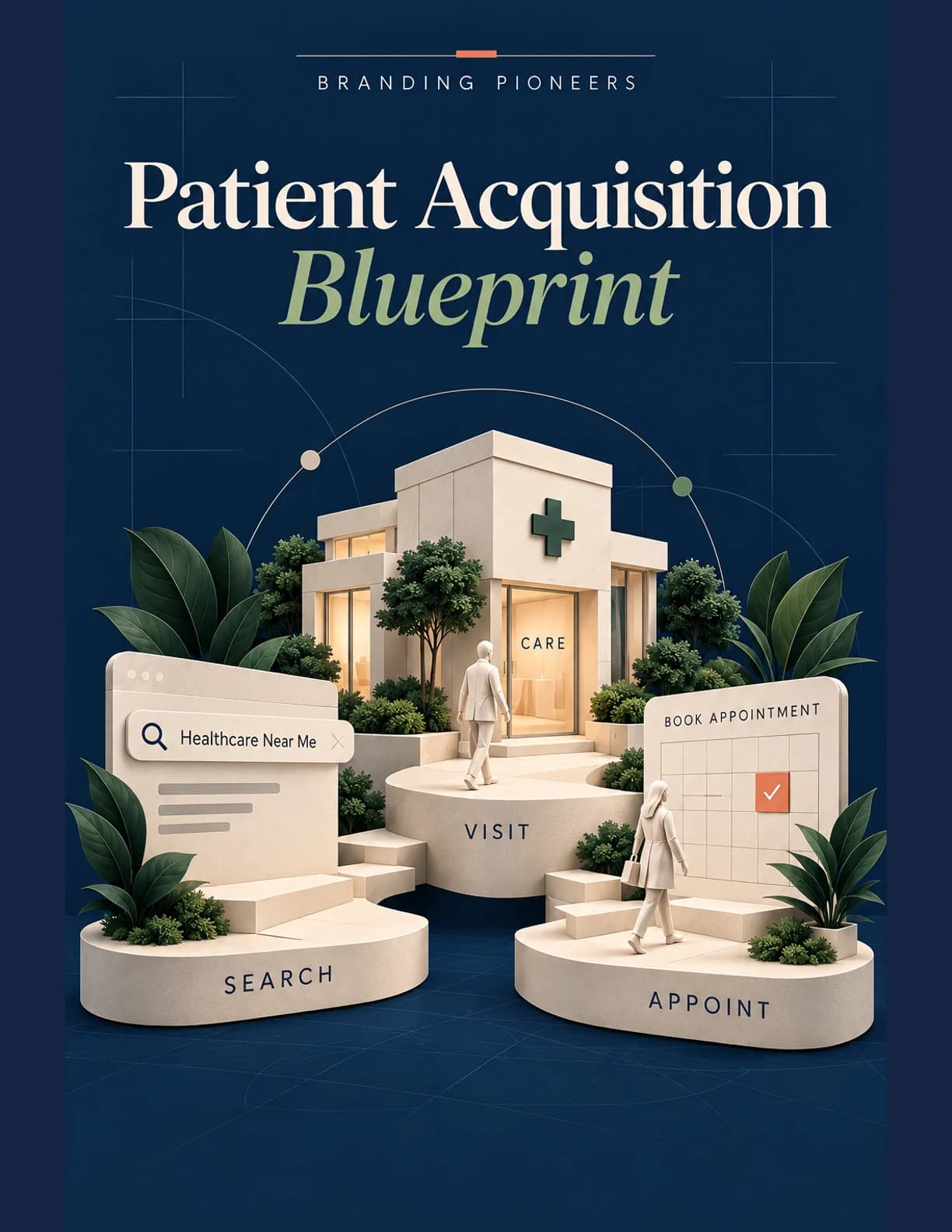
Free guide
The Patient Acquisition Blueprint
Ask anything — pricing, timelines, whether we have worked in your specialty.
Start a WhatsApp chatDeeper briefing
Mental health patients arrive in a very different state than primary-care or surgical patients. They're often vulnerable, often close to crisis, often reluctant to put their name on a form, and often searching at 11pm because that's when symptoms peak. Marketing that reaches for the usual healthcare tricks — aggressive follow-up ads, urgency copy, "limited-time" offers — isn't just ineffective here, it can do real harm. In December 2022 the US Department of Health and Human Services made it clear: following up with ads to someone who visited a depression or addiction page breaks HIPAA privacy law. Patients in this state need calm, clear, private handling.
We've worked in mental health long enough to know what builds over time: content that meets patients at the symptom stage, telehealth booking pages with an appointment this week and clear pricing, HIPAA-safe tracking that stays server-side and first-party, doctors who build trust by teaching, and crisis help on every page so someone searching in their worst moment can find a helpline.
A typical 12-month programme covers: content for symptoms and conditions (anxiety, depression, ADHD, OCD, PTSD, addiction, postpartum depression, substance abuse, eating disorders); search ads only, with BAA-covered tracking; personal-brand work for your leading therapists and psychiatrists; telehealth booking pages with insurance checks, clear self-pay pricing, and an appointment this week; a crisis-safe editing process where your clinical team reviews every page before it publishes; and a reputation programme that grows reviews across all your locations.
Privacy is the deciding factor. We never run third-party follow-up ads on mental health pages — full stop. We use server-side tracking, BAA-covered analytics vendors, no patient data in web addresses, and a clear consent step on every form.
After a full engagement, practices can expect steady growth in monthly session bookings, a lower cost per booked session, stronger organic rankings for psychiatrist, therapist, and online-therapy searches, more bookings coming through telehealth, and a measurable rise in how fast reviews come in — all reported from your own analytics and shared privately under NDA.
Go deeper
How we run it for practices like yours
How we run it for practices like yours
Long-form playbook
Inside Healthcare SEO
Inside Healthcare SEO
Inside Healthcare SEO
Pairs with this engagement
Pairs with this engagement
A specific pain we solve
A specific pain we solve
Common issue in this segment
Common issue in this segment
Local SEO tampa market · 11 mo
Launch service launch plan · 9 mo
Three page-experience metrics Google tracks: LCP for loading speed, INP for interactivity, and CLS for visual …
Optimizing a business's online presence so it surfaces in location-based searches — Google Maps and the local …
Questions
Yes, within strict platform policies. We lean on search and content where ads are restricted.
Private forms, limited CRM access and discreet follow-up scripts.
Yes, with clinicians reviewing every page.
Yes — family guides are often the most-read pages.
Three months on the Practice tier.
Yes, when it's set up correctly. The December 2022 HHS ruling made follow-up ads on mental health pages a HIPAA violation, but search-based marketing with server-side tracking, BAA-covered analytics, and first-party data is fully compliant. We run every mental health programme that way.
Symptom-stage SEO and content (50-65%), search ads only (15-25%), provider personal brand (10-15%), and reputation and reviews (10-15%). We leave out display follow-up ads for compliance reasons. Social media is for brand-building, not direct bookings.
In our work, online appointments book at a much higher rate than in-clinic-only practices. An appointment this week beats a polished brand every time. Practices that don't offer telehealth lose a big share of their potential patients in most areas.
It's decisive in the US. 'Accepts my insurance' is the most-checked filter on Psychology Today and similar directories. Practices that take several major plans book at a much higher rate than self-pay-only ones. We build insurance checks into booking pages where it applies.
Yes — each has a different patient journey, search behaviour, and economics. Psychiatry: medication-led, a longer first appointment, often paired with therapy. Therapy: weekly sessions, a longer commitment, lower price per session. TMS: depression-specific, a course of several sessions, higher revenue per patient. We build dedicated content and booking pages for each.
First-name-only reviews, a 'verified patient' badge, and wording that keeps the condition private ('struggled with anxiety for years' rather than naming a diagnosis). These privacy-respecting methods bring in far more reviews than the usual ask-for-a-review approach.
Mental health
Three quick questions. We come prepared with a plan for your specialty and city.

 You’ll speak with a senior strategist
mental health · Portfolio

