
Only cleanings and check-ups come in
High-value treatments are buried on a generic “services” page.
Our fix: Dedicated pages and campaigns for each treatment.
Search, ads and a site built around high-value treatments, so the patients who find you are the ones ready to go ahead.





30-minute call with a healthcare strategist
Why dental marketing is different
High-value treatments are buried on a generic “services” page.
Our fix: Dedicated pages and campaigns for each treatment.
“How much?” calls that never book.
Our fix: Clear cost ranges and finance options that qualify patients.
Bookings cluster on weekends.
Our fix: Recall and reminder automation on WhatsApp.
Free website & SEO audit
The patient journey
We build a page, ad or answer for every stage — so you are there from the first worried search to “near me”.
Example searches for illustration, not tracked rankings.
What we do
Treatment, cost and local pages that rank.
Implant and aligner campaigns with qualified leads.
Galleries, finance info and online booking.
Check-up and cleaning reminders on WhatsApp.
Dentist explainers and patient stories.
Automated review requests after every visit.
See what this looks like for your dental practice.
Get my free planDental portfolio
Items marked “Concept” are original concept work by our studio; mockups are AI-staged presentations of real artwork.
Results across our clients
Local and specialty searches captured from our portfolio, plus original Search Console reports from websites we built and optimised.
Portfolio captureHistorical captures; capture dates and locations are not recorded. They show visibility at the time, not current positions or a ranking guarantee.
Proof from the dashboards
Unedited screenshots from client accounts and our portfolio — Search Console, Google Ads, YouTube Studio, Google Business Profile and live Google results. Growth moments are highlighted.
Both top local results belong to our client.
Client names appear only where they are visible in the screenshot itself or the source folder. Other accounts are shown anonymously.
Credibility, checked
In the press
 Forbes India · Brand ConnectFounders building India’s most iconic brands(opens in a new tab)
 YourStory · Company profileMeet Branding Pioneers(opens in a new tab)
 The Eastern Herald · Founder featureEthical AI adoption and practice growth for doctors(opens in a new tab)
 Lokmat Times · Doctors’ DayCelebrating the doctors who make a difference(opens in a new tab)
Check us out independently
Our evidence standard
Client videos
Real results, real accounts — want the same review for yours?
Book a free callTrust & compliance

 Founder-led since 2016. Nishu Sharma and Arush Thapar review strategy for every new engagement.
Why us
| Criterion | Branding Pioneers | Generalist agency |
|---|---|---|
| Focus | ✓ Healthcare only, since 2016 | Many industries |
| Medical content | ✓ Written with your doctors | Generic copywriters |
| Ad policies | ✓ Built for healthcare rules | Learning as they go |
| Follow-up | ✓ Pioneer CRM & WhatsApp included | Leads handed over |
| Reporting | ✓ Enquiries and appointments | Clicks and impressions |
| Ownership | ✓ Your accounts and data | Often agency-owned |
| High-value treatments | ✓ Implant & aligner funnels | Generic “dentist near me” ads |
Dental
Enquiries from ads, Google, WhatsApp and client websites flow into Pioneer CRM. When the feed is connected, this panel reads the aggregate totals in real time.
Pricing
Prices exclude GST. Advertising spend and third-party software are billed separately. Full pricing
Free guide
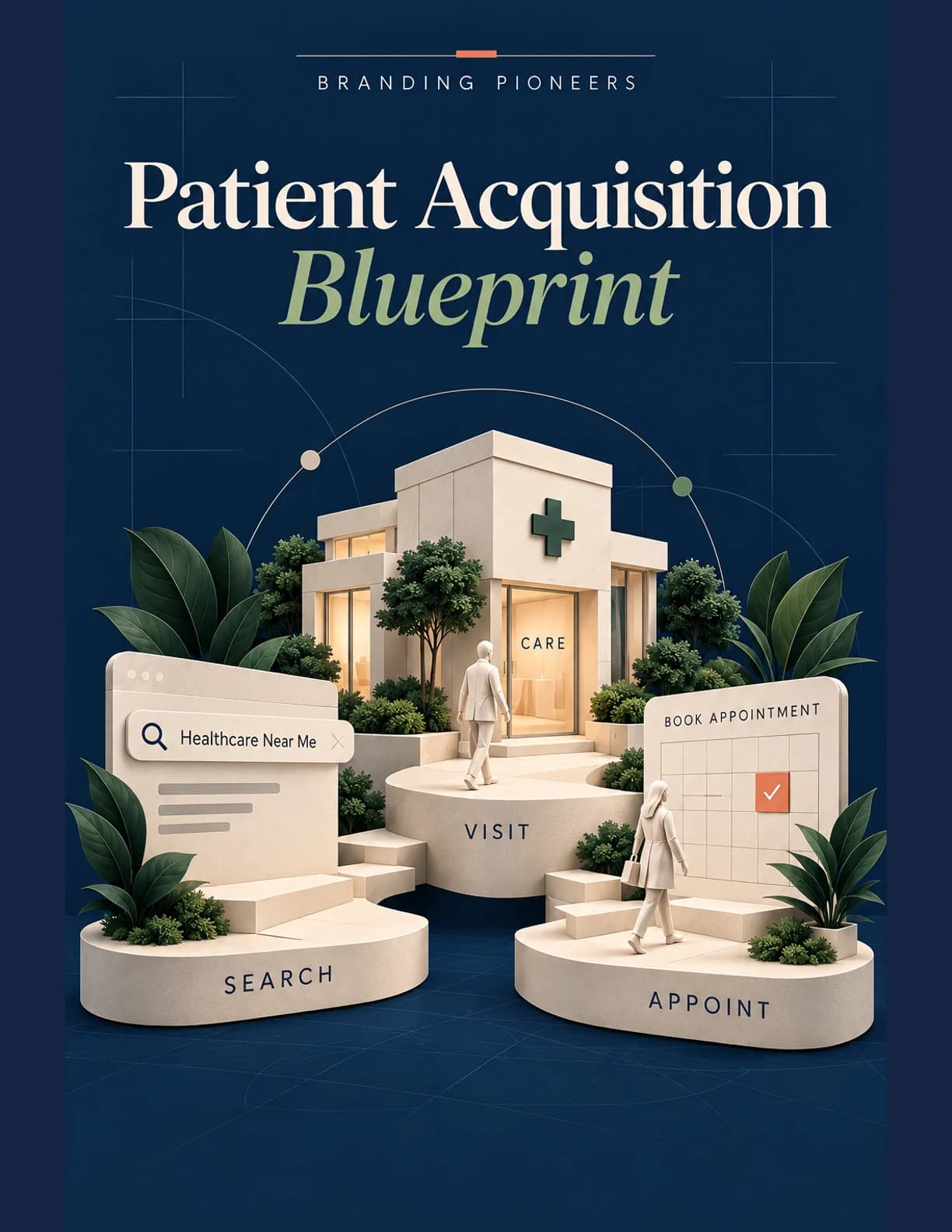
The Patient Acquisition Blueprint
Ask anything — pricing, timelines, whether we have worked in your specialty.
Start a WhatsApp chatDeeper briefing
A dental practice runs two very different businesses from the same chair. Routine care — cleanings, exams, fillings — is frequent, driven by convenience, paid through insurance, and won on local search, reviews, and easy booking. Big-ticket work — implants, full-mouth restoration, braces, cosmetic veneers — is rare, driven by trust, paid through financing, and won on dedicated treatment pages with before-and-after galleries, clear fees, and patient stories.
Use one approach for both and you underperform on both. We run them side by side in the same engagement: routine care built for top map results and steady reviews, big-ticket work built for trust and bookings. The shared foundations — your search authority, reputation system, and patient database — strengthen both.
A typical 12-month programme covers: top map results through a polished Google profile and cleaned-up local listings; treatment pages for your biggest services (implants, Invisalign, smile makeover, full-mouth, veneers); automatic review requests by text and email; cosmetic-focused social media on Instagram and TikTok; easy insurance and payment, with plan checks and monthly payment calculators; and, for chains, a multi-location setup with a separate Google profile and page per location and one central system.
Big-ticket work is where most practices leave money on the table. Implant patients spend weeks researching, comparing, getting second opinions, and weighing up financing. Practices that treat implants as a one-step funnel lose to those that build a library of helpful content — cost guides, financing explainers, before-and-after galleries, treatment-process videos — that earns trust over those weeks.
Dental marketing in India sits under DCI rules, ASCI guidelines, and local advertising laws. In practice: no over-the-top cosmetic outcome claims, no advertising that compares you to named rivals, before-and-after photos only with patient consent and never retouched, any prices shown using "starting from" or a fee range, and implant or major surgery ads listing the dentist's qualifications. The US adds state dental board rules on top. We clear every implant and cosmetic page against a compliance checklist before it goes live.
After a full engagement, practices can expect stronger map results for 'dentist near me' and treatment searches, a steady rise in new patients, a lower cost per new patient, more implant enquiries turning into treatment, and a flow of reviews that becomes hard for rivals to match — all reported from your own analytics and shared privately under NDA.
Go deeper
How we run it for practices like yours
How we run it for practices like yours
Long-form playbook
Inside Healthcare SEO
Inside Healthcare SEO
Inside Healthcare SEO
Pairs with this engagement
Pairs with this engagement
A specific pain we solve
A specific pain we solve
Common issue in this segment
Common issue in this segment
Local SEO tampa market · 11 mo
Launch service launch plan · 9 mo
Three page-experience metrics Google tracks: LCP for loading speed, INP for interactivity, and CLS for visual …
Optimizing a business's online presence so it surfaces in location-based searches — Google Maps and the local …
Questions
Yes, with written patient consent and platform-safe presentation.
That is the focus: dedicated pages, campaigns and qualifying questions for high-value treatments.
Yes — each clinic gets its own listing and local pages, with one shared brand.
Most dental campaigns go live within two weeks of tracking set-up.
The Practice tier starts at ₹50,000 a month; your proposal confirms scope first.
It depends on your city and how much big-ticket work you do. Below a certain budget, we recommend focusing only on your Google profile and reviews — paid ads don't pay off reliably below that point. We scope the work against your goals before we quote.
It's decisive for most independent practices. A single implant case is worth many times a routine new patient. Practices without dedicated implant marketing usually turn few enquiries into treatment; with proper treatment pages, easy financing, and patient stories, that improves a lot.
For cosmetic and braces work, yes. For routine care, much less. The main limit is whether your dentists are willing to be on camera — practices with regular provider video win more cosmetic patients.
A separate Google profile per location is essential. Each location gets its own page, with its own reviews, consistent contact details, and local content. A central system routes calls to the right location by what the caller needs and how close they are. Chains that run every location off one profile underperform, because Google penalises inconsistent details.
Google Business Profile matters most, then RateMDs (US), Practo (India), and Healthgrades (US). Yelp matters for general consumer search but less in healthcare. We focus review-gathering on the top platforms for your local market.
Insurance-friendly US practices lead with plan checkers and 'we accept your insurance' messaging on their pages. Self-pay or India-market practices lead with clear, upfront fees and financing options. The two approaches aren't interchangeable — we build the right one for how your patients pay.
Dental
Three quick questions. We come prepared with a plan for your specialty and city.

 You’ll speak with a senior strategist
dental · Portfolio

