Healthcare Marketing Answers
Expert answers to common healthcare marketing questions
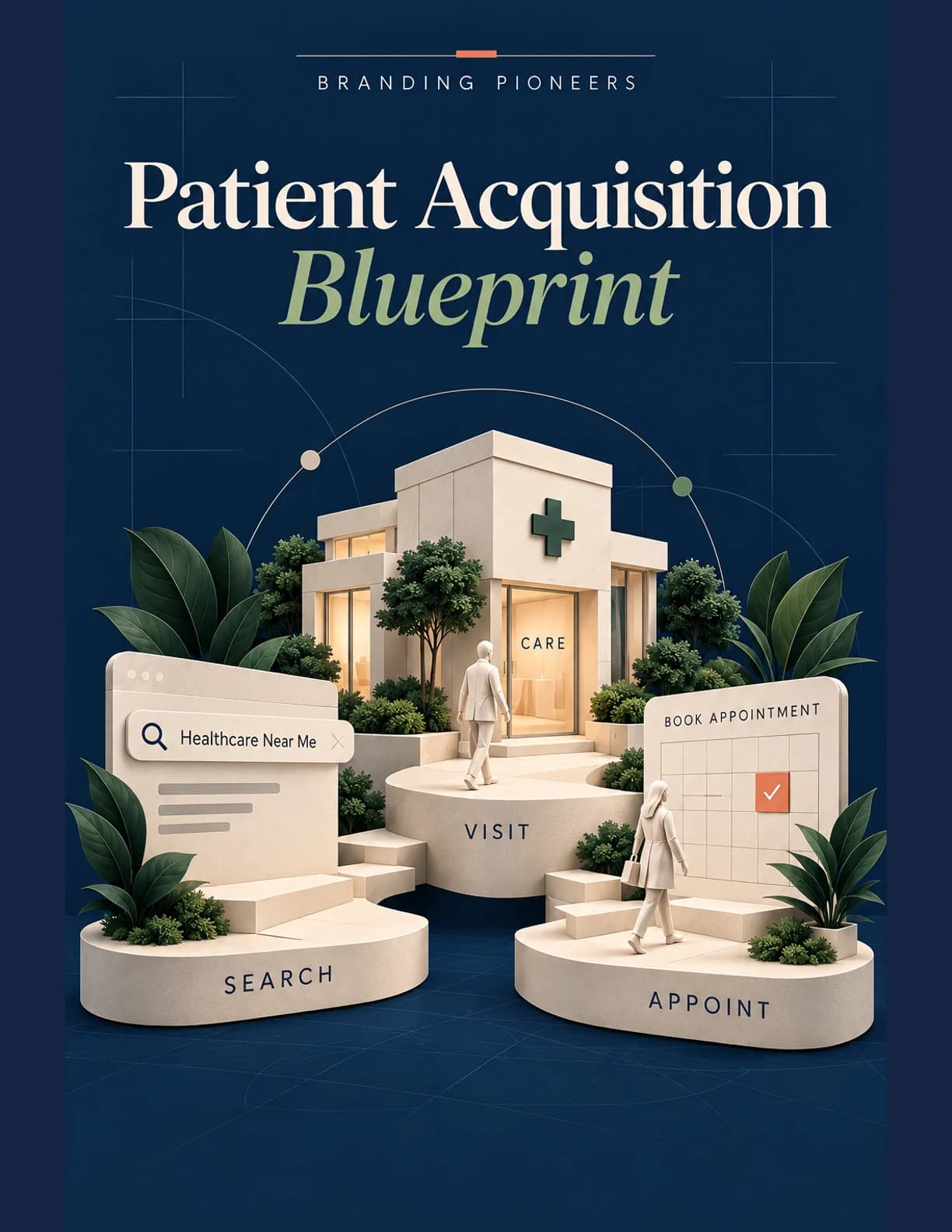
Patient Acquisition
How to get more patients for your practice
How to Get More Patients for My Clinic
The most effective ways to get more patients are local SEO (ranking on Google Maps), Google Ads for immediate leads, review generation for trust building, and automated follow-up systems to convert inquiries into appointments. Most clinics see 2-5x patient growth within 90 days with this combination.
How Many Patients Should a Clinic Get Per Month
A healthy single-physician clinic typically sees 150-300 patients per month. Multi-doctor practices should target 200-500+. New patient volume specifically should be 20-40% of total visits. These benchmarks vary by specialty — dermatology and dental tend to have higher volumes while surgical specialties have fewer but higher-value patients.
How Long Does Healthcare SEO Take to Show Results
Healthcare SEO typically shows initial improvements in 3-4 months, with significant results at 6-12 months. Local SEO (Google Maps) can show faster results in 2-3 months. Factors that affect timeline include competition level, website age, current authority, and content quality. PPC campaigns generate leads within 1-2 weeks if you need immediate results.
Is Google Ads Worth It for Doctors
Yes — Google Ads is one of the highest-ROI channels for doctors. Healthcare Google Ads campaigns typically deliver 4-8x return on ad spend. The average cost per lead ranges from $15-85 depending on specialty, and 15-30% of leads convert to patients. The key is targeting high-intent keywords ("[specialty] near me", "book appointment [procedure]") rather than broad informational terms.
How to Increase Online Appointment Bookings
To increase online appointment bookings: (1) Add prominent booking buttons on every page, (2) Enable self-scheduling with real-time availability, (3) Reduce form fields to essential info only, (4) Add click-to-call for mobile users, (5) Implement an AI chatbot that books appointments 24/7, and (6) Set up automated follow-up for incomplete bookings. These changes typically increase bookings by 150-300%.
How to Get More Walk-In Patients for Your Clinic
To increase walk-in patients: (1) Optimize Google Business Profile with accurate hours and services, (2) Rank in Google Maps for "near me" searches, (3) Use geo-fencing ads targeting people within 5km of your clinic, (4) List on walk-in clinic directories, (5) Add "Walk-ins Welcome" prominently on your website and GBP, and (6) Run local awareness ads on Facebook targeting your zip codes.
How to Generate Patient Leads for a Hospital
Hospital lead generation requires a multi-department approach: (1) Department-level SEO — each specialty needs its own keyword strategy, (2) Google Ads with dedicated landing pages per department, (3) Doctor personal branding on social media, (4) AI chatbot for 24/7 inquiry handling, (5) Referral network marketing, and (6) Insurance-based targeting campaigns. Hospitals typically see 200-400% growth in qualified leads within 6-12 months.
How to Increase Hospital Occupancy Rate
To increase hospital occupancy: (1) Run department-specific Google Ads for high-bed-use specialties, (2) Build physician referral networks with referring doctor portals, (3) Optimize for insurance-based searches, (4) Market high-value surgical procedures aggressively, (5) Launch medical tourism campaigns for international patients, and (6) Implement patient recall systems for follow-up procedures. Our hospital clients typically improve occupancy from 65% to 85%+ within 12 months.
How to Increase IPD Admissions
To increase inpatient admissions: (1) Target condition-specific keywords that lead to hospitalization, (2) Build content around procedures that require admission, (3) Run Google Ads for surgical procedures, (4) Develop referring physician relationships with a referral portal, (5) Optimize insurance pages to rank for "[procedure] covered by [insurance]", and (6) Retarget OPD patients who may need procedures. Focus on high-value departments first.
How to Get International Patients for Your Hospital
To attract international patients: (1) Build multilingual website and landing pages for target countries, (2) Run Google Ads in source countries targeting treatment keywords, (3) Create patient testimonial videos in target languages, (4) List on medical tourism platforms, (5) Implement a WhatsApp-based inquiry funnel with fast response, and (6) Offer concierge services (visa, travel, stay) prominently. Our medical tourism clients see 300-500% growth in international leads within 6-9 months.
Google & Local SEO
Google Business Profile, Maps, and local search
Why Is My Clinic Not Showing on Google Maps
Common reasons your clinic isn't showing on Google Maps: (1) Your Google Business Profile isn't verified, (2) Your NAP (Name, Address, Phone) is inconsistent across directories, (3) You have few or no Google reviews, (4) Your GBP categories are wrong, (5) Your listing was suspended for policy violations, (6) Competitors have stronger local SEO signals, or (7) You're targeting too broad an area. Start with a GBP audit to identify the specific issue.
What to Do When Your Google Business Profile Gets Suspended
If your GBP is suspended: (1) Don't create a new listing — this worsens the situation, (2) Identify the violation — common causes are address issues, keyword stuffing in business name, or multiple listings, (3) Fix the underlying issue before appealing, (4) Submit a reinstatement request through the GBP support form with documentation (lease, utility bill, license), (5) Wait 3-7 business days, and (6) If denied, escalate through Google's community forums or Twitter support. Our recovery rate is 92%.
How to Get More Google Reviews for Your Practice
To systematically generate Google reviews: (1) Ask every patient — timing matters (ask right after a positive interaction), (2) Send automated review requests via SMS/WhatsApp within 1 hour of visit, (3) Make it easy — send a direct Google review link, (4) Respond to every review (positive and negative), (5) Train front desk to mention reviews at checkout, and (6) Never offer incentives (violates Google's policy). Clinics using automated review systems average 15-30 new reviews per month.
How to Respond to Negative Patient Reviews
Best practices for negative review responses: (1) Respond within 24 hours — speed shows you care, (2) Be professional and empathetic — never argue or get defensive, (3) Don't disclose any patient information (HIPAA), (4) Acknowledge the concern without admitting fault, (5) Take the conversation offline — provide a direct contact, (6) Follow up privately to resolve the issue. Template: "Thank you for your feedback, [Name]. We take every patient's experience seriously. Please contact [direct line] so we can address your concern personally."
How to Remove Fake Google Reviews
To remove fake/spam Google reviews: (1) Flag the review through your GBP dashboard as "inappropriate", (2) Report it via Google's review removal form with evidence, (3) If it violates Google's policy (spam, fake, conflict of interest), Google may remove it in 5-14 days, (4) Respond publicly to the review noting it's not from a real patient, (5) If Google doesn't remove it, escalate via Google Business support, and (6) As a last resort, consult a reputation management specialist. Not all negative reviews qualify for removal — only policy violations.
How to Rank Higher on Google Maps for Your Practice
To rank higher on Google Maps: (1) Complete every field in your GBP (services, hours, description, attributes, photos), (2) Get consistent 5-star reviews (aim for 50+ reviews), (3) Ensure NAP consistency across 100+ directories, (4) Add your practice to healthcare-specific directories (Healthgrades, Zocdoc, Vitals), (5) Build local backlinks from hospitals, medical associations, and local news, (6) Post weekly Google Business updates, and (7) Embed Google Maps on your website. Map pack ranking typically improves within 2-4 months.
What Is NAP Consistency and Why Does It Matter for Healthcare SEO
NAP stands for Name, Address, Phone Number. NAP consistency means your practice information is exactly the same across every online directory, social profile, and listing. Even minor differences ("St." vs "Street", missing suite number) confuse Google and hurt your local rankings. For healthcare practices, NAP consistency across 100+ directories is one of the top 3 local ranking factors. An audit typically reveals 30-50 inconsistencies that need fixing.
SEO vs PPC for Healthcare — Which Is Better
Both are essential but serve different timelines. PPC (Google Ads) delivers leads in 1-2 weeks but costs $15-150 per lead and stops when you stop paying. SEO takes 3-6 months but delivers leads at $0 marginal cost and compounds over time. The optimal strategy is both: run PPC immediately for lead flow while building SEO for long-term dominance. As SEO gains traction, you can reduce PPC spend. Most healthcare practices allocate 60% to PPC initially, shifting to 70% SEO by month 6.
Website & Conversion
Making your website convert visitors into patients
Why Isn't My Healthcare Website Getting Leads
Common reasons healthcare websites don't generate leads: (1) No clear call-to-action above the fold, (2) No online booking or scheduling option, (3) Slow page load (over 3 seconds), (4) Not mobile optimized (43% of health searches are mobile), (5) Missing trust signals (no reviews, credentials, or photos), (6) No phone number visible, (7) Contact forms have too many fields, and (8) No live chat or chatbot. Fix these and most clinics see a 100-300% increase in leads.
What Should Be on a Doctor's Website
Essential pages for a doctor's website: (1) Homepage with specialty, location, and booking CTA, (2) About/bio page with credentials and personal story, (3) Individual service/procedure pages (one per service), (4) Insurance/accepted plans page, (5) Patient testimonials/reviews, (6) Online appointment booking, (7) Contact page with map, hours, and multiple contact methods, (8) Blog with patient education content, (9) Before/after gallery (if applicable), and (10) FAQ page. Each page should have clear CTAs and mobile optimization.
How to Improve Healthcare Website Conversion Rate
To improve your healthcare website conversion rate (average 2-3% → target 5-8%): (1) Add click-to-call button in header, (2) Place booking CTA above the fold on every page, (3) Reduce form fields to 3-4 essentials, (4) Add social proof near CTAs (reviews, ratings), (5) Install AI chatbot for instant engagement, (6) Speed up page load to under 2 seconds, (7) Add urgency signals ("Same-day appointments available"), (8) A/B test headlines and CTAs monthly.
Social Media
Social media marketing for healthcare
What Should Doctors Post on Instagram
High-performing Instagram content for doctors: (1) Before/after transformations (with consent), (2) Quick educational reels explaining conditions in plain language, (3) Behind-the-scenes clinic/day-in-the-life, (4) Patient testimonial videos, (5) Myth-busting posts, (6) Meet the team/staff spotlights, (7) Procedure walkthroughs, and (8) Personal/lifestyle content that humanizes the doctor. Post 4-5 reels per week for maximum reach. Avoid: stock photos, overly promotional content, and medical jargon.
Is TikTok Good for Healthcare Marketing
Yes — TikTok is one of the fastest-growing patient acquisition channels for healthcare. Healthcare content gets 2-3x more engagement on TikTok than other platforms. It's especially effective for dermatology, cosmetic surgery, dentistry, mental health, and weight loss. Key success factors: (1) Use trending sounds, (2) Keep videos under 30 seconds, (3) Lead with the hook in first 2 seconds, (4) Show real procedures/results, and (5) Be authentic — overproduced content underperforms.
How Often Should a Clinic Post on Social Media
Recommended posting frequency by platform: Instagram: 4-5 reels + 3 stories per week. Facebook: 3-4 posts per week. LinkedIn: 2-3 posts per week. TikTok: 5-7 videos per week. YouTube: 1-2 videos per week. Consistency matters more than volume — it's better to post 3x/week consistently than 7x/week for one month then stop. Batch create content monthly and use scheduling tools.
AI & Automation
Chatbots, CRM, and marketing automation
How to Reduce Patient No-Show Rates
To reduce no-shows (average 23% → under 8%): (1) Send automated reminders via SMS + WhatsApp 48hrs, 24hrs, and 2hrs before appointment, (2) Enable easy rescheduling via text reply, (3) Implement a waitlist system to fill cancellations instantly, (4) Require deposit or credit card for high-value appointments, (5) Send pre-visit preparation info to increase commitment, and (6) Track no-show patterns and flag repeat offenders. Automation alone reduces no-shows by 50-70%.
Should My Clinic Use an AI Chatbot
Yes — AI chatbots are now essential for healthcare practices. Benefits: (1) 24/7 patient inquiry handling (70% of inquiries come outside business hours), (2) Instant response (patients choose the first provider that responds), (3) Automated appointment booking, (4) FAQ handling reduces front desk calls by 40%, (5) Lead qualification — chatbot filters serious inquiries from browsing. Average chatbot conversion rate in healthcare is 35%. ROI is typically 5-10x within 3 months.
What CRM Is Best for Healthcare Practices
Top CRMs for healthcare: (1) GoHighLevel — best all-in-one (marketing + CRM + automation) for clinics, $97-297/month, (2) HubSpot — best for hospitals and larger organizations, free-$1,200/month, (3) Salesforce Health Cloud — best for enterprise health systems, (4) DrChrono — best for practices wanting EHR + CRM combined, (5) Zoho CRM — best budget option, $12-45/user/month. Choose based on: practice size, integration needs (EHR, booking system), and whether you need built-in marketing tools.
How to Automate Appointment Reminders
To set up automated appointment reminders: (1) Choose your channels — SMS has 98% open rate, WhatsApp 90%, email 20%, (2) Set up 3-touch sequence: 48 hours before (confirmation), 24 hours before (reminder + prep info), 2 hours before (final reminder with directions), (3) Enable 1-tap rescheduling via text reply, (4) Add to your CRM or use tools like GoHighLevel, Twilio, or WhatsApp Business API, (5) Track no-show rates before and after. Automated reminders typically reduce no-shows by 50-70%.
Cost & Budget
Healthcare marketing costs and budgeting
What Is a Good Cost Per Patient Acquisition
A good cost per patient acquisition (CPA) ranges from $15-$150 depending on specialty. Urgent care: $15-25. General dentistry: $25-40. Dermatology: $30-50. Orthopedics: $60-90. Cosmetic surgery: $80-150. IVF/fertility: $100-150. These benchmarks assume optimized campaigns — unoptimized campaigns often run 2-3x higher.
How Much Does a Healthcare Website Cost
Healthcare website costs vary by complexity: Basic clinic website (5-10 pages): $3,000-8,000. Multi-doctor practice site: $8,000-20,000. Hospital website with department pages: $20,000-75,000. Custom patient portal: $25,000-100,000+. Telehealth platform: $30,000-150,000. Mobile app: $25,000-100,000+. Ongoing maintenance runs $200-2,000/month. The ROI typically pays for the website in 3-6 months through increased appointments.
How Much Does Healthcare SEO Cost
Healthcare SEO costs range from $1,000-10,000+ per month depending on scope: Single-location clinic: $1,000-3,000/month. Multi-location practice: $3,000-7,000/month. Hospital (multi-department): $5,000-15,000/month. Typical contract is 6-12 months. Includes: keyword research, on-page optimization, local SEO, content creation, link building, and reporting. ROI benchmark: most practices see 3-5x return within 12 months. Beware agencies charging under $500/month — effective healthcare SEO requires specialization.
How Much Do Google Ads Cost for Doctors
Google Ads costs for doctors: Average cost per click (CPC): $3-15 for healthcare keywords. Average cost per lead: $15-150 depending on specialty. Recommended monthly budget: $2,000-10,000+ for meaningful results. Typical breakdown: Urgent care/walk-in: $3-5 CPC, $15-25 per lead. Dentistry: $4-8 CPC, $25-45 per lead. Dermatology: $5-10 CPC, $30-50 per lead. Cosmetic surgery: $8-15 CPC, $80-150 per lead. Management fee is typically 15-20% of ad spend or $500-2,000/month flat.
How Much Does Healthcare Marketing Cost Overall
Total healthcare marketing budget benchmarks: Solo practitioner: $2,000-5,000/month. Small clinic (2-5 doctors): $5,000-15,000/month. Mid-size practice: $10,000-30,000/month. Hospital: $20,000-100,000+/month. Typical allocation: 40% paid ads, 25% SEO/content, 15% social media, 10% automation/tools, 10% creative/branding. Industry benchmark: healthcare organizations should invest 5-10% of revenue in marketing. New practices should start at 10-15% to build initial visibility.
How Much Does Medical Tourism Marketing Cost
Medical tourism marketing costs: Monthly retainer: $5,000-25,000/month. Google Ads (international): $3,000-15,000/month. Multilingual SEO: $3,000-10,000/month. Content creation (multi-language): $2,000-5,000/month. The higher cost is due to multi-country targeting, language requirements, and longer conversion cycles. ROI is typically 3-8x because international patient revenue per case is significantly higher ($5,000-50,000+ per patient). Break-even typically occurs in month 3-4.
How to Choose the Right Healthcare Marketing Agency
Key criteria for choosing a healthcare marketing agency: (1) Healthcare-only specialization (generic agencies miss compliance and patient psychology nuances), (2) Case studies with measurable results in your specialty, (3) Transparent reporting — you should see dashboards, not just PDFs, (4) No long-term lock-in — month-to-month available, (5) Dedicated account manager (not a ticket queue), (6) Understands your EHR/CRM ecosystem, (7) Can show ROI in patients and revenue, not just clicks. Red flags: guaranteed rankings, no case studies, and outsourced fulfillment.
In-House vs Agency for Healthcare Marketing
Comparison: In-house team: Full control, deep brand knowledge, $150K-400K+/year salary cost for a small team, limited channel expertise. Agency: Specialized expertise across SEO/ads/social/AI, $3K-15K/month, instant team of specialists, but less brand immersion. Best approach for most practices: hybrid — hire one in-house marketing coordinator for day-to-day and use a specialized healthcare agency for strategy, SEO, ads, and technical execution. This gives you control + expertise at lower total cost.
Compliance & Regulations
HIPAA, medical advertising rules
Can Doctors Advertise on Social Media (HIPAA Compliance)
Yes, doctors can advertise on social media, but with HIPAA guardrails: (1) Never share patient info without written consent, (2) Before/after photos require signed photo release forms, (3) Don't respond to patient comments with health advice, (4) Testimonials are allowed with patient consent (varies by state), (5) Disable comments on posts that might attract PHI, and (6) Use a HIPAA-compliant social media policy for staff. Meta and Google both allow healthcare advertising within their medical advertising policies.
Is WhatsApp Marketing Legal for Healthcare
Yes, WhatsApp marketing is legal for healthcare with proper consent. Requirements: (1) Patients must opt-in to receive messages, (2) Use WhatsApp Business API (not personal WhatsApp) for compliance, (3) Don't share PHI in group chats, (4) Messages should be transactional (reminders, follow-ups) or consented marketing, (5) In India, WhatsApp Business is widely accepted; in the US, ensure HIPAA-compliant messaging platforms. WhatsApp has 90%+ open rates making it the highest-engagement channel for patient communication.
Is Healthcare Marketing HIPAA Compliant — What You Need to Know
Healthcare marketing can be fully HIPAA compliant with proper practices: (1) Never use patient data for marketing without written authorization, (2) Patient testimonials require signed consent forms, (3) Before/after photos need photo release agreements, (4) Email marketing requires opt-in and can't include PHI in subject lines, (5) Website forms must be encrypted (SSL) and stored securely, (6) Social media must have a PHI policy. Key rule: marketing TO patients is fine; using patient DATA for marketing needs authorization.
What Can Doctors Legally Advertise
Doctors can advertise almost any service with these guardrails: (1) Claims must be truthful and not misleading, (2) "Best" or "#1" claims need substantiation, (3) Success rates/guarantees must include disclaimers, (4) Before/after photos need consent and must be representative, (5) Testimonials are allowed with consent (regulations vary by state/country), (6) Price advertising is generally permitted, (7) Specialization claims must match board certifications. Medical advertising is regulated by state medical boards, FTC, and platform-specific policies (Google, Meta).
Specialty Marketing
Marketing for specific medical specialties
How to Market a Dental Practice in 2026
The most effective dental marketing strategies: (1) Google Business Profile optimization — dentistry is heavily local, (2) Google Ads targeting "dentist near me" and procedure keywords, (3) Before/after content on Instagram (smile transformations perform exceptionally), (4) Review generation — aim for 100+ Google reviews, (5) "New patient special" offer landing pages, (6) Retargeting ads for website visitors who didn't book, and (7) Referral program automation. Average dental CPA: $25-45. Best ROI channels: Google LSA + Local SEO.
How to Market a Cosmetic Surgery Practice
Cosmetic surgery marketing essentials: (1) Instagram + TikTok — before/after content is king (10-50x organic reach), (2) Google Ads targeting high-intent procedure keywords, (3) YouTube — procedure walkthroughs build massive trust, (4) RealSelf profile optimization, (5) Patient testimonial video campaigns, (6) Physician personal branding — patients choose the surgeon, not the clinic, and (7) Financing/pricing transparency on website. Average CPA: $80-150. Highest ROI: social media + surgeon personal brand.
How to Market an IVF & Fertility Clinic
IVF clinic marketing strategies: (1) Content marketing — patients research extensively before choosing (educational blog + YouTube), (2) Google Ads targeting "IVF clinic near me", "fertility specialist", and procedure keywords, (3) Patient success story videos (most powerful trust builder), (4) Support community building on social media, (5) SEO for condition keywords ("PCOS treatment", "low sperm count"), (6) WhatsApp-based inquiry funnel (IVF patients prefer private communication), and (7) International patient targeting for medical tourism. Average CPA: $100-150. Conversion cycle: 2-8 weeks.
How to Market a Mental Health Practice Ethically
Mental health marketing requires sensitivity: (1) Content marketing is the #1 channel — educational content about anxiety, depression, ADHD builds trust, (2) Google Ads with careful keyword selection (avoid crisis terms), (3) Therapist personal branding on LinkedIn and Instagram, (4) Directory listings — Psychology Today, GoodTherapy, BetterHelp referrals, (5) SEO for symptom and condition keywords, (6) Telehealth promotion — mental health has highest virtual care adoption. Avoid: before/after framing, guaranteed outcomes, and insensitive targeting. Average CPA: $35-50.
How to Market a MedSpa
MedSpa marketing playbook: (1) Instagram + TikTok — transformation reels (Botox, fillers, laser) drive massive organic reach, (2) Google Ads for "medspa near me" + specific treatment keywords, (3) Membership/package programs for recurring revenue, (4) Influencer collaborations and gifted treatments, (5) Google reviews — aim for 200+ with 4.8+ rating, (6) Email/SMS marketing for seasonal promotions and flash sales, (7) Before/after gallery on website. MedSpa has the lowest CPA in healthcare (~$18-25) and highest social media ROI.
Answers Backed by Real Experience

Every answer is informed by hands-on experience from 2,000+ healthcare marketing campaigns worldwide.
Your Competitors Are Ranking Above You Right Now
Every hour without a patient acquisition system is another appointment booked by the clinic down the street. Get a free audit — we'll show you exactly who's outranking you and what it's costing you.