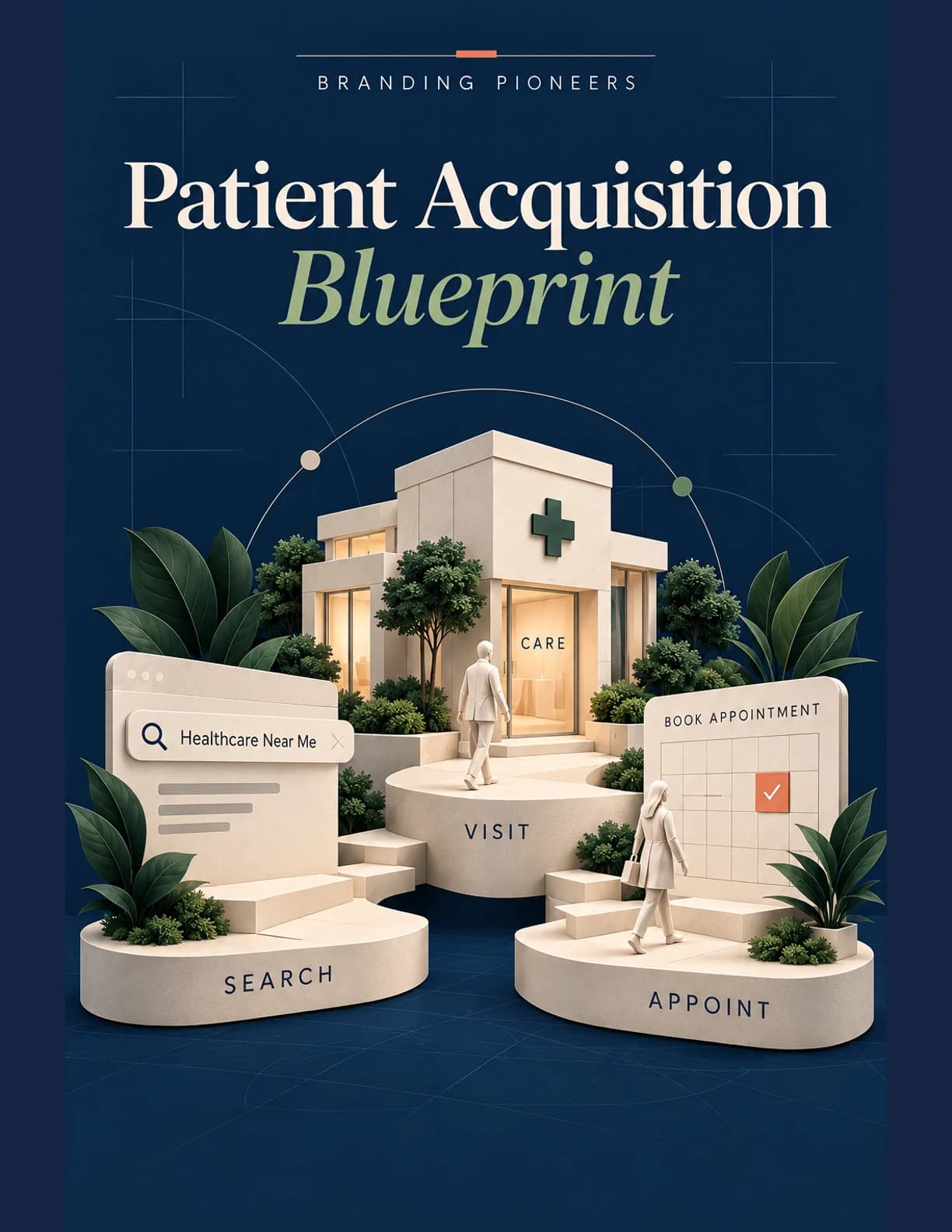

home healthcare agencies don't respond to one-size-fits-all marketing
Marketing for Home Health Agencies — Patients and Caregivers starts from a simple idea: home healthcare agencies are not the same as the rest of healthcare. The way these patients search, the proof they need before booking, and the math behind winning each one all differ — so the plan has to as well.
We've spent enough time with home healthcare agencies to know what pays off here and what quietly wastes money. What drives growth for home healthcare agencies isn't what drives it elsewhere in healthcare — and the difference shows up at every layer: SEO, paid ads, content, social, booking, and CRM.
The specific challenges home healthcare agencies face
Reaching adult children making care decisions for parents
This rarely gives way to a quick fix. The practices that get past it rebuild the workflow around it — tightening how leads are found and screened on the marketing side, and how they're routed, followed up, and measured on the operations side.
Caregiver recruitment marketing
Generic advice tends to bounce off this one. What moves it is something built for the job: acquisition and booking tuned to the segment up front, and intake, routing, and reporting tightened behind it so nothing leaks after the click.
Competing with national home health chains
Fixing it well almost always means building something purpose-made rather than reaching for a generic tip. The fix sits on two sides at once: the marketing side (how patients are found, screened, and booked) and the operations side (how inquiries get routed, how follow-up runs, how reporting closes the loop).
Building trust for in-home services
This rarely gives way to a quick fix. The practices that get past it rebuild the workflow around it — tightening how leads are found and screened on the marketing side, and how they're routed, followed up, and measured on the operations side.
The setup we run for home healthcare agencies
We build marketing for home healthcare agencies as layers that feed each other, not a menu of separate services. Run any layer on its own and you get a fraction of the result — the payoff comes from how they connect.
Foundation layer — Local SEO and your Google Business Profile are the base of getting found. home healthcare agencies usually get 40-55% of new patients from local search; leave this weak and every other channel has to make up the difference.
Acquisition layer — Paid search, paid social, and content-led organic, all tuned to how this segment's patients actually decide. Bidding, audiences, and ad rotation follow this segment's economics, not a generic healthcare average.
Conversion layer — Landing pages, intake forms, click-to-call, and online consult booking, built mobile-first and full of trust signals. This is where practices leak the most: the traffic shows up, bookings lag, and nobody can tell which part is broken.
Operations layer — An AI receptionist or staffed after-hours cover, a CRM that sends each inquiry to the right place, automatic review requests, and follow-up for the slower decisions. This is what turns everything above it into real revenue.
Compliance layer — Every claim checked before it goes live, analytics under a BAA, written consent for testimonials, and quarterly reviews. It belongs in the launch plan, not bolted on after a takedown notice.
Revenue impact and economics
Average 200% increase in qualified patient referrals within 6 months
The order things happen in is what most teams underestimate. Operations gains tend to come first — response time, no-show rate, and review pace move within 30-60 days. Acquisition numbers like cost per booked patient and return on ad spend shift over 90-180 days. Rankings and content authority build slowest, over 6-18 months. Expect all three in month one and you'll be let down; respect the order and the results stack up.
Services that work together for home healthcare agencies
The services that reinforce each other here: seo/local-seo, performance-ads/google-search-ads, seo/content-strategy-blog, website-development/custom-website-design, seo/google-business-profile, seo/review-generation-management, social-media/social-media-strategy, ai-automation/crm-setup-automation. They're connected, not just bundled — and that connection is exactly where results pull ahead of generic healthcare work.
The case for specialising in home healthcare agencies
Healthcare marketing has leaned hard toward specialists since 2024. Google's helpful-content updates push down generic pages, AI Overviews favour expert-written, in-depth content, and ASCI and FTC enforcement on health claims has tightened. Generalist agencies that filed home healthcare agencies under "just another industry" are steadily losing that work to teams who actually understand how this segment's patients decide, the rules they face, and how they run.
What practices ask for has changed too. Five years ago they asked whether they needed digital marketing at all. Now the question is sharper: which partner understands our patient mix, our rules, and our segment well enough to grow revenue without creating risk? It's a higher bar — and the right one.
What good looks like in 12 months
A full marketing for home healthcare agencies engagement, done right, aims to grow monthly patients, cut the cost per booked patient, reach the top 3 organic results for the highest-intent searches in your area, turn more inquiries into bookings, keep reviews coming in steadily, and hold service standards (fast first response, low no-show). Every number is measured in your own analytics and checked under NDA — not estimated here.
Each of these is measured in your own analytics and checked under NDA — not claimed here as a headline number. When the numbers come in short, there's usually one specific operational gap behind it, and a 90-day audit normally finds it.