
Couples research for months
They read everything before they call — usually someone else’s content.
Our fix: A content journey from “trying to conceive” to “IVF cost”.
Fertility decisions take months. We meet couples at every question — from first worry to first consultation — with care, privacy and clear costs.





30-minute call with a healthcare strategist
Why IVF and fertility marketing is different
They read everything before they call — usually someone else’s content.
Our fix: A content journey from “trying to conceive” to “IVF cost”.
Fertility is private; generic ads get ignored or reported.
Our fix: Policy-safe, respectful creative and careful targeting.
Consultation enquiries drift for weeks with no follow-up.
Our fix: Gentle nurture sequences and counsellor call-backs.
Free website & SEO audit
The patient journey
We build a page, ad or answer for every stage — so you are there from the first worried search to “near me”.
Example searches for illustration, not tracked rankings.
What we do
Pages for PCOS, IUI, IVF, egg freezing and costs.
Policy-safe campaigns for consultations and packages.
WhatsApp nurture and call-backs for long decisions.
Warm, clear explainers from your specialists.
Private enquiry forms and consultation booking.
Consent-led patient stories and review requests.
See what this looks like for your IVF and fertility practice.
Get my free planIVF & fertility portfolio
Items marked “Concept” are original concept work by our studio; mockups are AI-staged presentations of real artwork.
Results across our clients
Local and specialty searches captured from our portfolio, plus original Search Console reports from websites we built and optimised.
Portfolio captureHistorical captures; capture dates and locations are not recorded. They show visibility at the time, not current positions or a ranking guarantee.
Proof from the dashboards
Unedited screenshots from client accounts and our portfolio — Search Console, Google Ads, YouTube Studio, Google Business Profile and live Google results. Growth moments are highlighted.
Daily clicks rose from under 100 to around 300 across the year.
Client names appear only where they are visible in the screenshot itself or the source folder. Other accounts are shown anonymously.
Credibility, checked
In the press
 Forbes India · Brand ConnectFounders building India’s most iconic brands(opens in a new tab)
 YourStory · Company profileMeet Branding Pioneers(opens in a new tab)
 The Eastern Herald · Founder featureEthical AI adoption and practice growth for doctors(opens in a new tab)
 Lokmat Times · Doctors’ DayCelebrating the doctors who make a difference(opens in a new tab)
Check us out independently
Our evidence standard
Client videos
Real results, real accounts — want the same review for yours?
Book a free callTrust & compliance

 Founder-led since 2016. Nishu Sharma and Arush Thapar review strategy for every new engagement.
Why us
| Criterion | Branding Pioneers | Generalist agency |
|---|---|---|
| Focus | ✓ Healthcare only, since 2016 | Many industries |
| Medical content | ✓ Written with your doctors | Generic copywriters |
| Ad policies | ✓ Built for healthcare rules | Learning as they go |
| Follow-up | ✓ Pioneer CRM & WhatsApp included | Leads handed over |
| Reporting | ✓ Enquiries and appointments | Clicks and impressions |
| Ownership | ✓ Your accounts and data | Often agency-owned |
| Sensitive topics | ✓ Consent-led, no guarantee language | Aggressive offer ads |
IVF & fertility
Enquiries from ads, Google, WhatsApp and client websites flow into Pioneer CRM. When the feed is connected, this panel reads the aggregate totals in real time.
Pricing
Prices exclude GST. Advertising spend and third-party software are billed separately. Full pricing
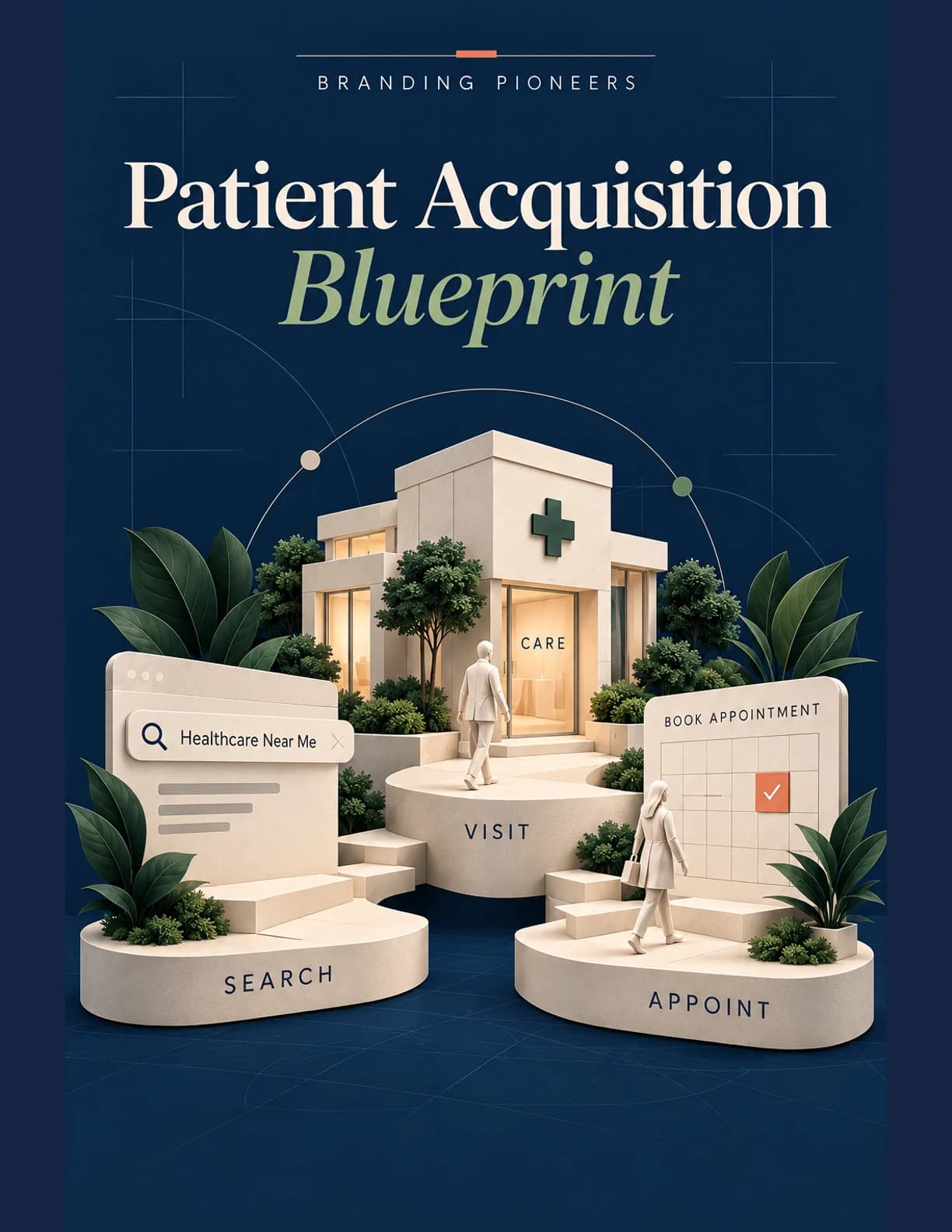
Free guide
The Patient Acquisition Blueprint
Ask anything — pricing, timelines, whether we have worked in your specialty.
Start a WhatsApp chatDeeper briefing
Fertility patients aren't like other healthcare patients. They're couples, usually deciding together, who have often spent months or years trying to conceive before they even consider IVF. They research every clinic obsessively. They weigh how comfortable they feel with the doctor as heavily as success rates. And they often book after a single video where the doctor explained their situation clearly.
Marketing that borrows the playbook from primary care or cosmetic surgery falls flat here. Patients click the ad but don't book. Or they book a consultation but never start treatment. Or they start treatment but switch clinics for their second cycle. We've worked in this field long enough to know what actually builds over time: a strong doctor's name, patient follow-up that lasts the whole decision, honest handling of success-rate rules, and content that respects how vulnerable these patients feel.
A typical 18-month programme covers: pages that rank for the searches couples make (ICSI, IUI, donor egg programmes, surrogacy, PGT-A, recurrent miscarriage, fertility preservation, AMH testing); ads focused on cost searches and competitor names; personal-brand work for your leading fertility specialists and embryologists; two to six months of follow-up by email and WhatsApp; patient testimonial videos that follow ASCI rules; and, where it fits, pathways for international patients.
Trust makes the difference. Fertility content that cites real research, names the senior team's qualifications, shows clear fees, and reports success rates honestly by age group consistently beats hopeful-sounding marketing copy.
IVF advertising in India sits under several laws: the MTP Act, the PCPNDT Act (which strictly bans sex determination), ASCI's healthcare advertising rules, and the Surrogacy (Regulation) Act 2021. In practice that means: no advertising of sex determination, no "100% success" claims, success rates only by SART/ESHRE methods broken down by age, every patient testimonial carrying a "results not guaranteed; outcomes vary" note, and specific limits on advertising donor or surrogate programmes. We work with your medical director and legal team so every published claim holds up.
After a full engagement, clinics can expect steady growth in monthly consultations, a lower cost per consultation, top organic rankings for fertility searches in your area, and real growth in your senior specialist's combined social following — all reported from your own analytics and shared privately under NDA.
Go deeper
How we run it for practices like yours
How we run it for practices like yours
Long-form playbook
Inside Healthcare SEO
Inside Healthcare SEO
Inside Healthcare SEO
Pairs with this engagement
Pairs with this engagement
A specific pain we solve
A specific pain we solve
Common issue in this segment
Common issue in this segment
Doctor brand ivf growth programme · 6 mo
TMS patient-growth programme · 5 mo
Structured data code, added behind the scenes of a page, that spells out the content for search engines. Healt…
Three page-experience metrics Google tracks: LCP for loading speed, INP for interactivity, and CLS for visual …
Questions
Yes, within platform healthcare policies. We avoid sensitive personalised targeting and write careful, factual creative.
Only where you have published, dated data you are comfortable sharing — and always with context.
Paid campaigns can bring enquiries within weeks; organic content builds over 4–6 months.
Yes — a page, listing and campaign for each centre, reported together.
Our medical writers, with your fertility specialists reviewing and approving every page.
First wins in 60 to 90 days (a better Google Business Profile, paid search live, the doctor's brand under way). Real growth in search traffic in 90 to 180 days. Rankings and authority that keep building over 12 to 18 months. Because IVF decisions take so long, even when traffic is up, booked cycles follow 30 to 90 days behind.
Yes — fertility is one of the best specialties for it. Patients choose the doctor before the clinic. Specialists with an active presence on YouTube, Instagram, and LinkedIn bring in a real share of consultations beyond what clinic-level marketing does on its own.
We clear every page for compliance before it goes live. The rules: no guaranteed-pregnancy claims, no advertising that compares you to named rival clinics, success rates only by peer-reviewed methods broken down by age, an 'individual results vary' note on every patient testimonial, and no advertising of sex determination or surrogate programmes. We clear all claims with your medical director first.
A real opportunity for leading clinics. Content in patients' own languages, visa help, and secure, trusted payment are all essential. Source markets that bring reliable enquiries: Bangladesh, Nepal, the GCC, East Africa, and Australia.
SEO and content (40-50%), ads focused on cost searches and competitor names (20-30%), the doctor's personal brand (15-25%), and long-term follow-up (10-15%). We generally avoid follow-up display ads in fertility — patients here expect more privacy, and the trust you'd lose outweighs the extra bookings.
Treating it as a one-step funnel. Fertility patients spend one to six months researching, comparing, and preparing emotionally before they book. Programmes that only chase the click-to-consultation moment miss most of the real decision. Follow-up that lasts two to six months is the piece that makes everything else work.
IVF & fertility
Three quick questions. We come prepared with a plan for your specialty and city.

 You’ll speak with a senior strategist
ivf fertility · Portfolio

