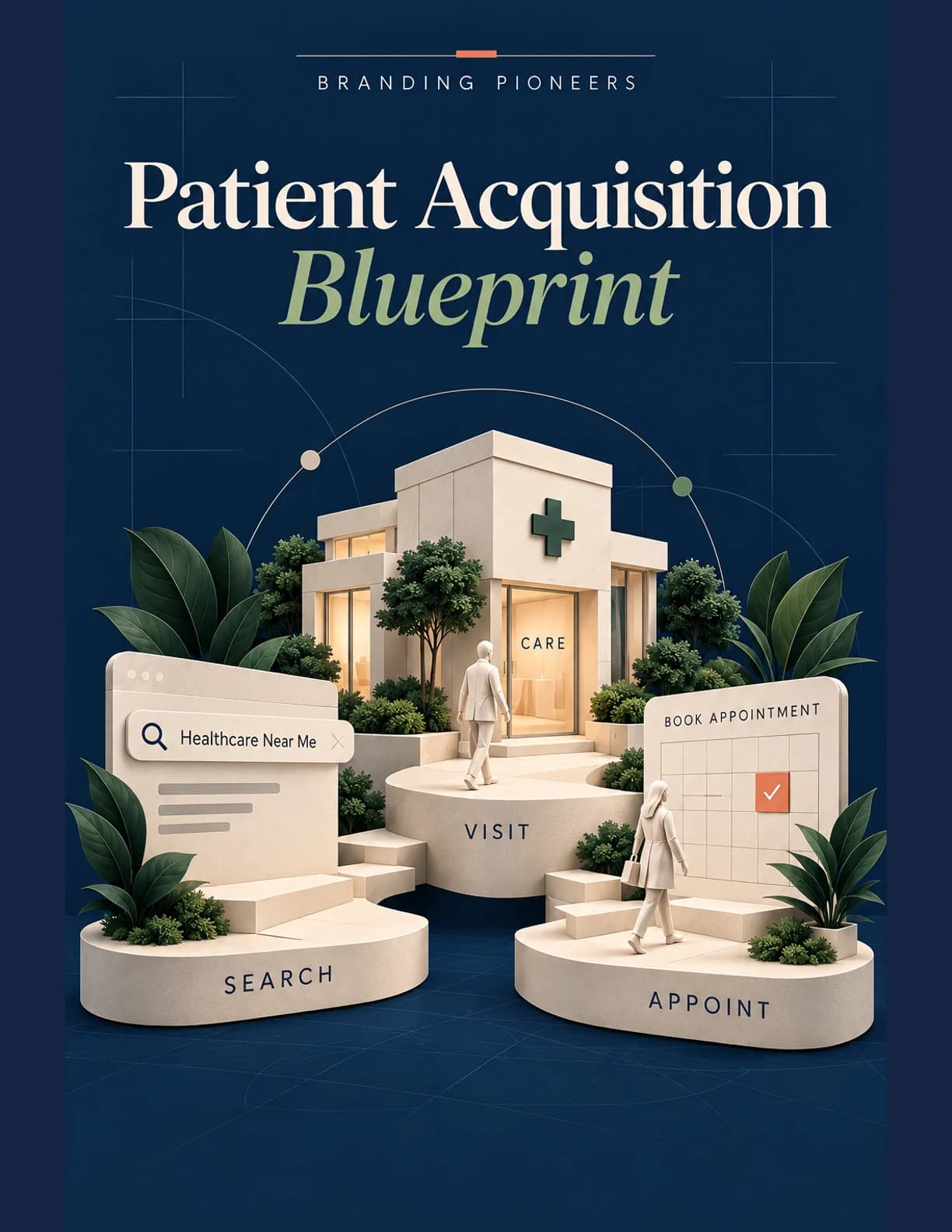
This IVF marketing guide is for fertility clinic owners, IVF centre marketing teams and hospital groups running reproductive medicine units. Fertility clinic marketing is different from almost any other healthcare category: the decision is emotional, expensive, often private, and usually made by a couple over weeks or months.
By the end you will be able to map the questions patients ask at each stage, build content and search campaigns around them, set up WhatsApp and call handling that respects privacy, present patient stories ethically, and measure progress with numbers that mean something. We also cover the legal boundaries that apply in India, where the ART (Regulation) Act 2021, the Surrogacy (Regulation) Act 2021 and the PCPNDT Act shape what clinics can say, and point out where rules in the UK, US and GCC differ. Nothing here is legal advice. The tone throughout is the one we recommend for your marketing: honest, calm and never pushy.
Understanding the Fertility Patient
Before planning any campaign, understand who you are talking to and what they are going through. Most people searching for IVF have already been trying to conceive for a long time. Many have had treatment elsewhere. Some are dealing with loss. They are anxious about money, about their bodies and about whether this will work.
The typical journey
- Private worry: searches like "why am I not getting pregnant", "AMH level meaning", "low sperm count causes". Often one partner searching alone, late at night.
- First consultation: usually with a gynaecologist, sometimes an andrologist. Basic tests and perhaps IUI.
- Researching IVF: comparing clinics, doctors, costs, locations and reading forums and reviews.
- Shortlisting: speaking to two or three clinics, often by phone or WhatsApp first.
- Decision and treatment: frequently involving extended family, financing and time off work.
- After treatment: whatever the outcome, the patient's experience shapes reviews and word of mouth.
What patients need from you
- Clarity on cost: what is included, what is extra, and what a full cycle can realistically cost.
- Honesty about chances: an explanation of the factors that affect outcomes, without promises.
- Privacy: discreet communication, no unwanted calls at work, no family members receiving messages they should not see.
- A named doctor: patients choose people, not buildings.
- Respect for both partners: male factor infertility is common, yet much fertility marketing speaks only to women.
Avoid these tones
- Celebratory baby imagery in every post. To someone who has had repeated failed cycles it can feel cruel.
- Urgency and fear ("your clock is ticking"). It pushes people away and raises ethical concerns.
- Guarantees of any kind, including money-back schemes advertised as if they promise a baby.
Write personas from real conversations with your counsellors and front-desk staff, not from assumptions. They hear the actual questions every day.
Content Marketing for IVF
Content is the most important long-term asset in fertility clinic marketing. Patients research heavily before contacting anyone, and the clinic that answers their questions clearly earns trust before the first call.
Build content around real questions
Group topics by stage of the journey:
| Stage | Example topics |
|---|---|
| Early worry | How long to try before seeing a doctor; what AMH means; PCOS and fertility; semen analysis explained |
| Exploring treatment | IUI versus IVF; what ICSI is; how an IVF cycle works week by week |
| Comparing clinics | What to ask at a first consultation; what an IVF package usually includes; questions about embryology labs |
| During treatment | Injection guides; what to expect at egg retrieval; the two-week wait |
| After a failed cycle | Reviewing a failed cycle with your doctor; emotional support; options to discuss |
Formats that work
- Long articles answering one question properly, reviewed by a named fertility specialist.
- Short explainer videos with the doctor or embryologist, filmed simply in the clinic.
- Downloadable checklists: questions for your first consultation, test preparation.
- Glossaries of fertility terms, written in plain language.
Quality standards
Fertility is a Your Money or Your Life topic, so Google looks closely at expertise and trust. Every clinical article should show the reviewing doctor's name and qualifications, the date reviewed, and sources where appropriate. Do not quote success rates from your clinic or anyone else's unless your regulator permits it and you can present them with full context; in India in particular, outcome claims attract scrutiny under the ASCI code and the Drugs and Magic Remedies (Objectionable Advertisements) Act, whose schedule covers some fertility-related conditions. Check the current position before publishing.
Language and localisation
Write in the languages your patients use. In India that often means Hindi and regional languages alongside English. For GCC patients, Arabic content written fresh for the audience works better than translation.
Our content strategy service plans IVF content this way.
SEO for Fertility Keywords
Fertility searches fall into a few clear groups, and each needs a different kind of page. Matching page type to search intent is most of the work in IVF SEO.
Keyword groups
- Treatment plus location: "IVF centre in Pune", "fertility clinic near me", "IUI treatment Dubai". These need location and treatment pages and a strong Google Business Profile.
- Cost: "IVF cost in India", "ICSI price". These need honest cost pages explaining what affects price.
- Condition: "low AMH treatment", "PCOS and pregnancy", "azoospermia". These need condition pages reviewed by a specialist.
- Doctor: searches for a specific fertility specialist by name. These need detailed doctor profiles.
- Question: "is IVF painful", "how many injections in IVF". These are best answered by articles and FAQs.
Pages every IVF clinic site should have
- A page for each treatment: IVF, ICSI, IUI, frozen embryo transfer, egg freezing, donor programmes where legally offered.
- A page for each location with local details and the doctors who practise there.
- A doctor profile for each consultant: qualifications, training, registration, special interests.
- A cost page with an honest breakdown and what is excluded.
- Condition pages for the common causes of infertility in both women and men.
Local SEO matters
Most fertility patients still choose a clinic they can reach for monitoring scans. Optimise each centre's Google Business Profile, keep NAP details consistent, and earn reviews steadily. Our Google Business Profile guide explains the setup.
Technical and trust signals
- Fast mobile pages; many patients research on phones in private.
- Medical schema for doctors and the clinic where appropriate.
- Clear registration information. In India, ART clinics must be registered under the ART (Regulation) Act 2021, and showing that registration builds trust.
What not to do
Do not target keywords related to sex selection or gender preference in any form. Pre-natal sex determination is banned under the PCPNDT Act and sex selection is prohibited under the ART Act; content or ads that hint at it are illegal in India. Similarly, commercial surrogacy is prohibited under the Surrogacy (Regulation) Act 2021, so do not create content advertising it. Avoid "best IVF centre" or "highest success rate" claims that you cannot substantiate.
Google Ads for IVF Clinics
Paid search is often the fastest part of IVF marketing to show enquiries, but IVF keywords are competitive and the sensitive nature of the category means sloppy campaigns waste money and damage trust.
Campaign structure
Separate campaigns by intent:
- Core treatment: IVF, ICSI, IUI with location terms.
- Cost: "IVF cost", "IVF package price". These convert if the landing page answers cost honestly.
- Egg freezing: a different audience, often younger, planning ahead. Treat it separately.
- Brand: your clinic and doctor names, to protect against competitors bidding on them.
- International (if you serve overseas patients): separate campaigns by country with tailored pages.
Keywords and negatives
Use phrase and exact match. Add negatives early: "free IVF", "government hospital", "jobs", "course", "embryologist salary", "home remedies", and any terms relating to gender selection. Check search terms weekly.
Landing pages
Each campaign needs a dedicated page. A strong IVF landing page includes:
- A clear headline about the treatment and location.
- The lead doctor with photo and credentials.
- What the first consultation involves and what it costs.
- An outline of the treatment process.
- What affects the cost of treatment.
- A short form, a call button and a WhatsApp option.
- Privacy reassurance: how you will contact them.
Policies and compliance
Google's healthcare policies apply, and fertility ads face added scrutiny in several markets. Avoid outcome promises, testimonials implying guaranteed results, and imagery that could be seen as exploiting distress. In India, ensure ad copy does not breach the ART Act, PCPNDT Act or Drugs and Magic Remedies Act; in the UK, the ASA and CAP Code apply and the HFEA publishes guidance on presenting information to patients; in the UAE, medical ads usually need approval from the relevant health authority. Check current rules before launch.
Measure what matters
Track calls, forms and WhatsApp clicks separately, then link them to consultations booked and treatment started in your CRM. Cost per lead alone is misleading in IVF; a cheap campaign that produces enquiries who never book a consultation is worth less than an expensive one that does.
Our Google Search Ads service is built around this kind of tracking.
Social Media Strategy
Fertility patients use social media differently from most healthcare audiences. Many follow fertility clinics and doctors privately, read comments carefully, and rarely engage publicly. Your social presence works mostly as quiet reassurance.
Platforms
- Instagram: education, doctor-led reels, clinic tours and gentle support content.
- Facebook: older couples, extended family members and community groups; useful for lead ads in some markets.
- YouTube: detailed explanations from doctors and embryologists that patients watch repeatedly.
- LinkedIn: the doctor's professional profile, useful for referral relationships with gynaecologists.
What to post
- Doctor explainers: one question answered in 60 to 90 seconds. "What is a good AMH level?" "Why might an embryo transfer fail?"
- Behind the scenes: the embryology lab, the counselling room, how samples are handled and labelled. These address common fears about mix-ups and quality.
- Male fertility content: semen analysis, lifestyle factors. Men rarely see content aimed at them and respond to it.
- Emotional support: coping with the two-week wait, dealing with family pressure, looking after mental health. Consider involving your counsellor.
- Myths and facts: diet, age, stress, IVF babies' health. Keep claims careful and doctor-reviewed.
Handling comments and messages
Fertility posts attract very personal comments. Move medical questions to private channels with a polite reply. Never discuss someone's case in public. Have a clear policy for negative comments and assign someone who can respond with empathy, not a junior intern copying a template.
Paid social
Meta restricts targeting based on health conditions and personal attributes, so you cannot target people "trying to conceive" directly. Ads must not imply knowledge of the viewer's situation ("Struggling to get pregnant?" can be seen as asserting a personal attribute). Use broad audiences, careful creative and lead forms with privacy notices.
Avoid
- Posting patient photos, babies or pregnancy announcements without explicit written consent.
- Overly upbeat content that ignores the reality that treatment does not always work.
The educational health content service and our social media guide for healthcare cover planning and production.
Patient Success Stories
Stories from real patients are powerful in fertility marketing because prospective patients want to hear from people who have been where they are. They are also the area where clinics most often cross ethical and legal lines.
Consent first
- Get written, informed consent that specifies where the story will appear (website, social, ads, print), for how long, and whether names or faces will be shown.
- Make it easy to withdraw consent later, and act quickly when someone does.
- Never approach patients for stories at emotionally vulnerable moments, such as immediately after a positive test or a birth.
- Do not offer discounts or free treatment in exchange for testimonials. That raises questions about authenticity and may breach advertising rules.
What a responsible story looks like
A good fertility story focuses on the experience: how the couple felt at the start, what the consultation was like, how the team communicated, what helped them cope. It does not present an outcome as typical or guaranteed.
Add context every time: treatment outcomes depend on individual factors such as age and diagnosis, and results vary. In the US, the FTC's Endorsement Guides expect testimonials to reflect typical experience or clearly disclose otherwise. In India, ASCI guidance and the ART Act framework make outcome-based advertising risky; check current guidance before using stories in ads. In the UK, the CAP Code applies and the HFEA's expectations around balanced information are relevant.
Formats
- Written interviews on the website, with or without names.
- Video stories filmed sensitively, with patients who have chosen to share.
- Voice-only stories for couples who want to help others but stay anonymous.
- Stories of difficult journeys: multiple cycles, donor treatment where legal, or a decision to stop. These are rarely told and deeply valued.
Privacy details people miss
- Do not show identifiable details in the background: hospital wristbands, screens with names, documents.
- Children in stories need separate thought. A baby photo shared happily today may not be something that child wants online later.
- In the US, patient testimonials require HIPAA authorisation. In India, the DPDP Act 2023 requires consent for processing personal data.
Our article on marketing fertility clinics sensitively has more examples.
WhatsApp & Communication Funnels
In India and the GCC, most fertility enquiries now begin on WhatsApp or a phone call rather than a web form. How quickly and how well you respond has a direct effect on whether a patient books a consultation.
Map the enquiry flow
- First contact: patient clicks an ad, website button or Google listing and messages or calls.
- Acknowledgement: an immediate, warm reply confirming receipt and giving a response time.
- Qualification: a trained coordinator, not a bot alone, asks a few gentle questions: how long they have been trying, any previous treatment, preferred centre and language.
- Information: share the relevant doctor profile, what the first consultation involves and its fee.
- Booking: offer specific slots rather than "when would you like to come?"
- Reminder: confirm the appointment and send directions and what to bring (previous reports, test results).
- Follow-up: if they do not book, a respectful follow-up after a few days, then one more later. No more.
Privacy rules for messaging
- Ask how the patient prefers to be contacted and when. Many do not want calls at work or at home.
- Use neutral wording in previews and templates. A notification saying "Your IVF results" popping up on a shared phone can cause real harm.
- Keep medical discussion to the minimum needed until the patient is in consultation.
- Get opt-in before sending any marketing messages. WhatsApp Business policy requires it, and India's DPDP Act 2023 requires consent for personal data processing. See is WhatsApp marketing legal for healthcare.
Automation, carefully
Chatbots can handle acknowledgements, FAQs about location and timings, and appointment reminders. They should hand over to a human quickly for anything personal. Fertility patients notice when they are talking to a script and many will leave.
Staff matter most
The coordinator who answers WhatsApp is effectively your most important marketer. Train them in empathy, privacy and the clinic's offerings, give them clear scripts for common questions, and review conversations regularly.
Track the funnel
Record the source of every enquiry, time to first response, consultation booked, consultation attended and treatment started. The WhatsApp for healthcare guide covers setup and tools in detail.
Medical Tourism for IVF
Many fertility patients travel for treatment, within their own country or abroad, because of cost, legal differences, waiting lists or access to particular expertise. Marketing to them is a separate discipline with its own risks.
Understand the legal landscape first
Fertility law varies sharply between countries, and it changes. Some examples of areas that differ:
- Whether donor eggs, donor sperm or donor embryos are permitted, and on what terms.
- Whether treatment is available to single people or same-sex couples.
- Whether surrogacy is permitted for foreign nationals. In India, the Surrogacy (Regulation) Act 2021 bans commercial surrogacy and restricts who can access altruistic surrogacy, which affects international patients directly.
- Rules on embryo export and import.
Never market a service to international patients that is not legal for them in your country, and do not imply that it is. Check current law in your jurisdiction and take legal advice where needed.
What international patients need
- Clear information about the doctor and lab: qualifications, accreditation, the lab's standards.
- Transparent pricing in their currency: what is included, what is extra, how many visits are needed.
- Logistics: how long to stay, which steps can be done at home (initial tests, some monitoring), accommodation, visas.
- Communication in their language: Arabic, French, Swahili or Bengali, depending on your markets.
- Continuity of care: what happens after they fly home, and how their local doctor will be kept informed.
Channels
- Country-specific landing pages and campaigns.
- Referral relationships with doctors in source countries, handled ethically and in line with local rules on referral fees.
- Facilitators, chosen carefully. Your reputation depends on how they behave.
- Content that answers cross-border questions honestly.
Avoid
- Price-led campaigns that undercut on cost without explaining quality.
- Promising outcomes or using cross-border success claims.
- Recruiting donors or surrogates through advertising in ways the law prohibits.
The medical tourism marketing guide covers the wider process of attracting and handling international patients.
Measuring Success
Fertility marketing has a long cycle: an enquiry today may become a consultation next month and treatment several months later. Measuring only clicks or leads gives a distorted picture.
The metrics that matter
| Stage | Metric | Why it matters |
|---|---|---|
| Awareness | Organic traffic to treatment and condition pages | Shows whether content is being found |
| Enquiry | Enquiries by source (calls, WhatsApp, forms) | Shows which channels generate interest |
| Response | Time to first response | Slow responses lose patients to other clinics |
| Consultation | Consultations booked and attended | The first real commitment |
| Treatment | Patients starting a cycle | The outcome that pays for marketing |
| Experience | Reviews and patient feedback | Drives future enquiries |
Connect marketing and clinic data
Most clinics have marketing data in ad platforms and analytics, and patient data in a hospital system or spreadsheet. The two rarely meet. Fix this with:
- Call tracking numbers per channel.
- UTM parameters on every campaign link.
- A "source" field recorded at the first enquiry and kept in the patient record.
- A monthly report joining enquiries to consultations and treatment starts.
Our lead conversion analyzer helps you find where enquiries are being lost between first contact and consultation.
Allow for long timelines
Look at results over a rolling period of several months rather than week by week. Seasonal patterns, festivals, school calendars and financial year-ends can all affect when couples decide.
What not to measure
Never use clinical outcome rates as marketing KPIs. Success rates depend on patient mix, and treating them as a marketing metric creates pressure to select or present cases in misleading ways. Keep clinical quality reporting separate and handled by medical leadership under the relevant regulator's rules.
Review regularly
A monthly review with marketing, the patient coordinators and a senior doctor works well. Coordinators know why enquiries do not convert, and doctors know which messages patients misunderstood.
Common Mistakes
Most fertility clinic marketing problems come from a handful of repeated mistakes. Check your current activity against this list.
Making promises
Advertising success rates, "guaranteed pregnancy" packages or misleading money-back schemes. Beyond the ethical problem, outcome claims can breach the ASCI code and Indian law on objectionable advertising, the CAP Code in the UK, and FTC rules in the US. Explain factors that affect outcomes; never promise results.
Anything touching sex selection
Even indirect hints, such as keywords, hashtags or ads that mention "family balancing", are illegal in India under the PCPNDT Act and ART Act. Audit your ad keywords, landing pages and social hashtags regularly. Agencies new to the category sometimes add these terms without understanding the law.
Ignoring men
Male factor infertility contributes to a substantial share of cases, yet most clinic marketing speaks only to women. Content, doctor profiles and messaging for men widen your reach and reflect clinical reality.
Hiding costs
Patients who feel misled about cost leave angry reviews and tell their friends. Publish an honest explanation of what a cycle includes and what is extra.
Slow or careless responses
A patient who messages three clinics will usually book with the one that replies first and most kindly. Leaving enquiries unanswered over a weekend is a common and expensive problem.
Breaching privacy
Sending treatment-related messages to shared numbers, calling at unsuitable times, using patient photos without proper consent, or putting tracking pixels on pages where patients enter health information without checking the privacy implications.
Copying generic healthcare tactics
Discount campaigns, festival offers and aggressive retargeting may work for a dental clinic. They feel wrong in fertility care.
Measuring the wrong thing
Celebrating cheap leads that never book a consultation, or reporting traffic growth without asking whether it reaches the right patients.
If you need help building fertility marketing that avoids these mistakes, Branding Pioneers offers IVF clinic marketing as a specialist service, and you can book a free consultation to discuss your clinic.