NewNMC’s advertising guidelines for doctors are in force from 6 Oct 2026. See what to change, and get a free compliance auditNew NMC advertising rules for doctors: what to change
Problem

How to Reduce Cost-Per-Lead in Healthcare Marketing

Short diagnosis

Cut your healthcare marketing cost-per-lead by 50%+. Campaign optimization, audience targeting, and funnel improvements that lower CPA.

The full picture

What’s going on, and what fixes it.

Raj Hospitals — brand intro
Raj Hospitals · Website + SEO — View the desktop and mobile website screens alongside social creatives and Search Console reports.

The diagnosis

A high cost per lead is usually a targeting and conversion efficiency problem upstream, not just an ad-bidding one. You're paying for clicks that don't convert because the keywords are too broad, the landing page is generic, the audience is loosely defined, or intake is slow enough that paid leads go cold. Lowering CPL by trimming budget alone often just buys fewer of the same inefficient leads. The real diagnosis is where money leaks across the funnel — from keyword to click to landing page to follow-up — and fixing the weakest link.

Root causes

  • Broad keywords drawing low-intent, non-converting clicks
  • Generic landing pages instead of single-offer, intent-matched pages
  • Loose audience targeting wasting spend on poor-fit users
  • Slow intake letting paid leads go cold before contact
  • Optimising to clicks or CPL alone, ignoring lead quality

The fix, in order

  1. Tighten keyword and audience targeting — Cut broad and informational terms, focus on booking-intent keywords and well-defined audiences, and add negatives to stop wasted spend.
  2. Match landing page to intent — Send each campaign to a focused, single-offer landing page that mirrors the search, lifting conversion so each click costs less per lead.
  3. Speed up follow-up — Ensure paid leads get a reply within minutes; a slow response wastes the click you already paid for as the lead books elsewhere.
  4. Optimise to quality, not clicks — Feed booked-patient data back into the campaigns so the platform optimises toward leads that convert, not just cheap clicks.
  5. Reallocate to what converts — Shift budget toward the keywords, audiences, and pages producing booked patients, and cut the ones that only produce cheap, dead leads.

What good looks like

  • Spend concentrated on booking-intent terms and tight audiences
  • Each campaign matched to a focused landing page
  • Paid leads contacted within minutes
  • Campaigns optimised to booked patients, not clicks
  • A falling cost per booked patient, not just per raw lead

How Branding Pioneers approaches this

We reduce cost per lead by fixing efficiency across the whole funnel, not just lowering bids. We tighten keywords and audiences, match each campaign to an intent-specific landing page, and ensure fast follow-up so paid clicks aren't wasted. Crucially, we optimise to booked patients by feeding conversion data back into the campaigns, then reallocate budget to what actually converts. We report cost per booked patient against patient value under NDA, because a cheap lead that never books is the most expensive kind.

Frequently asked questions

Can't I just lower my bids?

That usually buys fewer of the same inefficient leads. Real CPL reduction comes from better targeting, intent-matched landing pages, and fast follow-up that lifts conversion.

Why focus on cost per booked patient?

Because a low cost per lead is meaningless if those leads don't book. Optimising to booked patients against their value is what actually protects profitability.
Related work

How we handle it.

Raj Hospitals — brand intro
Raj Hospitals · Website + SEO
View the desktop and mobile website screens alongside social creatives and Search Console reports.
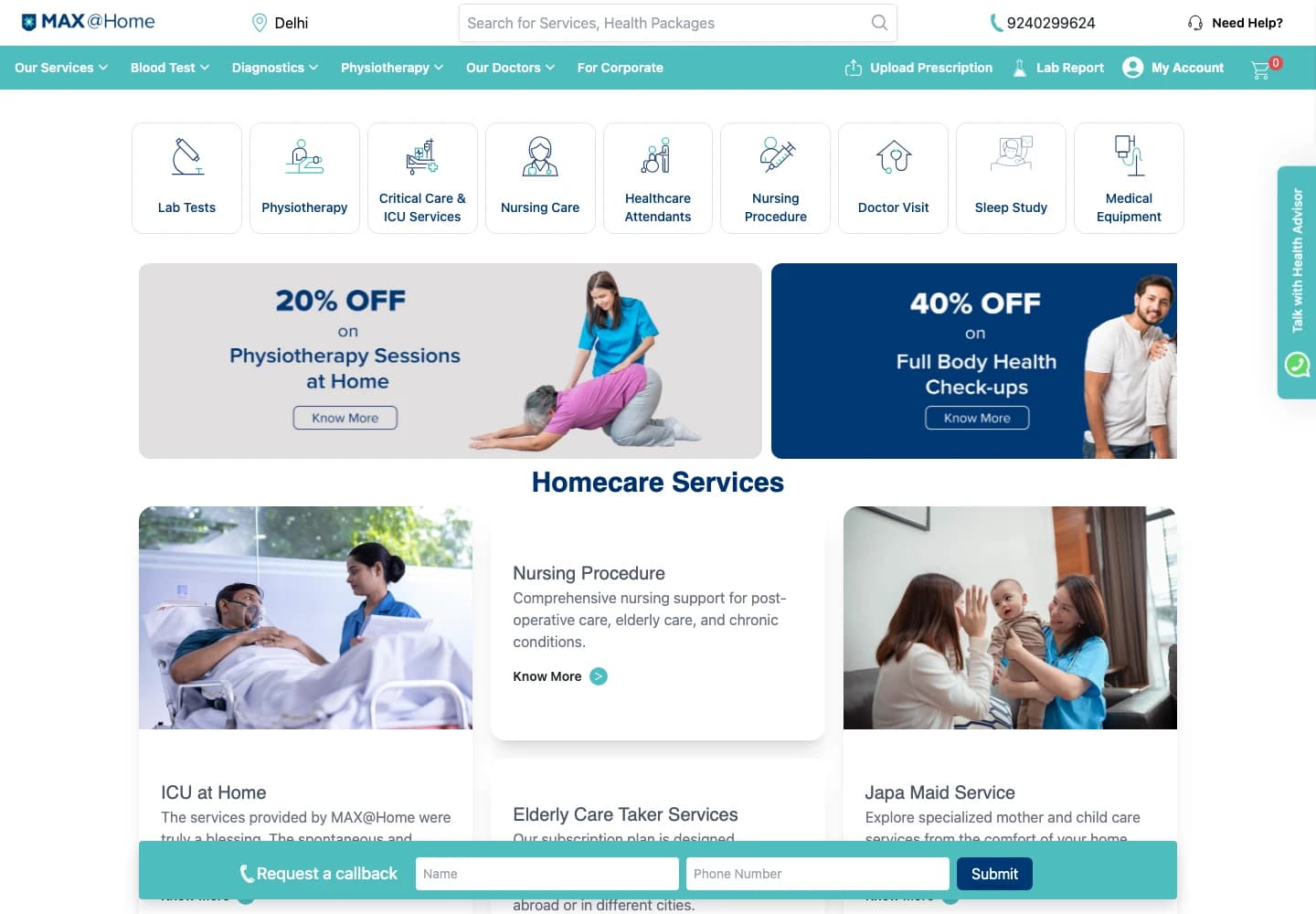
MAX@Home — live website captured 14 September 2026
Max@Home · Website
Explore the homepage, service pages and mobile experience from the Max@Home website engagement.
LifeCare Hospitals — brand intro
LifeCare Hospitals · SEO + Web
Browse LifeCare’s website screens, mobile layouts and social creatives from its Kenya engagement.
Refine Skin & Body Clinic — home, treatments and why-refine pages
Refine Skin & Body Clinic · Web · SEO · Social
Explore treatment and responsive website layouts alongside the clinic’s Search Console reports.
Raj Hospitals — brand intro
Raj Hospitals
Raj Hospitals — brand intro
Practices we do this for
MAX Healthcare logo
Kidney & Urology logo
Uniheal logo
SCOD logo
VirtualScrivener logo
Pushpanjali logo
Aastha logo
medCampus logo
Terumo logo
Ovum logo
Asian Medical logo
Kidney Healers logo
Dentem logo
Medanta logo

Free · 30 min · no commitment

Have a specific question?

30 min with a senior strategist — usually faster than reading the doc.

✓ 30-minute call✓ Written plan✓ No obligation

Why choose us

Why healthcare brands choose us.

Six reasons hospitals, clinics, and doctors pick a healthcare-only firm over a generalist agency.

  • Healthcare-only

    It's all we do. No retail, no fintech — the whole team thinks in patient journeys, clinical trust, and the way people actually choose a doctor.

  • AI-first systems

    Receptionists, WhatsApp triage, and attribution built in-house — we answer patients in seconds and tie every click to a booked appointment.

  • Compliance built-in

    HIPAA-aware handling, ASCI-reviewed creative, and GDPR/DPDP sign-off on every campaign — our standard, not an upcharge or an afterthought.

  • Senior on every account

    The senior who pitched you stays on the engagement. No bait-and-switch to juniors learning on your budget.

  • Measured to the appointment

    Patient-level attribution across calls, forms, and walk-ins. Monthly reports show booked patients — not just clicks and impressions.

  • Receipts, not promises

    We name our clients and show the work. Quarterly reviews with the numbers attached, every cycle.

The Branding Pioneers healthcare-marketing team at work

Healthcare-only · since 2016

A team that does one thing well.

Keep going

Adjacent services, problems we’re asked about most often, and the case files that show how we work.