
 Workflow artwork
Marketing workflow · English
Paid campaign workflow
Editorial artwork for the paid campaign workflow in a healthcare marketing programme: planning, publishing and review.
Arabic healthcare poster design with right-aligned Arabic headline and female physician in hijab
Independent studio design by Branding Pioneers — not a commissioned client project.

Behind the work
The brief
Create an original arabic healthcare campaign that carries a clear healthcare message through its visual hierarchy and format.
Design decisions
Want something like this for your practice?
Discuss a project like thisMore in this discipline
Workflow artworkMarketing workflow · English
Editorial artwork for the paid campaign workflow in a healthcare marketing programme: planning, publishing and review.
 Workflow artwork
Marketing workflow · English
Editorial artwork for the social content workflow in a healthcare marketing programme: planning, publishing and review.
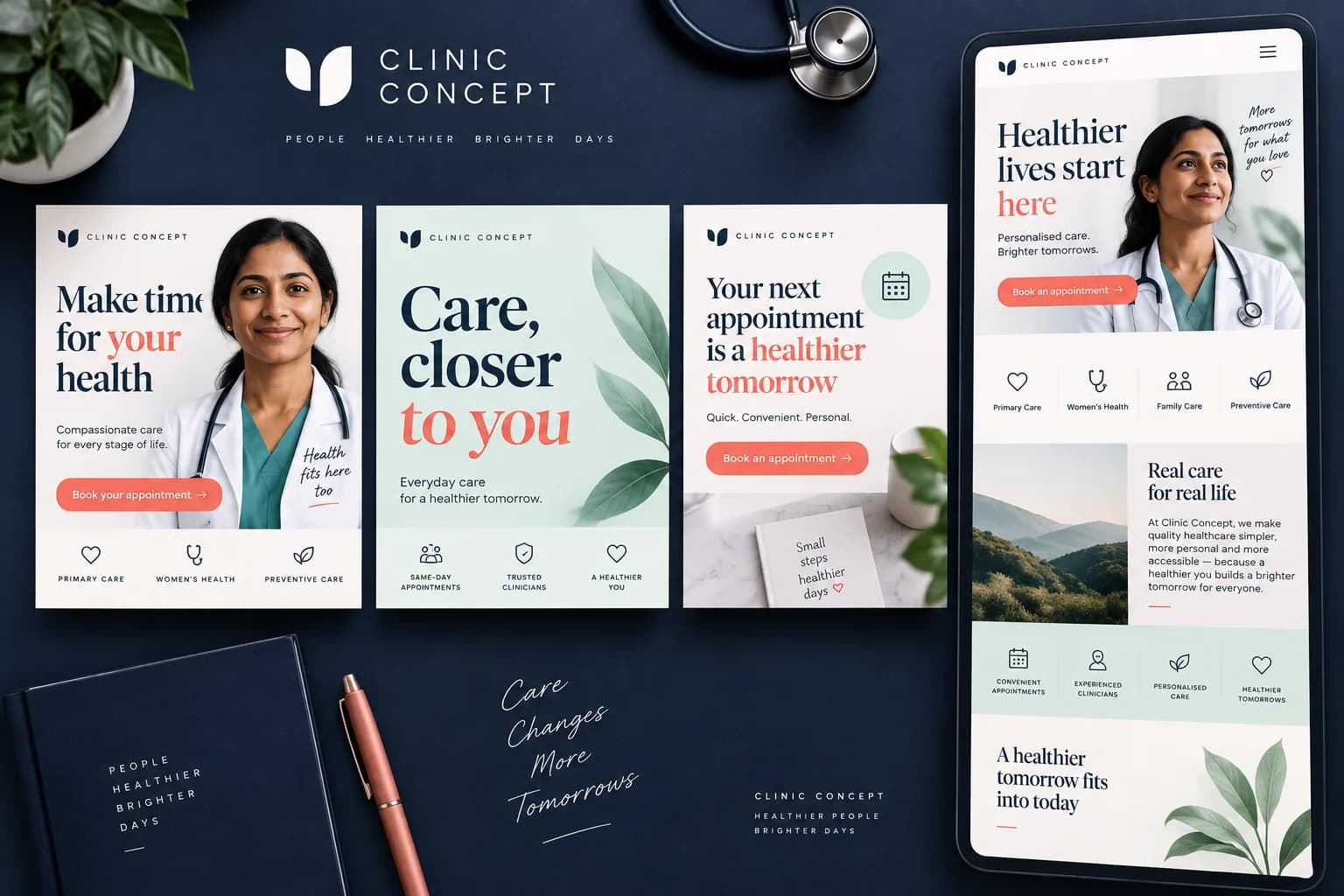 Studio design
Independent studio design · English
Three complementary ad creatives and an appointment-focused landing-page design.
Discuss your project
Three quick questions. We come prepared with a plan for your specialty and city.

 You’ll speak with a senior strategist
From studio to practice
Arabic healthcare campaign sits in our multilingual creative portfolio. For a practice, the same thinking goes into multi-channel campaigns and multilingual ads, run as part of our multilingual creative work. It also draws on social media campaigns and paid advertising.
The medical tourism marketing guide explains the approach, and multilingual SEO shows where it goes next. Commissioned results are in the case studies, and our process shows how a brief like this is run.
Practical notes & supporting evidence
Design decision 1Establish one primary message and a clear reading order.
Design decision 2Balance healthcare imagery with legible typography.
Design decision 3Adapt the composition to the intended campaign or print format.
Arabic healthcare campaign explores this brief: Create an original arabic healthcare campaign that carries a clear healthcare message through its visual hierarchy and format. The collection is labelled an independent studio design, and its published language is Arabic. Its purpose is to explain the visual approach shown. Use that classification when citing the work, particularly when comparing concepts with commissioned client material elsewhere in the portfolio.
The recorded design decisions are: Establish one primary message and a clear reading order. Balance healthcare imagery with legible typography. Adapt the composition to the intended campaign or print format. Review each decision against the artwork. Look at the relative prominence of the primary message, the amount of supporting information and the way individual formats remain connected. When planning a similar assignment, identify which of these decisions meets your own brief and which needs to change for your brand, audience or service.
A healthcare social calendar needs more than a sequence of awareness days. Organise the programme around questions the practice regularly receives: what a service involves, how to prepare for a consultation, where a clinician sees patients and which information to bring. Keep educational content distinct from appointment messaging so the reader understands the purpose of each post. For clinical statements, arrange the appropriate professional review before publication and keep the approved wording with the creative file.
Review the collection as a system. A post, carousel, story and video thumbnail each have a different reading pattern, but they should preserve the same terminology, visual identity and core message. Make text readable at phone size and avoid making a complex explanation depend entirely on words inside an image. Captions can carry useful context and link readers to fuller information. When adapting content into another language, review meaning and cultural context rather than treating the translation as a last-minute layout change.
Reach, views and engagement help explain distribution within the platform’s own reporting definitions. They do not show whether a person received appropriate care or completed an appointment. Choose the relevant next action for each content type before reviewing results: reading an explanation, visiting a service page, contacting a coordinator or booking a consultation. Use consistent labels and periods, and check whether the practice can respond to the enquiries the content invites.
A creative archive is useful because it lets you inspect message clarity, consistency and format choices. It should not be used to infer a client’s spend, conversion rate or treatment outcomes. When planning a similar programme, take the design principles from the example and write a fresh brief for your services, clinicians and audience. Record permissions for patient images and testimonials before using them. A genuine quotation or photograph should retain its original context and the agreed scope of permission.
Look first at the problem the collection addresses and the deliverables it actually contains. A website study can explain navigation and information hierarchy. A campaign collection can demonstrate how a message moves through different formats. Identity materials can show consistency across print and digital applications. These are useful design references, but each answers a different question. Choose the example closest to your intended task, then identify the parts you want to explore further rather than requesting a copy of the whole collection.
Write a brief that names your provider, audience, services, existing brand constraints and the action the work should support. Include content ownership and the practical destination of contact requests. When several stakeholders approve the work, agree who has the final decision on medical information, design and operational details. The clearer those responsibilities are, the easier it becomes to review a proposed layout without repeatedly changing the underlying service description or appointment process.
Read the collection at its intended size. Check whether the provider and message remain recognisable, whether supporting copy is legible and whether the next action is easy to understand. Look for consistent terminology across individual pieces. For multilingual work, have the wording reviewed by someone who understands the language and the service context. A translated message can change length, reading order and emphasis, so the layout needs its own review rather than an automatic text replacement.
Keep the distinction between independent studio concepts, client deliverables and editorial workflow artwork visible. Concepts explore possible design approaches. Client collections show the materials or engagement scope identified on their pages. Workflow artwork explains a process visually. None of these categories should be presented as an unverified client result. For a new project, confirm the release checklist and measurement plan separately from design approval, and make sure the source files and approval notes remain available to the team responsible for future updates.