
Healthcare-only intent
Specialty-tuned keyword strategy. Patient-intent over volume, on the same playbook across every account we run.
Hands-off blogging for busy practices: topic ideas, writing, editing, SEO, and publishing handled. Medical blog management that keeps your site ranking every month.
350+ healthcare brands served since 2016 · Healthcare only · Honest reporting, no guarantees
Why us
Specialty-tuned keyword strategy. Patient-intent over volume, on the same playbook across every account we run.
ASCI and FDA-promo pre-flight on every claim. Nothing is published until you approve it.
Condition, procedure and specialist terms built to hold page one. Local 3-pack coverage for every catchment city.
Find out where you rank today — free.
Get my free growth planPatient searches
Every specialty maps across these tiers, from the first worried question to “near me”.
Example searches for illustration, not tracked rankings.
Process
The first step is a deep-dive into your current medical blog management performance. We benchmark you against the top 3 competitors in your market. We start with a full audit of your website's technical health, content quality, and where you stand against competitors. For medical blog management, this means analyzing your Core Web Vitals, crawlability, medical schema implementation, author entity signals, and how your content stacks up against competitors ranking for your target keywords. We also audit your Google Business Profile, local citations, and review presence.
We map every patient search query relevant to your specialty — symptoms, conditions, procedures, "near me" searches, and insurance-related terms. In 2026, we also map medical entities (your physicians, conditions, procedures) for AI search engines like ChatGPT, Gemini, and Grok. Each entity gets a content plan, schema markup strategy, and internal linking architecture.
Our medical content team (writers + physician reviewers) produces optimized content following our TRUST framework: Topical authority, Real expertise, User intent match, Structured for scanning, Trustworthy citations. Every article is attributed to a named physician with verifiable credentials. We implement MedicalWebPage, Physician, and FAQ schema markup throughout.
We build your domain authority through healthcare-specific link building: medical journal citations, health reporter outreach, local health organization partnerships, and medical directory optimization. For AI search optimization, we ensure your content is structured for LLM citation — clear, factual, and connected to your physician entities.
Monthly reporting tracks rankings, organic traffic, and — most importantly — actual patient conversions from organic search. We also track AI search visibility: how often your hospital is cited in ChatGPT, Gemini, and AI Overviews. Every quarter, we reassess the strategy based on algorithm changes, competitive shifts, and your evolving business priorities.
How we measure
We report the levers below from your analytics and CRM. Magnitudes are reconciled with you privately, never promised up front.
| Lever | Starting point | Direction | How it’s measured |
|---|---|---|---|
| Monthly Organic Traffic | Your baseline | Higher, compounding | reconciled under NDA |
| Patient Inquiries per Month | Your baseline | More qualified volume | reconciled under NDA |
| Page 1 Keyword Coverage | Your baseline | Broader coverage | reconciled under NDA |
| Cost per Patient Acquisition | Your baseline | Lower vs baseline | reconciled under NDA |
Operating principles
“The most successful practices treat marketing seriously and consistently, the same way they treat clinical operations. Medical Blog Management done with that seriousness compounds.”
The evidence
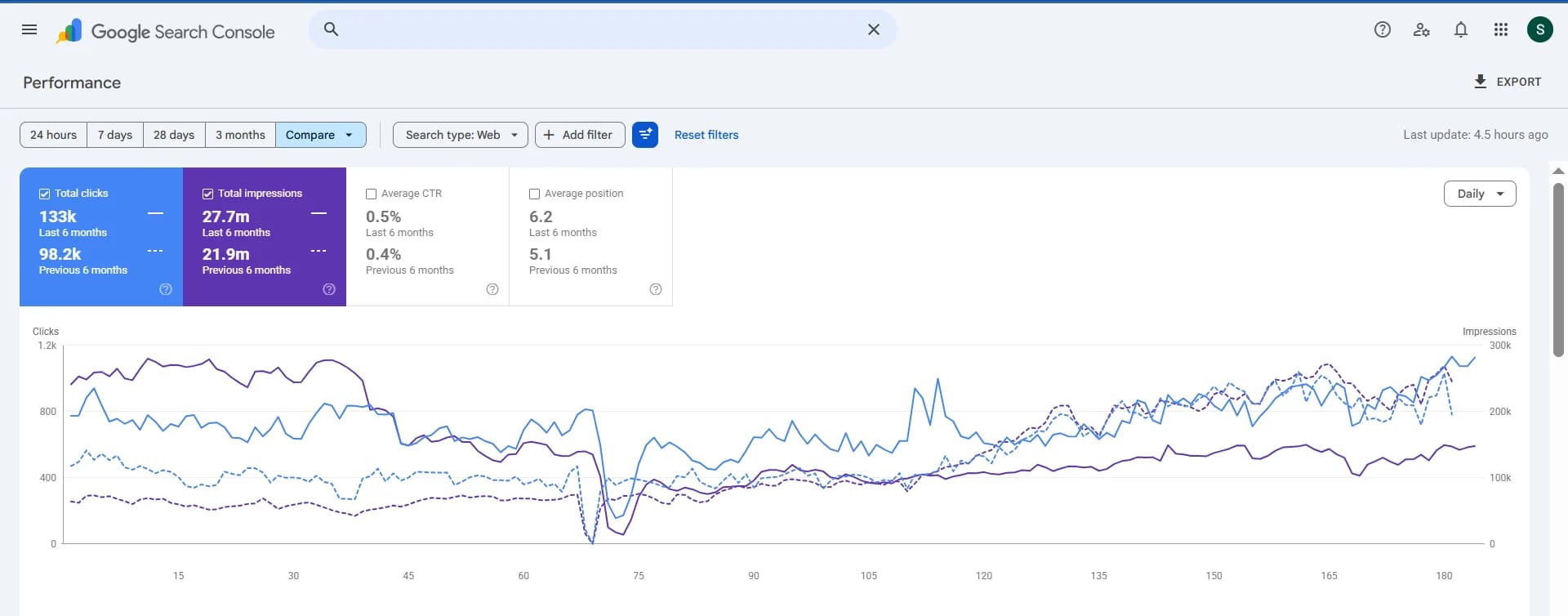
Local and specialty searches captured from our portfolio, plus original Search Console reports from websites we built and optimised.
Portfolio captureHistorical captures; capture dates and locations are not recorded. They show visibility at the time, not current positions or a ranking guarantee.
Pricing
Starting fees from our price book. Your proposal confirms the exact scope before you commit.
Prices exclude GST. Advertising spend and third-party software are billed separately. Full pricing
We're transparent about pricing because we know vague "it depends" answers are frustrating. For medical blog management, our fees start from $1,500/month (₹50,000/month in India) on the Practice tier (3-month minimum) and from $5,000/month (₹1,50,000/month in India) on the Hospital tier (6-month minimum); Enterprise is scoped custom (12-month minimum). The right tier depends on your practice size, market competition, and goals, and engagements run month to month once the minimum term ends. During your strategy call, we'll give you a specific quote with ROI projections.
Honestly? It depends on the channel. If we're running Google Ads, you'll start getting calls within the first week or two. SEO is a longer play — expect initial movement in 3-4 months with serious traction by month 6-12. AI and automation changes (like chatbots and automated follow-ups) show impact almost immediately. During your strategy call, we'll map out a realistic timeline based on your specific situation and market.
We work with 113+ medical specialties — from general dentistry to cardiac surgery to IVF clinics. The approach changes significantly by specialty because patients search and decide differently. A cosmetic surgery patient's journey is completely different from an orthopedic patient's. We tailor everything to your specialty's specific patient behavior patterns.
It depends on your market competition and keyword difficulty. For local terms like "dentist in [city]," you can see movement in 2-4 months. For competitive specialty terms, expect 6-12 months for page-one rankings. We prioritize quick wins early (Google Business Profile, long-tail keywords) while building toward the high-volume terms that drive serious patient volume over time.
Healthcare sites are particularly impacted by Google's E-E-A-T (Experience, Expertise, Authoritativeness, Trustworthiness) standards. The Helpful Content and Core updates specifically target medical content quality. We build your SEO on physician-authored content, proper medical schema markup, and authoritative backlinks — so algorithm updates actually help your rankings rather than hurt them.
Local SEO focuses on Google Maps and "near me" searches — it's about dominating your geographic area and showing up in the Map Pack. Organic SEO targets broader informational and transactional searches ("best treatment for knee pain," "invisalign cost"). Most healthcare practices need both: local SEO for immediate-need patients and organic SEO for patients researching conditions. We build a strategy that covers both.
Healthcare SEO
Senior strategist on the call. 90-day roadmap whether you engage us or not.

 You’ll speak with a senior strategist
Client portfolio · SEO & search visibility