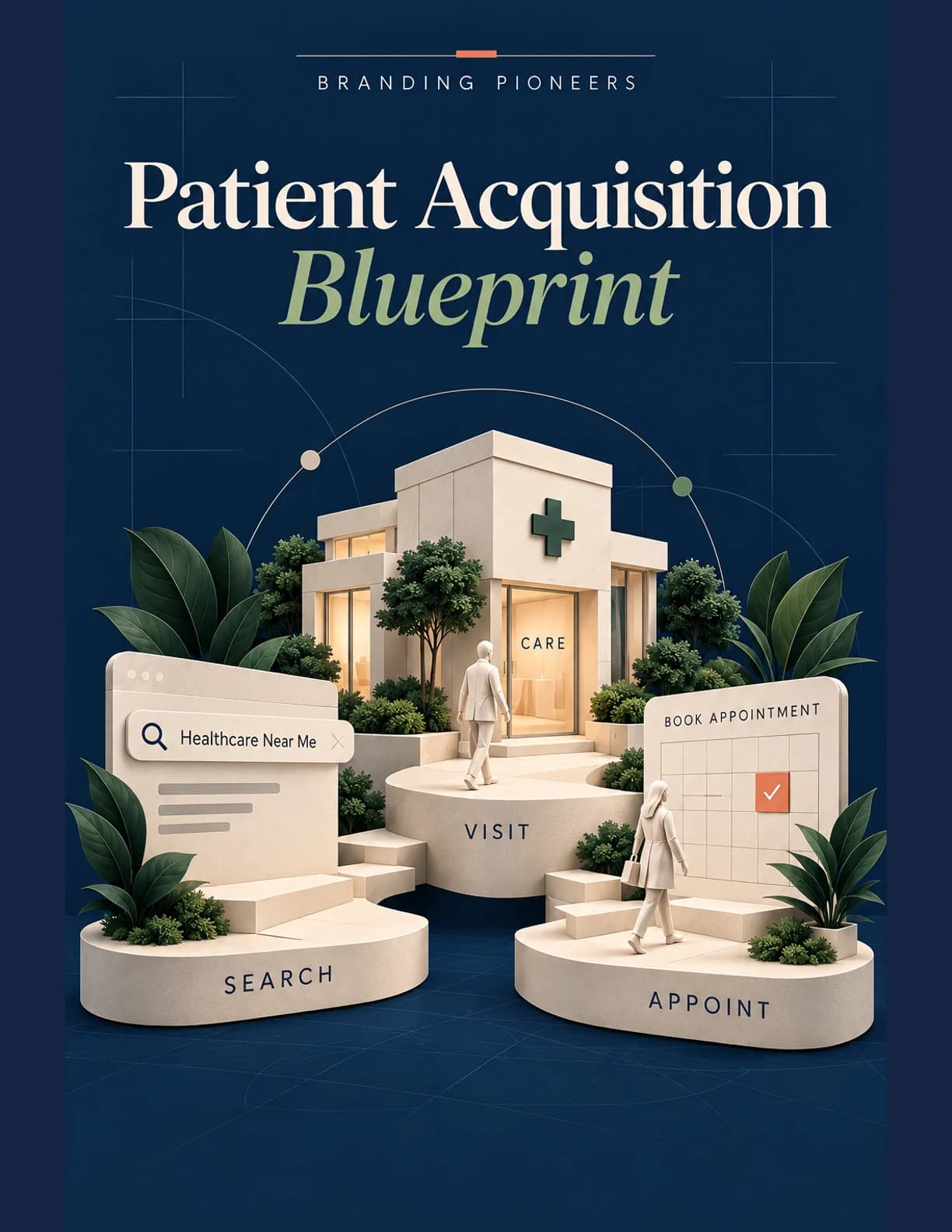

Hospitals don't lose to competitors. They lose to latency.
A multi-specialty hospital is twelve businesses sharing one campus, one brand, and one CRM. Cardiology converts in days. Oncology takes months. Emergency runs 24/7. The marketing system that supports all twelve has to speak twelve different timescales while presenting one coherent hospital brand to the patient.
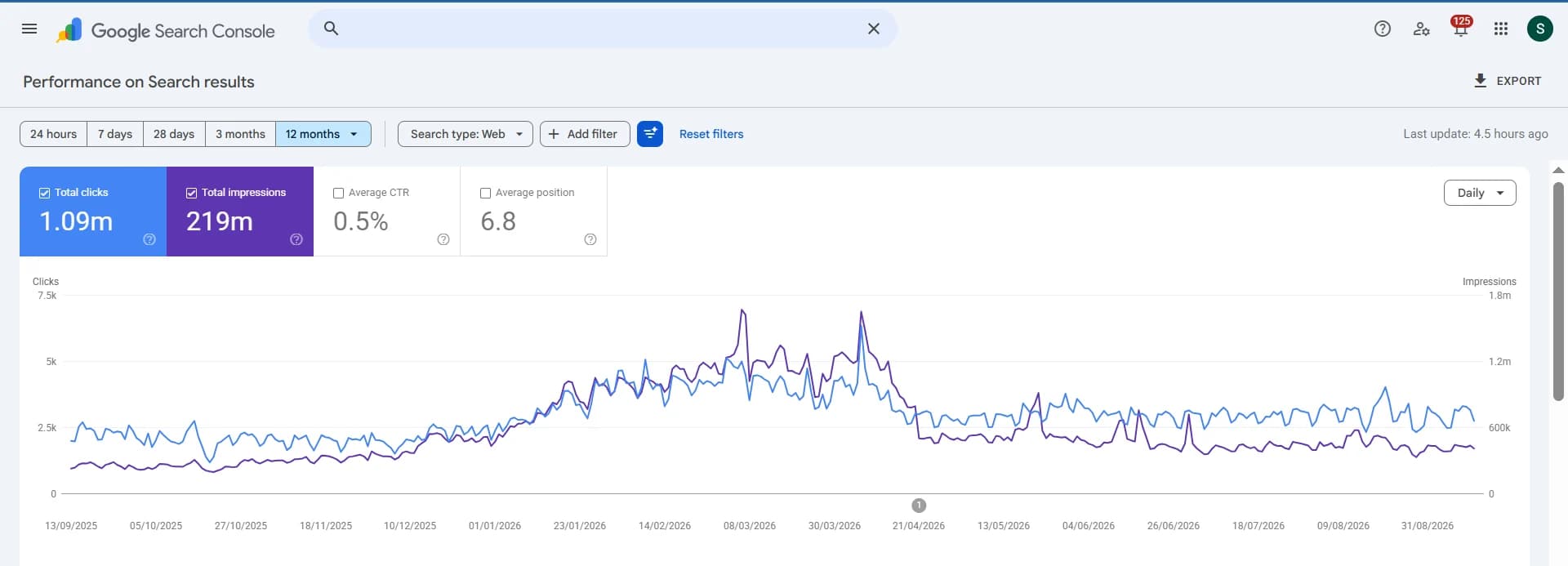
Most hospital marketing programmes — agency-led or in-house — collapse this complexity into a single funnel. They run "hospital ads" with generic creative. They build a website with department pages that all look the same. They report on impressions and clicks aggregated across lines. The result: cardiology is starved of paid budget while oncology over-spends, emergency is invisible on Google because it has the worst SEO, and the OPD shows mid-quarter to find the marketing team has no answer for why footfall is down 18%.
We don't run hospital marketing as a single funnel. We run it as twelve interlinked but distinct programmes — each tuned to its line's economics, patient acquisition cycle, and trust signals.
What we ship for hospital engagements
The standard 12-month hospital programme runs department-aware SEO across 240+ intent clusters per campus, paid acquisition tuned per line (cardiology bidding ≠ oncology bidding ≠ emergency bidding), an AI receptionist that routes inquiries to the right desk in under three minutes, a reputation engine that compounds reviews across all locations, doctor brand-building for the top 30 physicians on staff, and an international intake funnel for medical-tourism patients who fly in for cardiac, oncology, and orthopedic procedures.
The CRM piece is decisive. Most hospitals lose 35-50% of inquiries to operational latency — calls not answered, leads not routed to the right department, follow-up never happening. A hospital with 8,000 monthly inquiries and 40% leakage is leaving 3,200 patients on the table every month. The first six months of every engagement focus as much on the operational fix as on traffic generation, because the math doesn't allow otherwise.
Department-line specifics
Cardiology — bimodal patient intent (urgent acute + elective preventive). Different funnels, different CPCs, different conversion targets. Generic hospital marketing collapses these and underperforms on both.
Oncology — 30-90 day consideration cycle. Trust-led, family-included decision. Second-opinion funnels are decisive. Most hospital oncology marketing under-invests here despite 30-40% of patients pursuing second opinions.
Emergency — 24/7 search behaviour. Map pack ranking + GBP optimisation + paid search on "ER near me" + local citation consistency. Operational SLA on response (sub-3-minute pickup) is non-negotiable.
Orthopedics — bimodal too (acute injury + elective replacement). Procedure-intent SEO + surgeon personal brand for elective; map-pack + paid for acute.
Multi-line aggregation — each line gets its own marketing programme that compounds with the hospital-level brand. Done correctly, the lines reinforce each other; done poorly, they cannibalise.
What good looks like in 12 months
After a full hospital engagement the group has: organic and map-pack coverage built department by department across every major specialty; a profile page and personal-brand track for each named consultant; a CRM that routes enquiries by intent and specialty and makes cross-line referrals visible; paid media structured per service line rather than per hospital; and, for tier-1 cancer and cardiac centres, an international patient intake path. Enquiry volume, cost-per-booked-consultation and referral movement are reported to hospital leadership from their own systems.
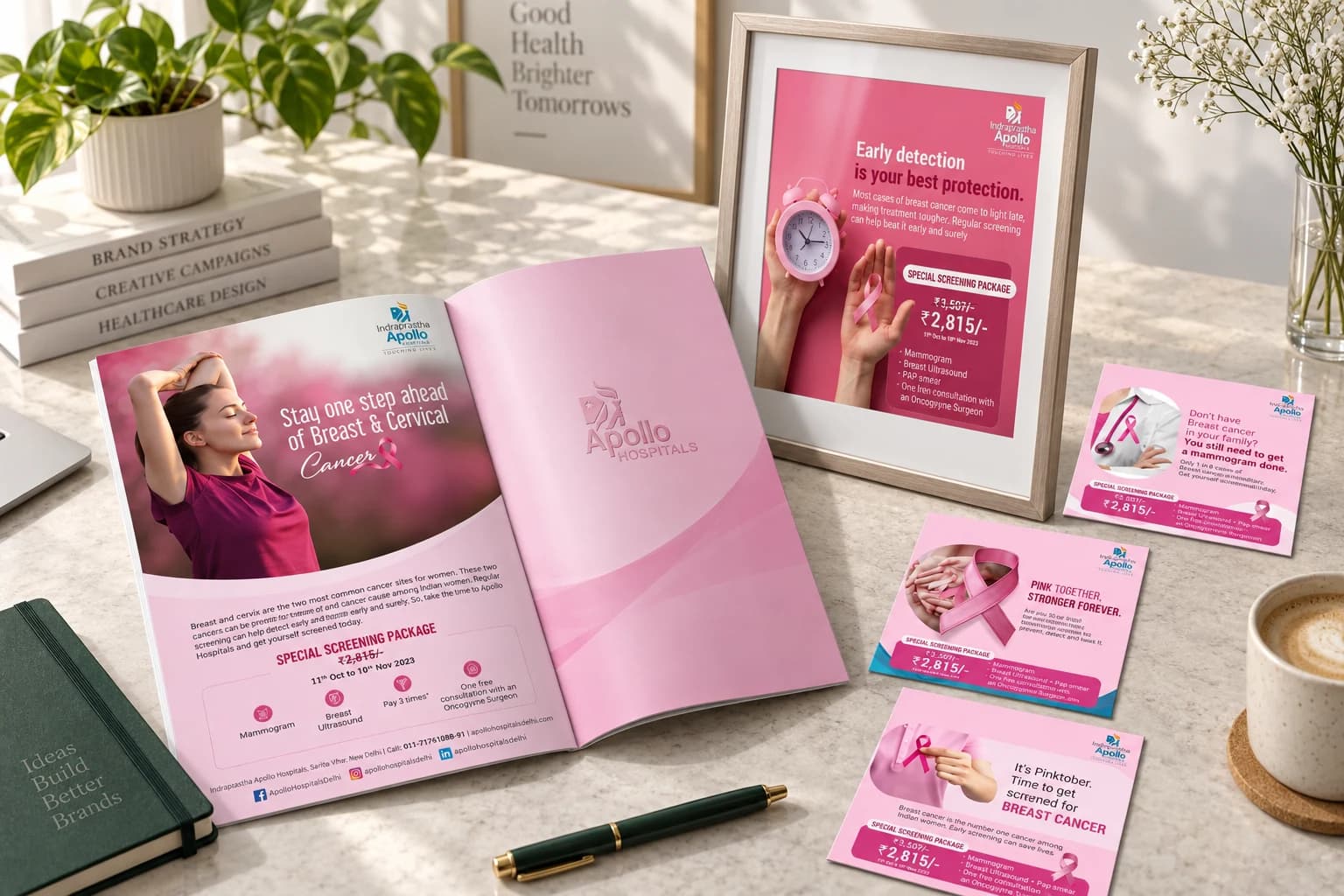
All of this assumes executional discipline. Hospitals that assemble the stack from several boutique agencies pay for the coordination overhead twice — once in fees and once in the seams between SEO, paid, CRM and PR that nobody owns. The integrated stack outperforms the assembled stack consistently in our engagements. Featured case file: Apollo Athenaa — doctor-led film series, CNBC TV-18 feature.
Frequently asked questions
How is hospital marketing different from clinic or doctor marketing?
A hospital is twelve businesses sharing infrastructure. Each line has its own patient journey, economics, and trust signals — cardiology converts in days, oncology in months, emergency runs 24/7. A hospital marketing programme that treats all twelve lines identically underperforms on every line.
What's the typical hospital marketing budget?
Tier-1 multi-specialty hospitals: ₹40L-1.2Cr/year across all lines. Tier-2 hospitals: ₹15-40L/year. Lower than ₹15L/year is hard to make work for a multi-specialty hospital — the channel mix needed to support multiple lines requires baseline budget per line.
How long until hospital marketing produces results?
First wins in 30-60 days. Meaningful organic traffic shifts in 90-180 days. Compounding ranking + content authority over 6-18 months. Hospitals that haven't shifted booking volume by month 4 are usually misconfigured at the operational layer (CRM, intake, response time).
Should each cardiologist or oncologist have their own personal brand?
Yes for the top 20-30 physicians. Personal brand work compounds into hospital brand without dilution if architected correctly — physicians with active LinkedIn + YouTube drive 25-40% incremental consultation volume beyond hospital-level marketing.
How do you handle compliance — ASCI, NABH, MCI?
Compliance pre-clearance is built into the launch process, not appended. Every claim is checked against ASCI guidelines, NABH advertising rules, MCI code of medical ethics. Hospital case studies require named patient consent. Outcome statistics use peer-reviewed methodology.
What about international medical tourism for hospitals?
Significant opportunity for tier-1 multi-specialty hospitals. International patient acquisition cost ranges ₹85K-220K per booked treatment with average treatment values of ₹4.5-18L. Multilingual SEO, visa concierge integration, and escrow trust mechanics are mandatory infrastructure.