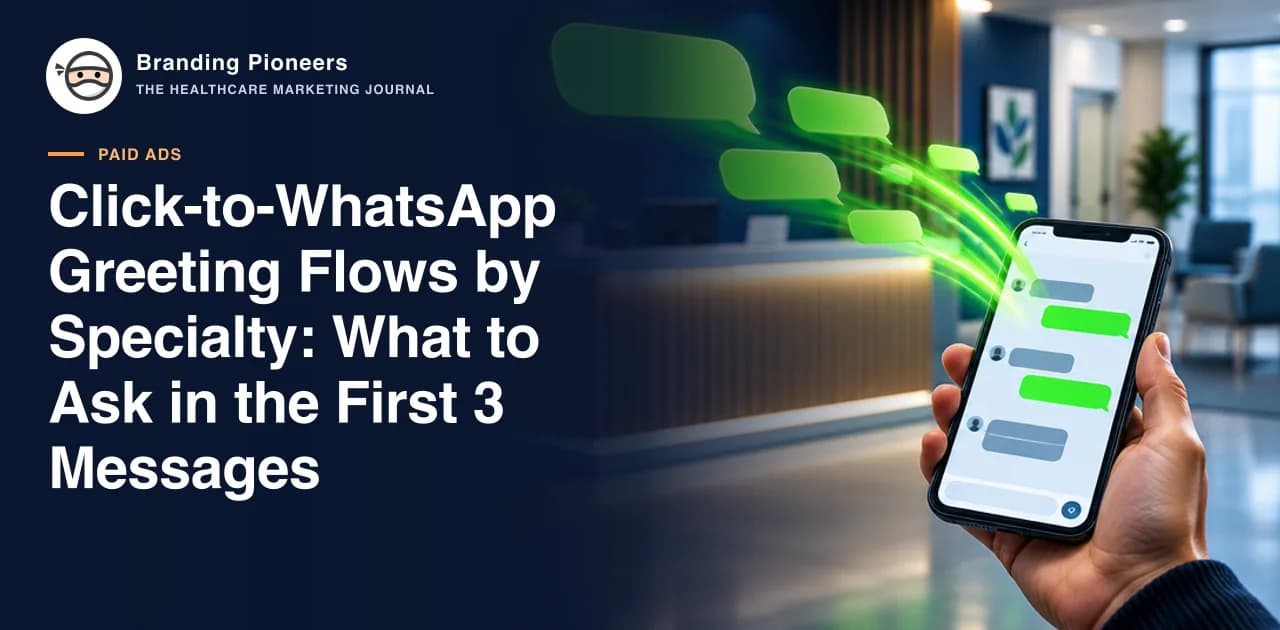
This article is for clinics that already run click-to-WhatsApp ads and want to improve what happens in the first minute of the chat. Our general guide to click-to-WhatsApp ads for clinics covers setup and cost. This one goes narrower: the first three messages, specialty by specialty.
The first messages matter because they decide whether a curious tap becomes a booking. Ask too little and the front desk spends the day chasing basic details. Ask too much, or ask the wrong things, and the person leaves. For a healthcare provider there is a third constraint: do not collect clinical detail in a chat that is not designed to protect it.
The question sequences below are frameworks to adapt, not proven scripts. We have no test results to publish, so the section on measurement explains how to run your own.
The three-message pattern
A useful flow has three beats.
- Message one: acknowledge and orient. Confirm the person reached the right place, say who is replying, and set expectations for response time.
- Message two: ask one qualifying question. Choose the single question that tells the team how to route the enquiry.
- Message three: offer the next step. Offer a consultation slot, a call, or the information the person asked for, depending on their answer.
Keep each message short enough to read on a phone without scrolling. One question per message. Offer tap-friendly options where the product allows buttons or quick replies, and accept free text when it does not.
What not to ask
Chats feel casual, so people overshare. Set the flow to avoid prompting for:
- Symptoms, diagnoses or medical history.
- Test results, scans, prescriptions or images of a body part.
- Identity documents or insurance numbers.
- Payment details.
If a person volunteers clinical information, the reply should say that the doctor will discuss it during the consultation and ask for a convenient time. Take clinical details through the provider's own secure process, as your policy decides. Have the clinical lead and your adviser review the wording.
IVF and fertility: orient without intruding
Fertility enquiries are personal. Many people are researching quietly and may not want to reveal their situation to a stranger on the first message.
- Message one: Thank them, say a member of the fertility care team is replying, and mention the working hours so they know when to expect an answer.
- Message two: Ask what would help most right now, with options such as: speak to a counsellor, book a first consultation, learn about the process, or ask about costs.
- Message three: Based on the answer, offer a slot, a call, or a short, clinician-approved explanation of the first visit. Ask for a preferred time and language.
Do not ask for age, history of treatment or reasons for infertility in the chat. These are consultation topics. The one practical detail worth capturing is whether the enquiry is from one person or a couple, only if the clinic needs it to schedule, and phrased with care.
Our IVF content in the fertility marketing guide covers the wider enquiry journey.
Orthopaedics: separate planned from urgent
Orthopaedic enquiries mix elective questions, such as joint replacement information, with injuries that may need urgent care. The first messages should handle both safely.
- Message one: Greet, name the clinic and say the team replies during stated hours. Add one line, approved by the clinical team, telling anyone with an emergency to contact emergency services or go to the nearest emergency department.
- Message two: Ask what the person is looking for: a consultation with a specialist, information about a procedure, a second opinion appointment, or physiotherapy.
- Message three: Offer the next available consultation or a call from the coordinator. Ask for preferred branch and time.
Avoid asking the person to describe the injury or send scans in the chat. If the clinic wants imaging before a consultation, say so in the booking confirmation and give the secure upload route the provider has approved.
Dental: the easy route to a booking
Dental enquiries are often the most straightforward to convert because the booking is lower stakes and the decision cycle is shorter.
- Message one: Greet, name the clinic, and confirm the branch nearest the person if the ad covered several.
- Message two: Ask what they would like to book: a check-up and cleaning, a consultation about a specific service, or something else. Offer three or four tap options matching the ad.
- Message three: Offer the next available appointment times and ask which suits.
Dental is where a short flow works best. The ad already told the person what the service is, so the chat should move straight to scheduling. Our dental marketing guide covers the surrounding funnel.
Match the opening line to the ad
The pre-filled first message the person sends should reflect the ad they saw. If each ad set uses a different pre-filled line, the team can tell at a glance which campaign produced the chat, and the greeting can respond to it. A generic "Hi" gives you neither routing nor attribution.
Meta documents a way to send conversion events back from a chat. Its Conversions API for business messaging page describes the ctwa_clid click ID, passed in the webhook referral object, which you store with the conversation and include when you report a conversion. The page lists event names such as LeadSubmitted and QualifiedLead, and notes that Meta does not deduplicate these events, so you must avoid sending duplicates yourself. Because health data is sensitive, only send action events, never clinical detail, and check whether your data source is restricted.