Most clinics start a video programme with the wrong purchase. They buy lights, book a long shoot and ask a doctor to “talk about the specialty.” The camera rolls, but nobody has decided which patient question the film should answer or where the finished answer will live. Weeks later the team has attractive footage and no reliable way to use it.
An educational video can be simpler. Choose one recurring question, get a clinician-approved answer, record it clearly, and publish it beside the relevant service or condition page. Repeat. The quality of the workflow matters more than the complexity of the shoot.
This article is about production and distribution. It does not substitute for clinical review, patient consent or the local rules that apply to a provider's advertising. Those decisions stay with the provider's responsible teams.
Build a question bank from real work
Begin with questions the appointment team, nurses and clinicians hear repeatedly. Keep the wording patients use. “What happens at my first scan?” is a stronger brief than “radiology awareness.” “What should I bring to a fertility consultation?” gives the speaker a useful boundary. A broad topic such as “women's health” invites a broad, forgettable answer.
For each question, record the audience, the stage of the journey, the clinician who can answer it, the page where it belongs and the next action. A question about preparation should live on the relevant appointment page. A question about a condition may belong on a reviewed educational page. A question about aftercare should be available to existing patients through an appropriate care channel, not forced into an acquisition campaign.
Do not turn clinical uncertainty into an editing problem. If a question requires a personal assessment, the video should say what can be explained generally and where individual advice begins. The answer can still be useful without presenting an online clip as a diagnosis.
Write an answer outline, not a performance script
Clinicians often sound stiff when reading marketing copy. Give the speaker a short outline: the patient's question, the direct answer, two or three points that clarify it, and an appropriate next step. Ask them to say the answer in their own words. Record a second take if the first includes jargon that a patient would have to search separately.
The editor can improve pacing, captions and visual clarity. The editor should not remove a qualification that changes the medical meaning. Send the near-final cut back to the clinical reviewer with the transcript and any on-screen text. A tiny caption change can turn a conditional statement into a promise.
Our video production portfolio illustrates the range of formats a practice can use. The repeatable unit, however, is the approved answer to a real question, not the format itself.
Design a shoot the clinic can sustain
Choose a quiet room, natural eye line and a microphone that makes the voice easy to hear. A phone can record usable video when the room and audio are controlled. Film several short questions in one session, but keep separate takes and filenames so each answer has its own review path. A single long interview often becomes difficult to approve because every cut depends on the rest.
Agree the practical details before the clinician arrives: who prepares the questions, who checks wardrobe or name titles, who gets permission for the location, who watches for patient information in the background, and who has final sign-off. Remove patient names from screens and documents visible in the room. A busy clinic is a working environment, not a set built for the camera.
Keep a simple version record. Store the approved transcript, the final file, the publication date, the clinician's review decision and the page on which the video appears. If the service changes, this record tells the team which clips need another look.
Make the video useful without sound
Captions are part of the answer, not decoration. Review them for medical terms, medication names and numbers; automatic transcription can turn a clinically important word into something else. Place important labels in a safe part of the frame so a platform's controls do not cover them. Use on-screen diagrams only when they clarify a point the speaker is making.
Provide a readable transcript or adjacent summary on the page. Some visitors cannot or do not want to play video. Others need to scan for one step and return later. The page should still answer its question when the video does not load. This also gives search engines clear text about the material without inventing a separate keyword-heavy description.
The healthcare content strategy should decide which questions warrant a video and which are better answered in text. Video is useful when a human explanation, a process demonstration or a familiar face changes the visitor's understanding. It is not required for every paragraph.
Publish the answer where the question appears
Putting every clip on a single video page creates a library that few patients browse. Place the relevant clip on the service, condition, clinician or preparation page where its question is already being asked. Give it a descriptive heading and a nearby text answer. Link to the next logical step: a fuller guide, a clinician profile or a booking route that matches the topic.
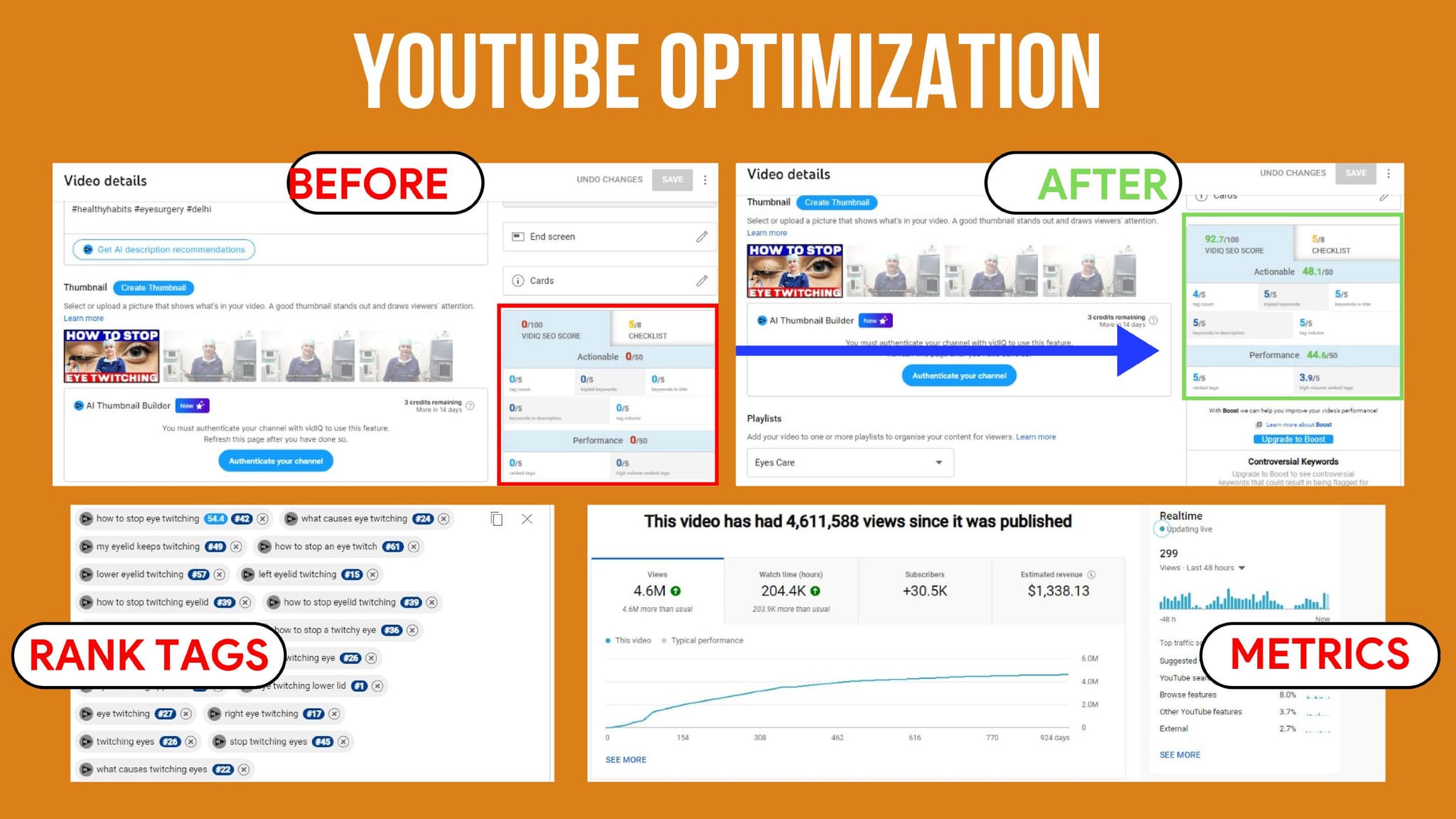
Publish a version on the provider's video channel if that channel has an owner. Use a title and description that describe the question accurately. Google's video SEO guidance explains that search discovery depends on a watchable video, a suitable page and accessible information about the clip. Structured data can help describe a video, but it does not guarantee a special search display.
When a longer film has distinct sections, add meaningful chapter labels and timestamps. “What the first appointment includes” helps a visitor; “intro” does not. A short clip often needs no chapters at all.
Keep patient stories in a separate approval lane
An explainer by a clinician and a patient testimonial are different editorial products. A patient story can reveal sensitive personal information, requires a specific permission and may create expectations about outcomes. Do not insert an identifiable patient clip into an educational answer merely because it makes the edit more emotional. The existing patient-video guide covers that separate workflow where it is lawful. Check the market first: in India, the National Medical Commission's 2026 guidelines bar doctors from requesting or sharing patient testimonials for promotion, even with consent, and ask for the doctor's name, qualifications and registration number on every post (see our NMC guide); in Australia, AHPRA bans testimonials about clinical aspects of care.
For an explainer, use diagrams, a clinician on camera, or approved footage of the service environment. If patient footage is necessary, involve the provider's consent and clinical teams before the shoot. Permissions, withdrawal processes and any advertising restrictions should be set for the market in which the clip will appear.
Measure whether the answer helps
View count is a distribution measure, not a patient outcome. Compare questions that trigger video views with on-page behaviour, follow-on clicks, call topics and feedback from the appointment team. If people still call to ask the exact question answered by the video, check whether the clip is visible, understandable and placed on the right page. If people watch but cannot find the next step, fix the page route before producing another clip.
An example brief for one useful clip
Suppose a diagnostic centre hears the same question every day: “What happens at a first MRI appointment?” The brief should identify the intended patient group, the exact service and location, the clinician who can review the explanation, and the booking page where the answer belongs. The outline might cover arrival, preparation instructions that the centre actually uses, what the team will explain on the day, and how the patient receives follow-up information. It should not include generic advice copied from another provider's process.
The final deliverables can be small: one short answer with accurate captions, a transcript for the page, a thumbnail that names the question, and a version record. A coordinator can then compare incoming calls with the published answer. If callers still ask whether they need a referral or what to bring, that is a signal to revise the answer or the page, not automatically to buy another campaign.
Keep a clear approval record
Use a simple status for each clip: drafted, clinically reviewed, edited, approved, published, and due for review. Save comments against the version being reviewed. If the clinic changes an instruction after filming, decide whether a caption can safely correct it or whether the speaker must record a new answer. A clinical instruction should not be patched with tiny text that most viewers will miss.
Before publishing, watch the clip once as a patient who has no sound and once as a clinician listening without seeing the captions. These two passes reveal different errors. The first tests whether the text and visuals carry the answer. The second catches edits that make a careful clinical statement sound abrupt or certain. If either version misleads, correct the master file and all exported versions together.
Review the question bank quarterly. Retire clips when the service or team changes. Keep the high-value questions that the clinic hears repeatedly. A sustainable programme is a small set of accurate answers that remain useful, not a monthly quota of uploads.
Filed underdoctor explainer videoshealthcare video content workflowclinic educational videomedical video marketing

About the author
Nishu Sharma
Founder & CEO · Gurugram, India
Nishu founded Branding Pioneers in 2016 with one rule that hasn't changed since: healthcare only. She'd run digital strategy at a top-10 Indian agency and watched generalist marketing underserve medical clients who needed something built for how patients actually search and decide. So she left to build the specialist instead. It's now an 80-person team working with healthcare brands worldwide.
Free guide · 17 pages
The Patient Acquisition Blueprint
A 90-day plan from first search to booked appointment.