Branding Is Not a Logo — It Is a Promise
When most clinic owners think about branding, they think about their logo. Maybe their color scheme. Perhaps a tagline. But branding in healthcare is something far more fundamental: it is the promise your practice makes to every patient, and the consistency with which you deliver on that promise.
A strong healthcare brand does not just look professional. It communicates what you stand for, who you serve best, and why a patient should choose you over the practice down the street. In a market where patients often cannot evaluate clinical quality directly, brand perception becomes the primary decision factor.
Start With Positioning: Who Are You For?
Before you design anything, answer this question: who is your ideal patient, and what do they value most? A premium cosmetic clinic serving affluent patients has a fundamentally different brand from a community family practice serving working families. Neither is better — but trying to be both creates a muddy brand that appeals to no one.
Define your positioning along three axes. First, your specialty focus: what do you do better than anyone else in your area? Second, your patient experience promise: are you the fastest, the most thorough, the most technologically advanced, the most affordable, or the most compassionate? Third, your personality: are you warm and personal or clinical and precise? Approachable or exclusive?
This positioning statement should be a single sentence that guides every brand decision. For example: "We are the most patient-centered orthopedic practice in Gurgaon, combining advanced surgical expertise with a warm, anxiety-free experience for every patient."
Visual Identity: More Than Aesthetics
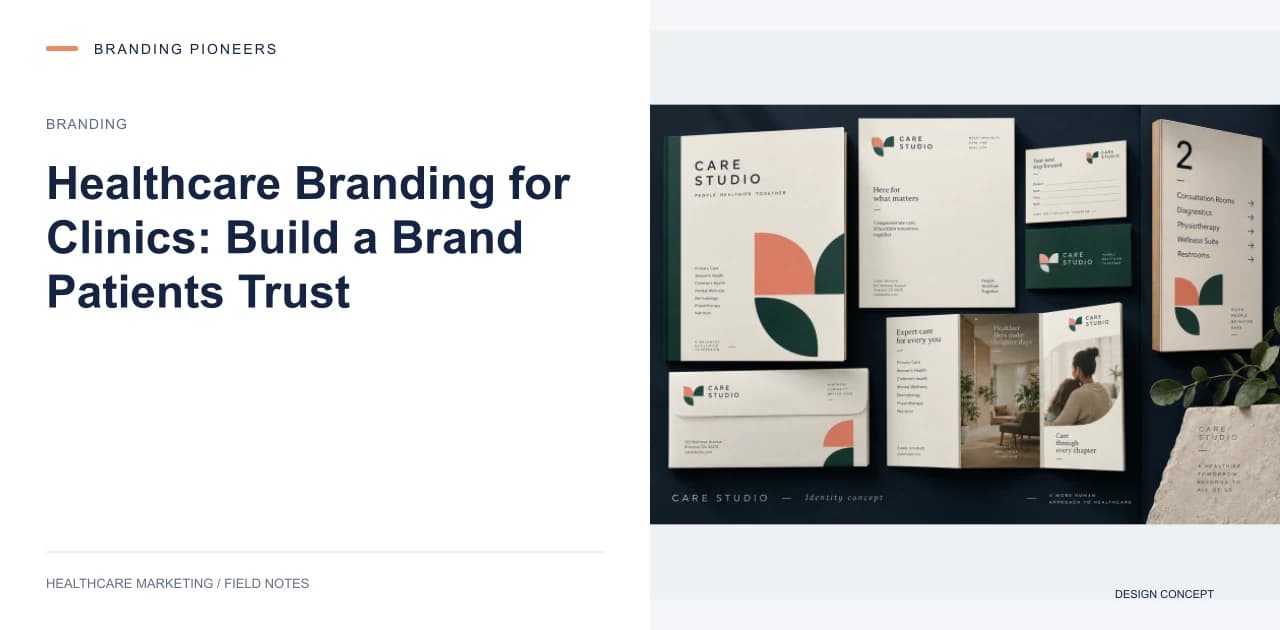
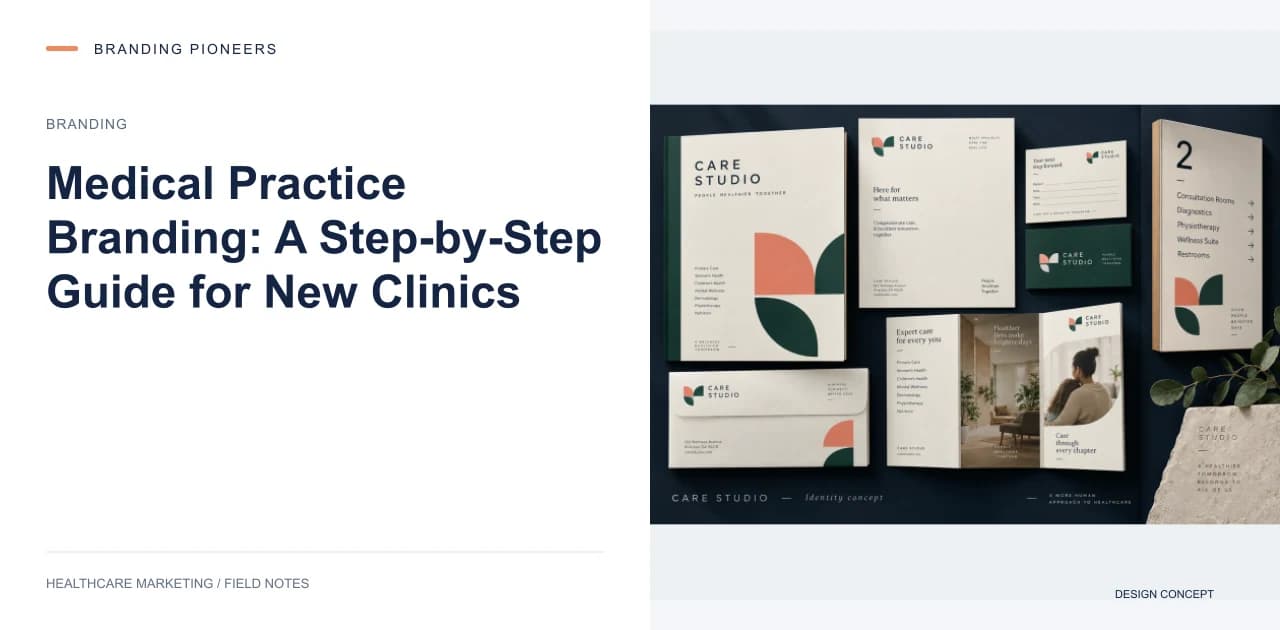
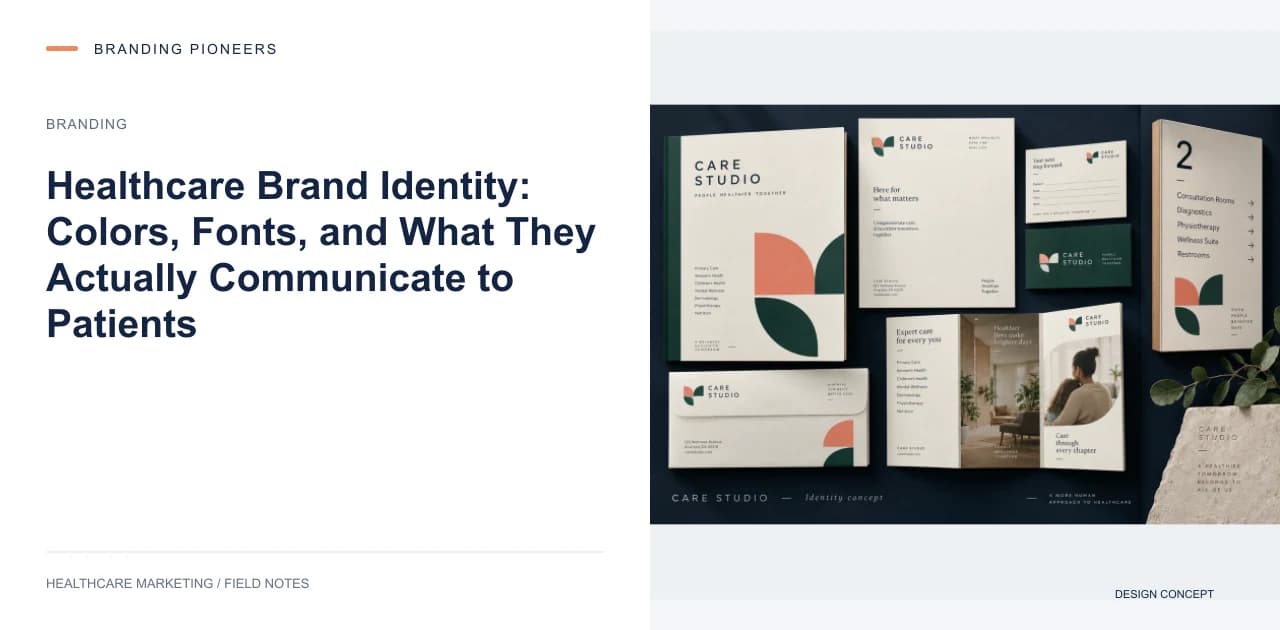
Your visual identity — logo, colors, typography, photography style — should communicate your positioning instantly. A children's hospital needs a different visual language than an oncology center.
Color psychology matters in healthcare. Blue conveys trust and professionalism (used by the majority of hospitals for good reason). Green suggests health and renewal. Teal and warm neutrals feel modern and approachable. Red and orange signal urgency — appropriate for emergency services, less so for a wellness clinic.
Your logo should be simple enough to work at small sizes (think mobile favicons and social media profile pictures), distinctive enough to be recognizable at a glance, and appropriate for the emotional context in which patients encounter it. Avoid overly complex medical symbols, generic crosses, and clip-art style illustrations. Invest in professional design — this is the one asset that appears everywhere your brand exists.
Typography is underrated in healthcare branding. The font on your signage, website, and printed materials creates an immediate emotional impression. Serif fonts feel traditional and authoritative. Sans-serif fonts feel modern and clean. Script fonts feel personal and approachable. Choose a primary typeface and a complementary secondary typeface, and use them consistently everywhere.
Brand Voice: How You Sound
Your brand voice is how your practice communicates in writing and conversation — website copy, social media posts, email newsletters, even how your receptionist answers the phone. A consistent voice builds familiarity and trust.
Define your voice along a spectrum for each of these dimensions: formal to casual, clinical to conversational, authoritative to empathetic, serious to lighthearted. Most successful healthcare brands land somewhere in the middle — professional but approachable, knowledgeable but not condescending.
Write a brand voice guide with three to five principles. For example: "We explain medical concepts in plain language without dumbing them down. We are warm but never unprofessional. We use the patient's name. We avoid jargon unless we immediately explain it."
Patient Experience as Brand
Here is where healthcare branding diverges from most industries: the patient experience is the brand. No amount of beautiful design can overcome a frustrating booking process, a cold receptionist, a dirty waiting room, or a doctor who does not listen.
Audit every touchpoint in the patient journey: How easy is it to book? What is the waiting room experience? How does the staff greet patients? How does the doctor communicate during the appointment? How does the follow-up process work? Each of these touchpoints either reinforces or undermines your brand promise.
The practices with the strongest brands have explicitly designed each of these touchpoints. They have trained their staff on how to greet patients. They have standardized the follow-up process. They have thought about the waiting room magazine selection. This level of intentionality is what separates a brand from a business.
Consistency Across Channels
Brand inconsistency is the silent killer of trust. If your website feels premium and modern but your clinic signage looks dated, patients feel the disconnect. If your Instagram is warm and personal but your front desk is cold and transactional, the brand breaks down.
Create a brand style guide that covers visual identity, voice and tone, photography guidelines, and patient communication standards. Make sure every team member — from the marketing team to the front desk to the medical staff — understands and follows the guidelines.
For multi-location practices, consistency becomes even more critical. Every location should deliver the same brand experience. This means standardized interior design, standardized communication protocols, and regular brand audits across all locations.
Building Trust Through Transparency
Trust is the currency of healthcare branding. And in 2026, transparency is the fastest way to build it. Publish your pricing (or at least price ranges). Show your real team on your website (not stock photos). Share your patient outcomes data. Respond to negative reviews professionally and publicly. Publish educational content that helps patients even if they never become your patients.
Practices that embrace transparency consistently report higher patient satisfaction, stronger word-of-mouth referrals, and better online review ratings. Transparency is not a vulnerability — it is a competitive advantage.
Measuring Brand Strength
Brand is notoriously difficult to measure, but there are proxy metrics that indicate brand health: direct website traffic (people typing your name into Google), branded search volume (tracked in Google Search Console), patient referral rate (what percentage of new patients were referred by existing patients), social media engagement rate, and patient satisfaction scores.
Track these quarterly. A healthy brand shows consistent growth in direct and branded traffic, a referral rate above 30 percent, and patient satisfaction scores that stay consistently high quarter after quarter.
Your brand is the most durable competitive advantage you can build. Competitors can copy your services, match your prices, and outspend your ad budget. But they cannot replicate the trust and emotional connection that a strong brand creates with patients over time.
Filed underhealthcare brandingclinic brand identitymedical practice brandinghospital brand strategy

About the author
Nishu Sharma
Founder & CEO · Gurugram, India
Nishu founded Branding Pioneers in 2016 with one rule that hasn't changed since: healthcare only. She'd run digital strategy at a top-10 Indian agency and watched generalist marketing underserve medical clients who needed something built for how patients actually search and decide. So she left to build the specialist instead. It's now an 80-person team working with healthcare brands worldwide.
Free guide · 17 pages
The Patient Acquisition Blueprint
A 90-day plan from first search to booked appointment.