Why Medical Tourism matters in healthcare marketing
Medical tourism is patients crossing borders for treatment — often for cost savings, shorter wait times, or access to procedures unavailable at home. Marketing to them is fundamentally different from marketing to local patients because the buyer is researching from another country, in another language, with zero ability to walk in and assess the facility. Every doubt — about quality, safety, legitimacy, and logistics — has to be answered online before they will commit thousands of dollars and a flight.
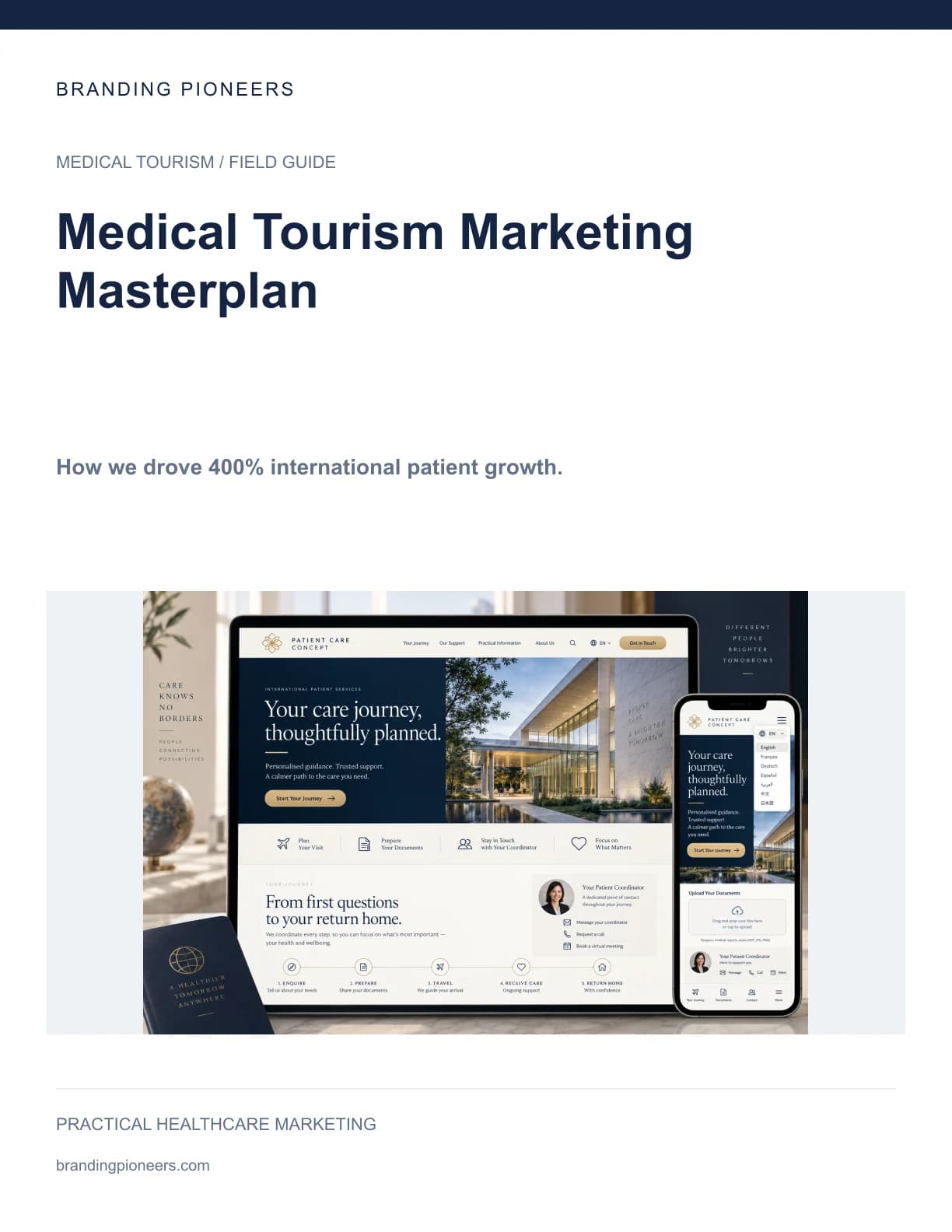
This makes trust-building across cultures and international SEO the core disciplines. Multilingual content that genuinely speaks to a source-country audience, internationally recognised accreditations displayed prominently, transparent all-in pricing, and clear handling of the surrounding journey (visa help, airport pickup, accommodation, post-op follow-up once they fly home) are what separate a hospital that wins international patients from one that merely has a translated brochure. The decision cycle is long and high-consideration, so content has to nurture confidence over weeks, not close in one visit.
How Medical Tourism works in practice
Medical-tourism marketing builds cross-border trust and removes logistical fear. Core levers:
- Multilingual, culturally adapted content — true localisation, not machine translation — targeting specific source countries.
- International SEO: hreflang tags, country-targeted pages, and presence on the search engines patients actually use abroad.
- Prominent accreditations (e.g. internationally recognised quality standards) and surgeon credentials to substitute for the in-person visit they cannot make.
- Transparent, all-inclusive pricing covering the procedure, stay, and follow-up, since hidden costs are a top deal-breaker.
- End-to-end journey content: visa assistance, travel and accommodation, interpreters, and remote post-operative follow-up after they return home.
A worked example
Imagine a joint-replacement hospital courting patients from a country with long public-health wait lists. Its international landing page is fully in the patient's language, leads with its accreditation badge and the surgeon's case volume, quotes one all-in price including ten nights of recovery accommodation, and details visa and airport-pickup support. A prospective patient comparing options chooses it over a cheaper but opaque competitor — because the package answered the safety and logistics questions before they had to ask.
Frequently asked questions
What matters most when marketing to international patients?
Trust and logistics. Because they can't visit beforehand, you substitute with accreditations, surgeon credentials, transparent all-in pricing, and clear handling of visa, travel, accommodation, and remote follow-up.
Is translating my website enough for medical tourism?
No. True localisation adapts tone, examples, and search behaviour to each source country, and it must be paired with international SEO (hreflang, country-targeted pages) so patients actually find the content.
Why is the sales cycle longer for medical tourism?
Patients are committing significant money and international travel for a health procedure, so they research over weeks. Content must nurture confidence repeatedly rather than aim to convert on a single visit.