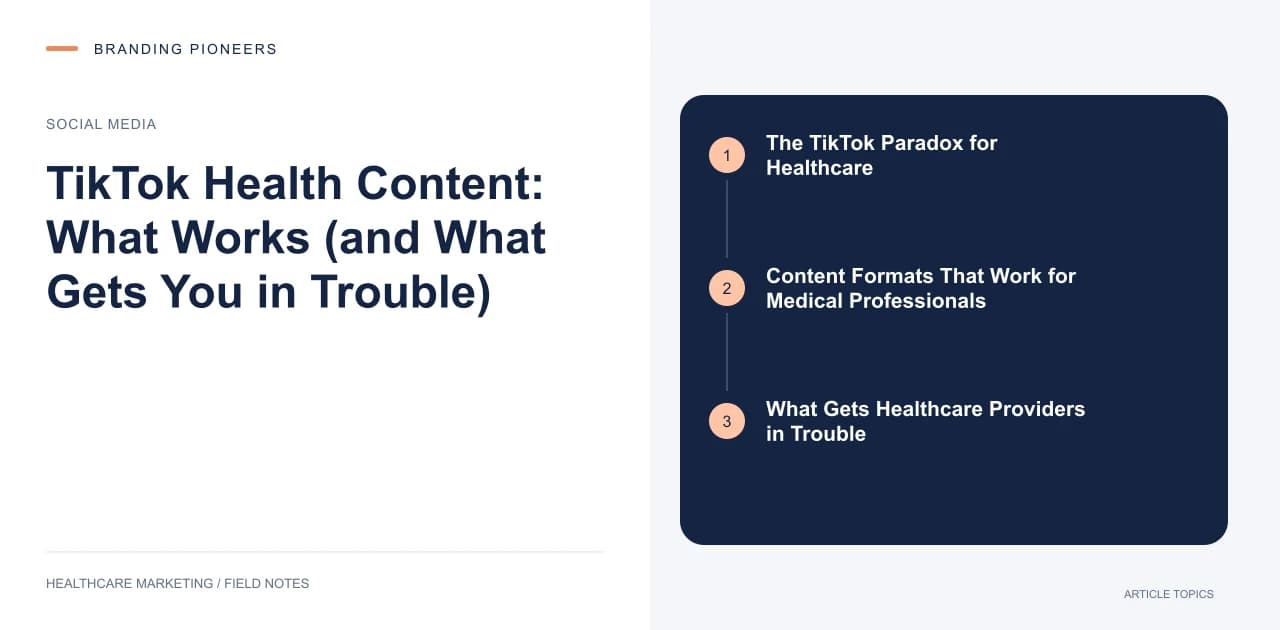
The TikTok Paradox for Healthcare
TikTok offers something no other platform does: the ability to reach millions of people organically without spending a single rupee on advertising. A dermatologist with 500 followers can post a video debunking a skincare myth and reach 500,000 viewers if the content resonates. No other platform offers that kind of organic reach in 2025.
But TikTok also presents unique risks for healthcare professionals. The platform rewards entertainment, controversy, and emotion — qualities that can conflict with medical accuracy and professional ethics. Healthcare providers who chase viral moments at the expense of accuracy end up damaging their credibility and, in some cases, facing regulatory consequences.
The solution is not to avoid TikTok. It is to develop a strategy that leverages its strengths while respecting the boundaries of medical professionalism.
Content Formats That Work for Medical Professionals
After analyzing 200 healthcare TikTok accounts across multiple specialties, these are the content formats that consistently generate reach, engagement, and patient conversions:
Myth-busting reactions: Use TikTok's duet or stitch features to react to viral health misinformation. A cardiologist stitching a video about "natural heart disease cures" and providing evidence-based context generates enormous engagement. These videos serve the public interest while positioning you as an authority.
Success metric: myth-busting videos generate an average of 4 times more views than standard educational content. They also attract the highest proportion of new followers because they tap into existing viral content's reach.
"Things your doctor wants you to know": This format frames medical advice as insider knowledge, which is inherently compelling. "Three things your dermatologist wishes you would stop doing," "What your cardiologist checks first on your blood work," "The one question most patients forget to ask their surgeon." These videos feel personal and authoritative simultaneously.
Procedure demystification: Short, well-edited videos showing what happens during a procedure (with appropriate consent and sensitivity). A dentist showing the step-by-step process of placing an implant, a dermatologist walking through a laser treatment, or an orthopedic surgeon explaining what knee replacement surgery actually involves. These videos reduce patient anxiety and drive appointment bookings.
Day-in-the-life content: Patients are genuinely curious about doctors' daily lives. Morning routines, what is in your work bag, how you decompress after a difficult case, what you eat during a 12-hour shift. This content humanizes physicians and builds the parasocial connection that drives trust and, ultimately, patient choice.
What Gets Healthcare Providers in Trouble
Diagnosing in comments: When viewers describe symptoms and ask for opinions, never provide specific medical advice. Redirect to "Please see a healthcare provider for personalized advice." Providing specific guidance creates liability and violates medical ethics regardless of platform.
Before-and-after without context: Showing dramatic results without noting that outcomes vary, that the video shows a specific case with specific circumstances, and that results depend on individual factors. Regulatory bodies are increasingly monitoring social media claims by healthcare providers.
Trending sounds with inappropriate context: Using comedic trending audio over serious medical content. A video of a surgical wound set to a trending dance song may get views but damages professional credibility and can be seen as trivializing patient care.
Criticizing other providers: Reacting to another doctor's content by calling them out specifically invites professional consequences and reduces your credibility among peers who may be referral sources.