

Web · Next.js
Aster CMI hospital
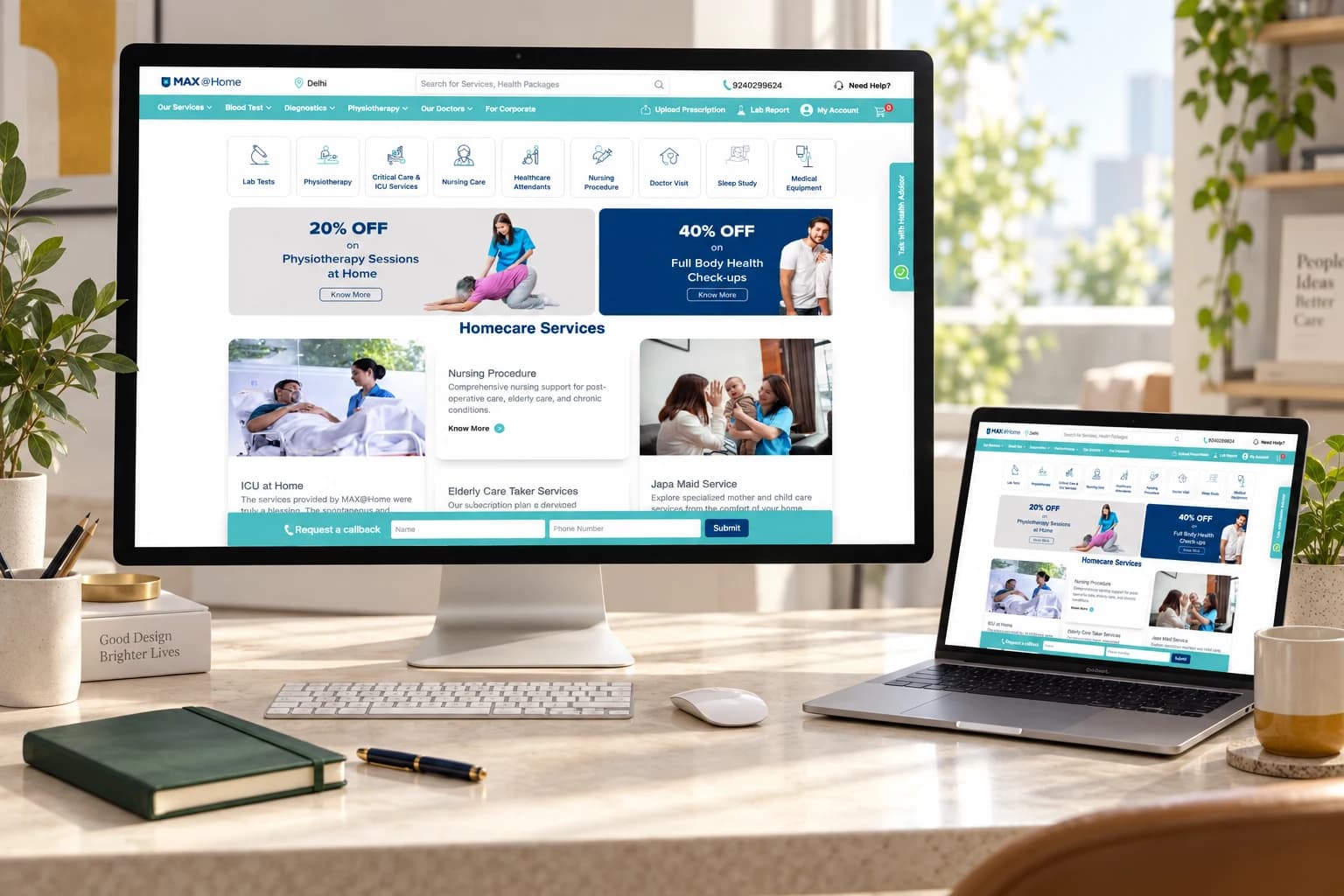
Next.js build · Core Web Vitals green
WordPress runs 40% of the web. Custom Next.js runs the brands that need to compete on Core Web Vitals. The decision-grade comparison for a healthcare website.
Side-by-side
| Dimension | WordPressMature CMS, 100K+ plugins | RecommendedCustom Next.jsPerformance + security-first |
|---|---|---|
| Time to launch | Stronger: 4–6 weeks (template tuned) | Weaker: 8–14 weeks (built from scratch) |
| Lighthouse score | Weaker: 60–80 typical | Stronger: 95–100 typical |
| Core Web Vitals · LCP | Weaker: 2.5–4s typical | Stronger: <1s typical |
| SEO architecture | Even: Plugin-driven (Yoast / RankMath) | Stronger: Built-in, framework-native |
| Plugin / dependency risk | Weaker: Real — security exposure | Stronger: Minimal — engineered surface |
| Compliance hardening | Even: Possible — needs hardening pass | Stronger: Built in from the first build |
| Editor UX (non-tech updates) | Stronger: Excellent — Gutenberg/Elementor | Even: Headless CMS — clean but newer to ops |
| Cost · 3-year | Stronger: $15K–$60K total | Weaker: $50K–$250K total |
| Multi-language scale | Even: WPML / Polylang plugins | Stronger: Native i18n in Next.js |
Verdict · why we recommend it
Performance: Next.js wins by a wide margin. For competitive healthcare verticals (cardio, IVF, dental), Core Web Vitals are scoring criteria — we lose deals on slow WP.
Security: WP plugin ecosystem is the largest single attack surface for healthcare sites. Custom Next.js has a much smaller surface.
Editor UX: WP wins for non-technical content teams. Gutenberg + Elementor is mature. Headless CMS is catching up but newer to operations.
Hybrid: build the marketing site in Next.js, run blog/news in headless CMS (Sanity, Contentful) with full editor UX. Best of both worlds.
SEO: framework-level performance wins matter for ranking. Custom builds also avoid plugin-bloat that erodes Core Web Vitals over time.
Cost: WP is cheaper to launch, more expensive to maintain over 3 years (security, plugin churn). Custom is the inverse.
Receipts
Web · Next.js
Next.js build · Core Web Vitals green

Web · headless
Headless build · online intake flow

Web · multi-device
Responsive builds across devices

Web · multilingual
Multilingual · hreflang correct
Why choose us
Six reasons hospitals, clinics, and doctors pick a healthcare-only firm over a generalist agency.
It's all we do. No retail, no fintech — the whole team thinks in patient journeys, clinical trust, and the way people actually choose a doctor.
Receptionists, WhatsApp triage, and attribution built in-house — we answer patients in seconds and tie every click to a booked appointment.
HIPAA-aware handling, ASCI-reviewed creative, and GDPR/DPDP sign-off on every campaign — our standard, not an upcharge or an afterthought.
The senior who pitched you stays on the engagement. No bait-and-switch to juniors learning on your budget.
Patient-level attribution across calls, forms, and walk-ins. Monthly reports show booked patients — not just clicks and impressions.
We name our clients and show the work. Quarterly reviews with the numbers attached, every cycle.

Healthcare-only · since 2016
A team that does one thing well.
Keep reading
Adjacent decisions, the receipts behind them, and the practical playbooks our team sends as a follow-up.
Inside Healthcare Website & Software Development
Inside Healthcare Website & Software Development
Inside Healthcare Website & Software Development
Pairs with this engagement
Pairs with this engagement
Common issue in this segment
Common issue in this segment
TMS patient-growth programme · 5 mo
Local SEO tampa market · 11 mo
The infrastructure side of search — making a site easy for engines to crawl and index. For healthcare, that me…
A standalone page built for one campaign or ad with a single conversion goal. The best healthcare versions zer…
Long-form playbook
Yes — AI chatbots are now essential for healthcare practices. Benefits: (1) 24/7 patient inquiry handling (70%…
Local SEO + media buying in San Diego
Local SEO + media buying in Philadelphia
Final · your call
Most hospitals we serve run on Next.js. Most clinics run on WordPress. The right call depends on stage and ambition.
Practical notes & supporting evidence
Start hereWordPress vs custom Next.js .
Establish contextUse the published scope and relevant source material
Choose the next stepFollow the linked resource and assign an owner
This page focuses on WordPress vs custom Next.js . Start with its published information and the decision you need to make. Identify which details apply to your practice and which require further checking. Follow the relevant linked resources for implementation steps, source material or the current contact route, and keep your own constraints visible when turning the information into a brief.
Begin with the question you need to answer, then choose the most appropriate destination in this collection. A guide explains a method, a checklist supports a repeatable review, a calculator explores assumptions and a case file documents a particular engagement. Reading them as interchangeable resources can create confusion. If you need to brief a supplier, start with the relevant service or framework. If you need to assess evidence, start with the source reports and the limits stated alongside the example.
Use the collection to narrow the investigation rather than adding every possible task to a marketing plan. Identify the stage where progress is blocked: discovery, understanding the service, making contact, arranging an appointment or following up. Choose a resource that addresses that stage and keep a short note of the evidence you need. A focused review is easier to act on than a long list of unrelated recommendations, particularly when clinical approvals and operational changes involve different people.
Client portfolio · Healthcare websites