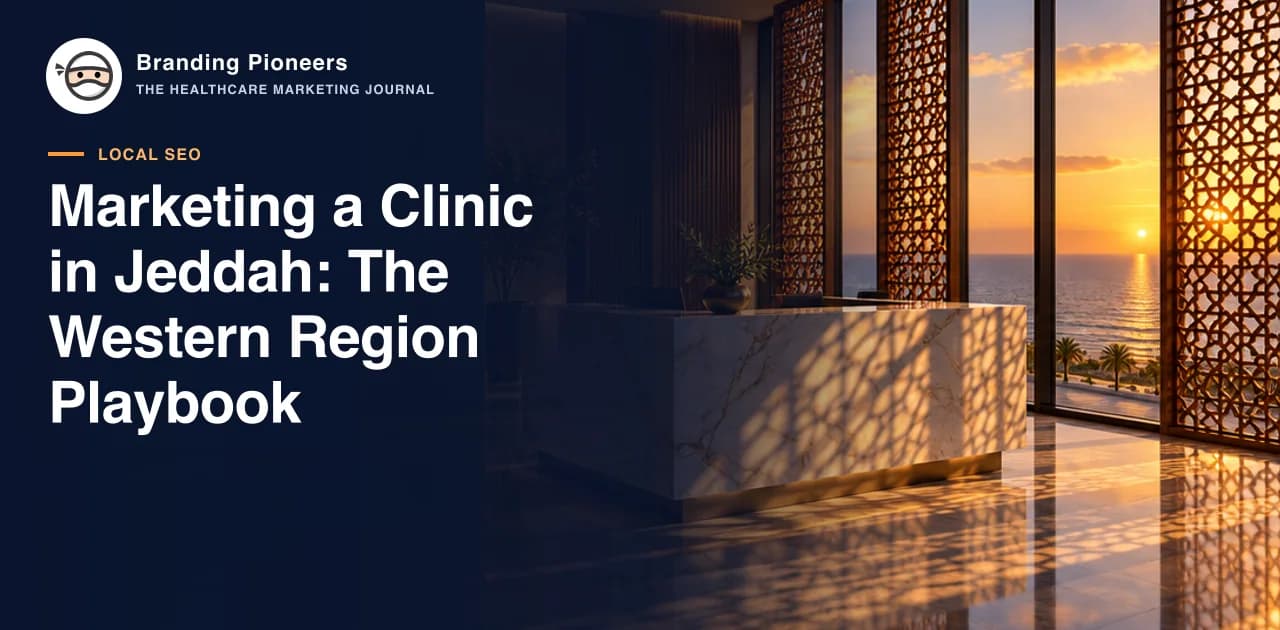
This playbook is for clinic owners, specialists and hospital marketers who want to win patients in Jeddah. It covers how patients on the Red Sea coast search and choose, what makes the Western Region different from the capital, which channels to prioritise, and what to fix first. It is a city playbook. Approval rules and Arabic foundations are covered in a separate post that we link below.
Jeddah is the commercial and maritime city of the Kingdom's west, and the main arrival point for pilgrims travelling to Makkah and Madinah. Its airport and seaport mean the city's population and demand are never static. Business and demand rhythms follow the Islamic calendar, which shifts earlier relative to the Gregorian calendar each year. A marketing calendar written for Riyadh will not fit.
The thesis: Jeddah rewards clinics that plan around the year's rhythm, serve a mixed resident and visiting population, and build trust in the way people in the Western Region actually seek care: through family, local reputation and a known hospital name.
How patients in Jeddah search and choose
Residents. Jeddah has a large resident population of Saudis and expatriates, with long-established communities from across the Arab world, South Asia and Africa. Language mix is broad. Arabic is the base, English is common, and Urdu, Hindi, Bengali and other languages matter in specific services. As with every Saudi city, search is in colloquial Arabic, often mixed with transliterated English, and the vocabulary can differ from the capital's.
Insurance. Private health insurance is required for expatriate residents and private-sector employees in the Kingdom, so network status is a first filter for many. Publish accepted insurers in Arabic and English, and keep the list current.
Family and reputation. Recommendation carries weight. Patients ask relatives, colleagues and friends, then check reviews and the hospital name. Reputation built over decades with local hospital groups is a real advantage for them, so a newer clinic needs to make its own credibility visible: clinician classification, training and a clear service scope.
Pilgrims and visitors. During Umrah and Hajj periods, visitors may need urgent or primary care, pharmacy services and sometimes planned care. The patients are often not Saudi residents, and they search in many languages. Much of their care is handled by designated facilities and arrangements around the pilgrimage, so a private clinic should not assume this audience is open to it; it should be clear about what it genuinely offers, in which languages and at which locations. We do not claim any role in the official pilgrimage health arrangements, and nor should you in marketing copy.
Distance and traffic. Jeddah is a long, coastal city. Patients choose by district and road. Searches name a district or a landmark.
What makes Jeddah different from Riyadh
Riyadh is the capital, with government and corporate payers and head-office employers shaping demand, as we describe in our Riyadh clinic marketing playbook. Jeddah differs in four ways.
- Seasonality. Umrah runs through the year, and Hajj and Ramadan move on the lunar calendar. Plan the content and staffing calendar against the Islamic dates for the year, not against Gregorian months. Verify the dates each year from official announcements; we are not quoting them here.
- A more commercial, port-city mix. Private business, trade and a long-established merchant population shape demand more than government employment does.
- Local hospital groups. The Western Region has its own well-known private names, such as Dr. Soliman Fakeeh Hospital and International Medical Center, alongside national groups with Jeddah hospitals, including Saudi German Hospital and King Faisal Specialist Hospital and Research Centre's Jeddah campus. They are market context. A clinic should not claim to match them; it should differentiate on specialty, access and service.
- A visitor population. Capital-city marketing assumes residents. Jeddah's includes people passing through.
The competitive set
- Established private hospital groups. Strong brand recall and large referral networks.
- National groups with Jeddah sites. Consistent digital presence and standardised patient journeys.
- Public sector facilities. The default for many Saudi patients; explain what private care adds without criticism.
- District clinics and polyclinics. Dental, dermatology, aesthetics, paediatrics and family medicine compete street by street.
- Aggregators and booking apps. They appear high in results; keep their data aligned with yours.
- Pharmacy-led and telehealth options. Substitutes for minor problems and follow-ups.
Channels in priority order
1. Arabic search and the map. Build native Arabic keywords, service pages and district pages, and set up a profile with Arabic primary presence. See healthcare SEO for clinics in Jeddah and Google Business Profile for clinics in Jeddah. Mark opening hours accurately for Ramadan and other seasonal changes, and update them in good time.
2. Paid search, planned against the calendar and approvals. Paid ads are promotional health content and need authorisation, so build the campaign calendar months ahead of Ramadan, Umrah peaks and the school year. See Google Ads for clinics in Jeddah. Target by district and by the languages your clinic can genuinely serve.
3. WhatsApp and first response. Messaging is where enquiries live across the Gulf. A monitored line with fast, human replies in Arabic and the other languages you offer is worth more than a form. Our healthcare AI automation for clinics in Jeddah describes first-response workflows that hand over to your team.
4. Website with a multilingual path. Right-to-left layout, working forms and clear language selection. Seasonal banners help if a visitor-facing service is real.
5. Short video and social. Educational content in Arabic from an identifiable, qualified clinician. Social posts count as advertising for approval purposes, and influencer work has its own disclosure and licensing requirements.
The full list is on the Jeddah hub page.
What to fix first
- Calendar. Build a twelve-month plan against the Islamic calendar, school terms and insurance renewals. Include approval lead times.
- Insurance page. Accepted insurers, in two languages, kept current.
- Arabic foundation. Native keyword map, original Arabic on core pages, working right-to-left forms.
- Profile hours and language information. Seasonal hours, spoken languages, and district information.
- Visitor offer, if real. If you do serve visitors, create a specific page and enquiry path in the right languages. If you do not, do not pretend to.
- Response test. WhatsApp and phone at different hours, including late evening.