Published by Branding Pioneers · Published topic archive and article metadata
A practical reference for this page
01
Start hereMarketing by medical specialty — page 2
02
Establish contextUse the published scope and relevant source material
03
Choose the next stepFollow the linked resource and assign an owner
Use the specialty marketing reading collection
A dental implant patient and an IVF patient are on completely different journeys, and the marketing that suits one actively fails the other. These are the specialty-specific patterns: decision cycles, the questions patients ask first, and the sensitivities each field carries. This page is part of a collection containing 30 published articles. The archive groups them under specialty marketing and keeps links to the complete articles so a short card can lead into the full explanation. Treat the card as an introduction to the question, not as the full recommendation or its supporting evidence.
On this archive page, examples include IVF Clinic Marketing: The Sensitive Approach That Actually Works; Dental Marketing in 2026: 12 Strategies That Actually Fill Chairs; Mental Health Marketing: The Ethical Approach. Choose the article whose question is closest to the decision you are making. Read its source context and implementation details before assigning a task, and identify which assumptions depend on your service mix, location or operational process. If the article includes a tool or case example, follow that reference so its definitions and limits stay attached to the conclusion.
Design the website around a real patient task
Start with the task a visitor needs to complete. Finding a treatment, checking a clinician’s background, identifying a location and asking for an appointment are related tasks, but they need different information. Make those paths visible in the navigation and on the relevant service pages. A good brief includes the content and the operational destination of each action: who receives the form, what happens after submission and how a visitor obtains help when the first contact route fails.
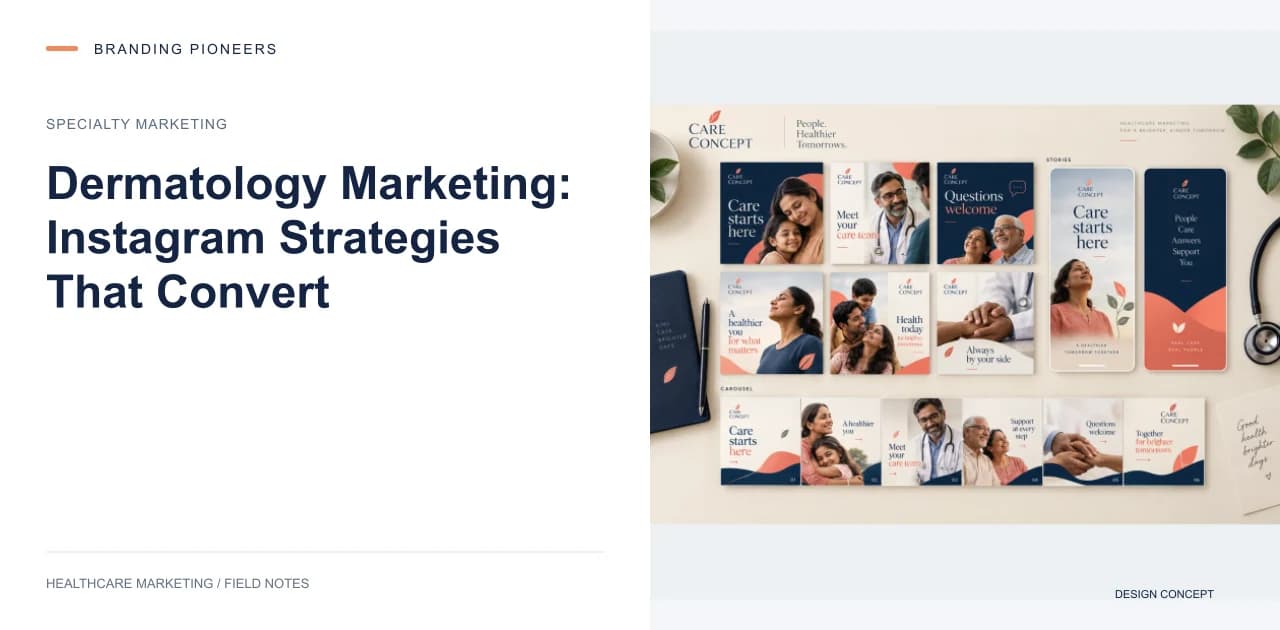
Desktop screens help explain page hierarchy, but they cannot establish the quality of the mobile experience. Check readable text, tap targets, menu behaviour and form validation on a phone. Long doctor biographies and treatment descriptions should remain easy to scan without hiding important details in decorative interactions. When a collection shows both desktop and mobile artwork, compare the priority of information across them. The mobile layout should preserve useful content rather than simply shrink the desktop composition.
From visual approval to a checked release
A launch review should cover content ownership, approved contact information, working forms, redirects and the URLs that search engines are expected to index. If a site replaces an existing website, map important old pages to appropriate new destinations. Check titles, descriptions, canonicals and internal links against the actual released URLs. Keep the review list separate from the visual approval: a polished mockup does not prove that a live booking form, analytics event or redirect behaves correctly.
Document the difference between a design study, a delivered website and a live capture. A design study explains a proposed experience. A live capture records what the site looked like when it was captured. Neither alone establishes an improvement in appointment conversion. For an outcome comparison, use a defined period and consistent event definitions, then reconcile digital enquiries with attended appointments where the practice can do so. Performance and accessibility checks should be repeatable after future content edits, not only at the first launch.
Choose the resource that matches your next decision
Begin with the question you need to answer, then choose the most appropriate destination in this collection. A guide explains a method, a checklist supports a repeatable review, a calculator explores assumptions and a case file documents a particular engagement. Reading them as interchangeable resources can create confusion. If you need to brief a supplier, start with the relevant service or framework. If you need to assess evidence, start with the source reports and the limits stated alongside the example.
Use the collection to narrow the investigation rather than adding every possible task to a marketing plan. Identify the stage where progress is blocked: discovery, understanding the service, making contact, arranging an appointment or following up. Choose a resource that addresses that stage and keep a short note of the evidence you need. A focused review is easier to act on than a long list of unrelated recommendations, particularly when clinical approvals and operational changes involve different people.
Supporting client example: Max@Home · Website. See the linked case file for the source context.