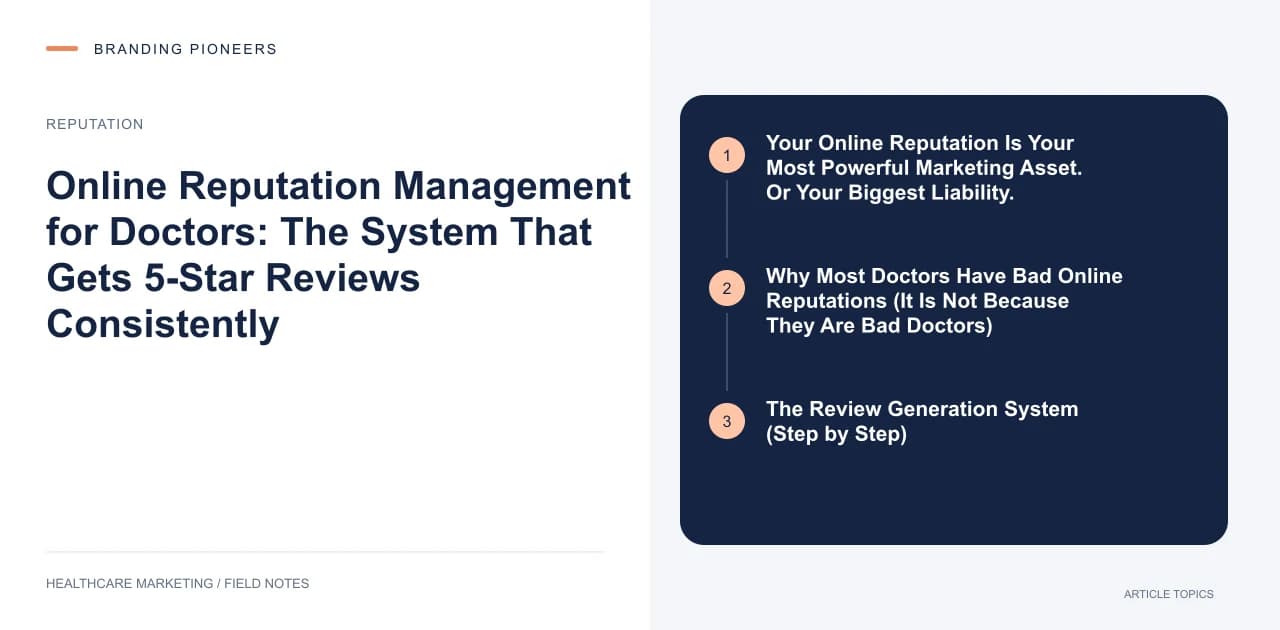
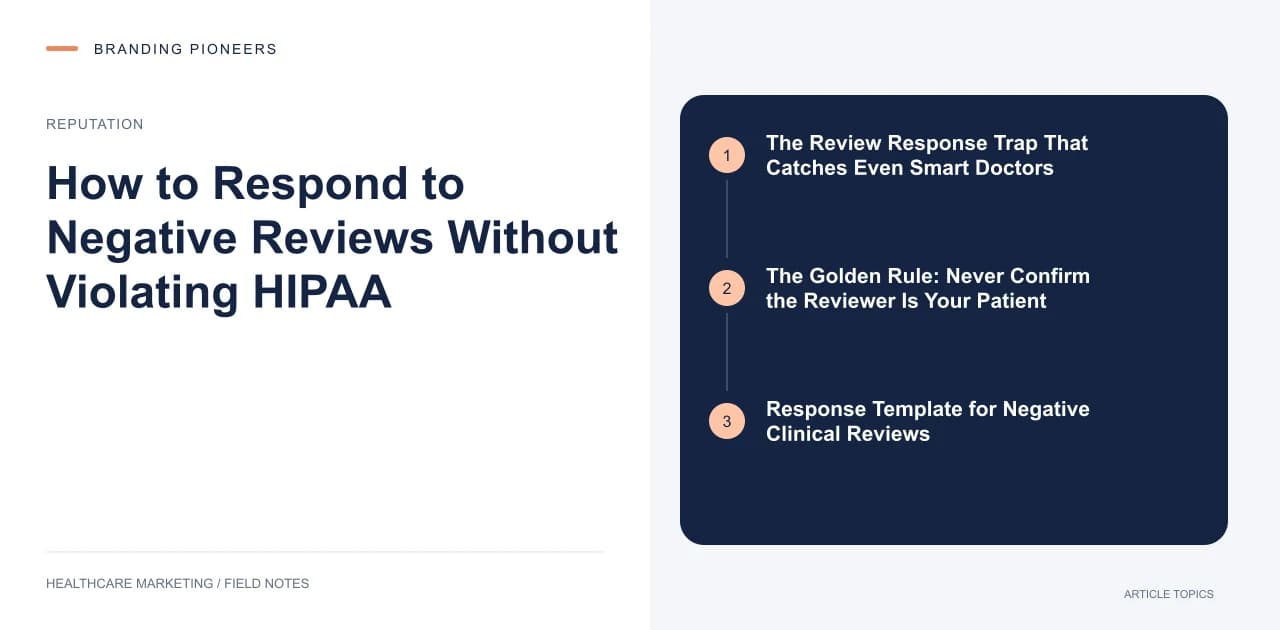
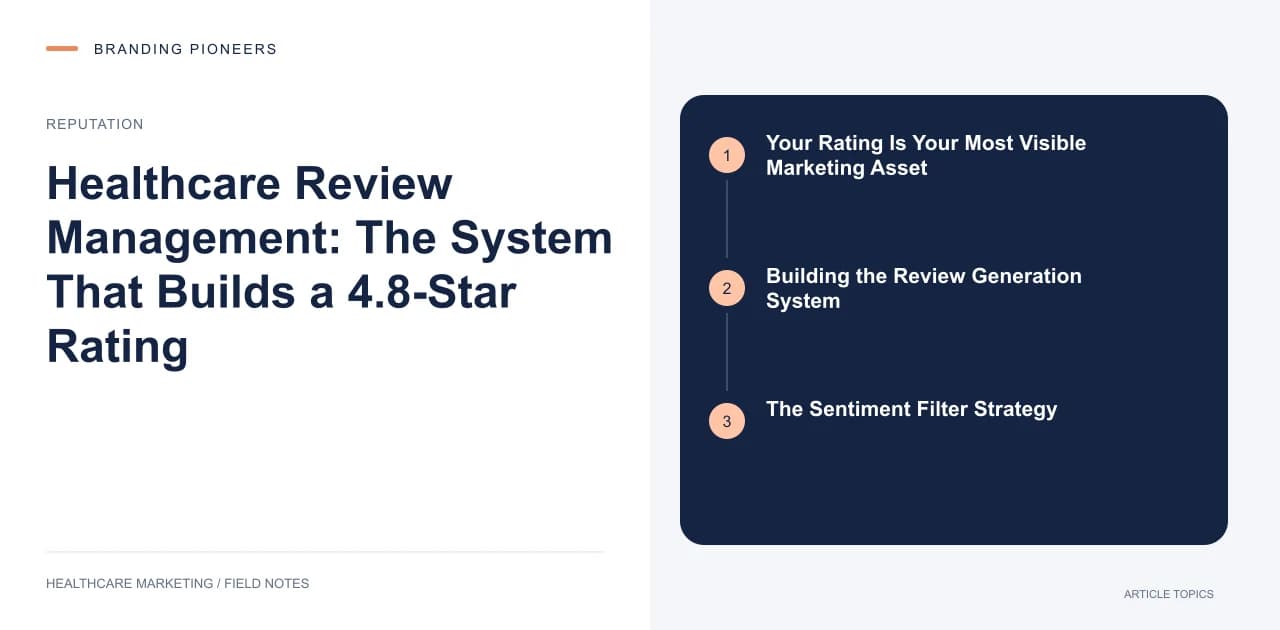
Reviews are the single biggest trust signal in healthcare and the one most practices handle reactively. These cover building volume ethically, responding to a bad review without breaching confidentiality, and what can and cannot be done about a result you would rather did not exist.
Published by Branding Pioneers · Published topic archive and article metadata
A practical reference for this page
01
Start hereReviews and online reputation
02
Establish contextUse the published scope and relevant source material
03
Choose the next stepFollow the linked resource and assign an owner
Use the reputation reading collection
Reviews are the single biggest trust signal in healthcare and the one most practices handle reactively. These cover building volume ethically, responding to a bad review without breaching confidentiality, and what can and cannot be done about a result you would rather did not exist. This page is part of a collection containing 7 published articles. The archive groups them under reputation and keeps links to the complete articles so a short card can lead into the full explanation. Treat the card as an introduction to the question, not as the full recommendation or its supporting evidence.
On this archive page, examples include Fake Review Laws for Doctors: The FTC Rule, the UK Ban, and What Counts as Review Gating; Hospital Reputation Crisis Management: What to Do When a Patient Complaint Goes Viral; Patient Reviews Management: The Complete Guide to Monitoring and Responding. Choose the article whose question is closest to the decision you are making. Read its source context and implementation details before assigning a task, and identify which assumptions depend on your service mix, location or operational process. If the article includes a tool or case example, follow that reference so its definitions and limits stay attached to the conclusion.
Search visibility starts with the right page
Separate the searches that ask for information from the searches that ask for an appointment. A person comparing treatments needs an explanation of options, suitability and the questions to ask a clinician. A person searching for a named specialist needs a current profile, the locations where that doctor consults and an obvious contact route. Sending both visitors to a generic homepage makes the next step harder to find. Build a small intent map before commissioning another batch of articles, and check whether an existing page already answers each question.
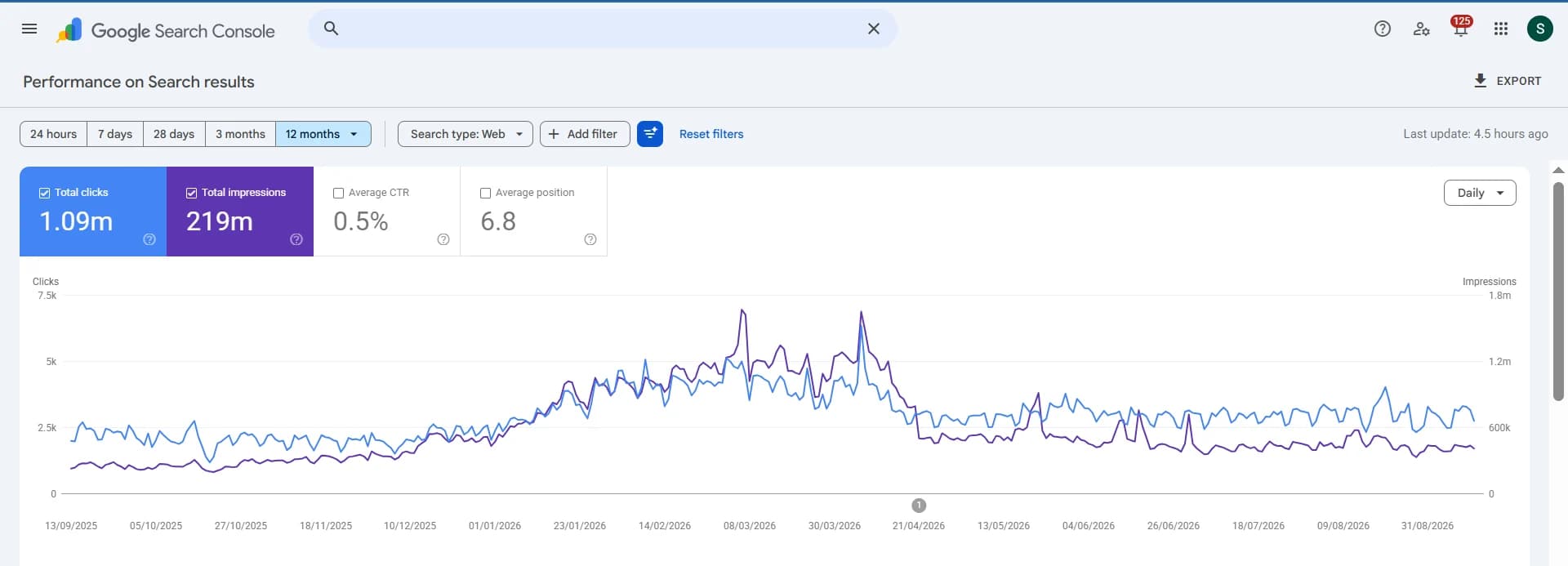
For a search review, keep the query, landing page, reporting period and search type together. Impressions describe exposure in the report; clicks describe visits from that search surface. Neither measures attended appointments. A useful investigation also checks indexing, canonical URLs, internal links and the mobile page experience. Compare equivalent periods and annotate significant website changes. A different service mix or a seasonal campaign can change demand without any change in the quality of the SEO work.
Make expertise visible where the question is answered
Medical explanations should identify the clinician responsible for checking clinical statements and provide a way to verify relevant qualifications. Marketing advice has a different authoring requirement: explain who publishes it, what evidence supports examples and which assumptions limit a recommendation. A professional biography belongs beside the relevant material or within an easy link, rather than being hidden in a general team directory. Only attach a review attribution after that review actually happens.
Keep the main heading descriptive and let subheadings follow the reader’s decision. Use links that name the destination, such as a treatment guide or a specialist profile. Images need nearby explanation and accurate alternative text; adding keywords to an unrelated picture does not make it supporting evidence. The same principle applies to structured data: markup should describe what readers can verify on the page. Keep page titles, descriptions and canonical URLs consistent with the page’s actual topic.
Choose the resource that matches your next decision
Begin with the question you need to answer, then choose the most appropriate destination in this collection. A guide explains a method, a checklist supports a repeatable review, a calculator explores assumptions and a case file documents a particular engagement. Reading them as interchangeable resources can create confusion. If you need to brief a supplier, start with the relevant service or framework. If you need to assess evidence, start with the source reports and the limits stated alongside the example.
Use the collection to narrow the investigation rather than adding every possible task to a marketing plan. Identify the stage where progress is blocked: discovery, understanding the service, making contact, arranging an appointment or following up. Choose a resource that addresses that stage and keep a short note of the evidence you need. A focused review is easier to act on than a long list of unrelated recommendations, particularly when clinical approvals and operational changes involve different people.
Supporting client example: Artemis Hospitals · SEO · Ads · Social · YouTube. See the linked case file for the source context.