International patient acquisition is a different discipline from local marketing: different channels, different trust signals, and a follow-up window that closes far faster. These cover source-market targeting, multilingual content and the concierge expectations that come with it.
Published by Branding Pioneers · Published topic archive and article metadata
A practical reference for this page
01
Start hereMedical tourism marketing
02
Establish contextUse the published scope and relevant source material
03
Choose the next stepFollow the linked resource and assign an owner
Use the medical tourism reading collection
International patient acquisition is a different discipline from local marketing: different channels, different trust signals, and a follow-up window that closes far faster. These cover source-market targeting, multilingual content and the concierge expectations that come with it. This page is part of a collection containing 7 published articles. The archive groups them under medical tourism and keeps links to the complete articles so a short card can lead into the full explanation. Treat the card as an introduction to the question, not as the full recommendation or its supporting evidence.
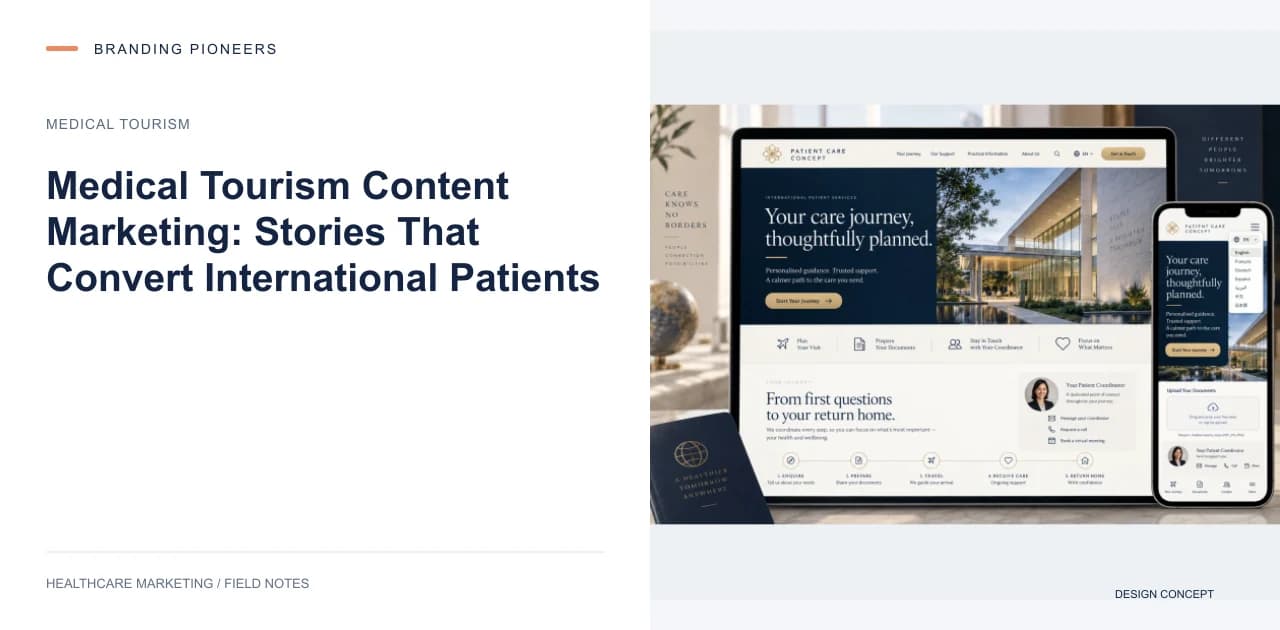
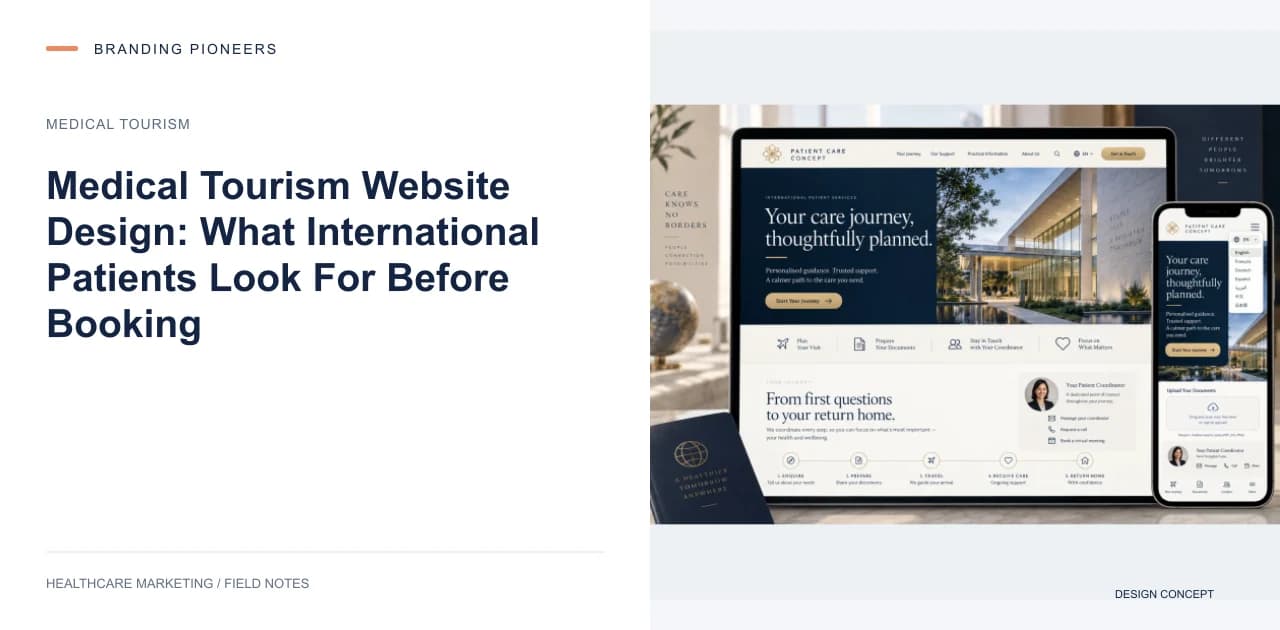
On this archive page, examples include Medical Tourism Content Marketing: Stories That Convert International Patients; Cross-Border Telemedicine: Marketing Indian Specialist Consultations to Africa and the Middle East; Medical Tourism Website Design: What International Patients Look For Before Booking. Choose the article whose question is closest to the decision you are making. Read its source context and implementation details before assigning a task, and identify which assumptions depend on your service mix, location or operational process. If the article includes a tool or case example, follow that reference so its definitions and limits stay attached to the conclusion.
Build a content programme around useful questions
A healthcare social calendar needs more than a sequence of awareness days. Organise the programme around questions the practice regularly receives: what a service involves, how to prepare for a consultation, where a clinician sees patients and which information to bring. Keep educational content distinct from appointment messaging so the reader understands the purpose of each post. For clinical statements, arrange the appropriate professional review before publication and keep the approved wording with the creative file.
Review the collection as a system. A post, carousel, story and video thumbnail each have a different reading pattern, but they should preserve the same terminology, visual identity and core message. Make text readable at phone size and avoid making a complex explanation depend entirely on words inside an image. Captions can carry useful context and link readers to fuller information. When adapting content into another language, review meaning and cultural context rather than treating the translation as a last-minute layout change.
Judge content by the action it supports
Reach, views and engagement help explain distribution within the platform’s own reporting definitions. They do not show whether a person received appropriate care or completed an appointment. Choose the relevant next action for each content type before reviewing results: reading an explanation, visiting a service page, contacting a coordinator or booking a consultation. Use consistent labels and periods, and check whether the practice can respond to the enquiries the content invites.
A creative archive is useful because it lets you inspect message clarity, consistency and format choices. It should not be used to infer a client’s spend, conversion rate or treatment outcomes. When planning a similar programme, take the design principles from the example and write a fresh brief for your services, clinicians and audience. Record permissions for patient images and testimonials before using them. A genuine quotation or photograph should retain its original context and the agreed scope of permission.
Choose the resource that matches your next decision
Begin with the question you need to answer, then choose the most appropriate destination in this collection. A guide explains a method, a checklist supports a repeatable review, a calculator explores assumptions and a case file documents a particular engagement. Reading them as interchangeable resources can create confusion. If you need to brief a supplier, start with the relevant service or framework. If you need to assess evidence, start with the source reports and the limits stated alongside the example.
Use the collection to narrow the investigation rather than adding every possible task to a marketing plan. Identify the stage where progress is blocked: discovery, understanding the service, making contact, arranging an appointment or following up. Choose a resource that addresses that stage and keep a short note of the evidence you need. A focused review is easier to act on than a long list of unrelated recommendations, particularly when clinical approvals and operational changes involve different people.