The Healthcare Advertising Challenge on Facebook
Facebook removed many health-related targeting options in recent years. You cannot target users based on specific medical conditions, medications, or health insurance status. This change frustrated healthcare marketers who relied on condition-based targeting.
But here is what many miss: the restrictions pushed the most effective strategy to the top. Instead of targeting people based on assumed health conditions (which was always ethically questionable), the winning approach is now content-first advertising — drawing patients in with genuinely valuable health information rather than targeting them based on perceived vulnerabilities.
Targeting Strategy 1: Geographic and Demographic Layering
Start with geography. Define a radius around each hospital or clinic location — typically 15 to 30 miles depending on your market density. Layer demographic filters: age ranges that match your patient population, education level (correlates with health information-seeking behavior), and household income (relevant for elective and cosmetic procedures).
For a joint replacement program, target ages 50 to 70 within 25 miles of the hospital. For a fertility clinic, target ages 28 to 42. These broad demographic filters are compliant and surprisingly effective.
Targeting Strategy 2: Interest-Based Audiences
While condition-specific targeting is restricted, interest-based targeting remains available. Target people interested in fitness, nutrition, wellness, yoga, marathon running (for sports medicine), parenting (for pediatrics), or healthy aging.
The logic is indirect but sound: someone interested in marathon training is more likely to need sports medicine services. Someone actively researching nutrition may be managing a chronic condition. These interests signal health consciousness without targeting specific conditions.
Targeting Strategy 3: Custom Audiences from Existing Patients
Upload a hashed list of existing patient email addresses to create a Custom Audience. Then create a Lookalike Audience — Facebook finds users who share behavioral patterns with your existing patients.
This is the most powerful targeting mechanism available. A one-percent Lookalike Audience based on your actual patients will consistently outperform any interest or demographic targeting. The algorithm identifies patterns you would never guess — browsing behavior, app usage, content engagement — and finds similar people.
Important compliance note: ensure your patient email list usage complies with your privacy policy. Patients should have consented to marketing communications.
Targeting Strategy 4: Website Retargeting
Install the Facebook Pixel on your website and create retargeting audiences. Someone who visited your knee replacement page but did not request an appointment sees a follow-up ad with a patient testimonial and a "Book a Free Consultation" call to action.
Retargeting is extraordinarily cost-effective for healthcare because the audience is already familiar with your practice. Retargeting CPAs are typically 50 to 70 percent lower than cold audience CPAs.
Segment your retargeting by page visited. Someone who browsed your cosmetic dentistry page should see cosmetic dentistry content, not a generic hospital ad.
Ad Creative That Works
Video Ads
Video consistently outperforms static images for healthcare. Short physician introduction videos — 30 to 60 seconds of a doctor explaining a procedure or answering a common question — achieve two to three times higher engagement than image ads.
Keep it authentic. Professionally lit but not overly produced. The doctor should speak naturally, not read a script. Film vertically for mobile placement in Stories and Reels.
Patient Story Ads
With proper consent and HIPAA-aligned practices, patient story ads are the highest-converting format for hospitals. A real patient sharing their recovery journey creates emotional connection and social proof simultaneously.
Educational Carousel Ads
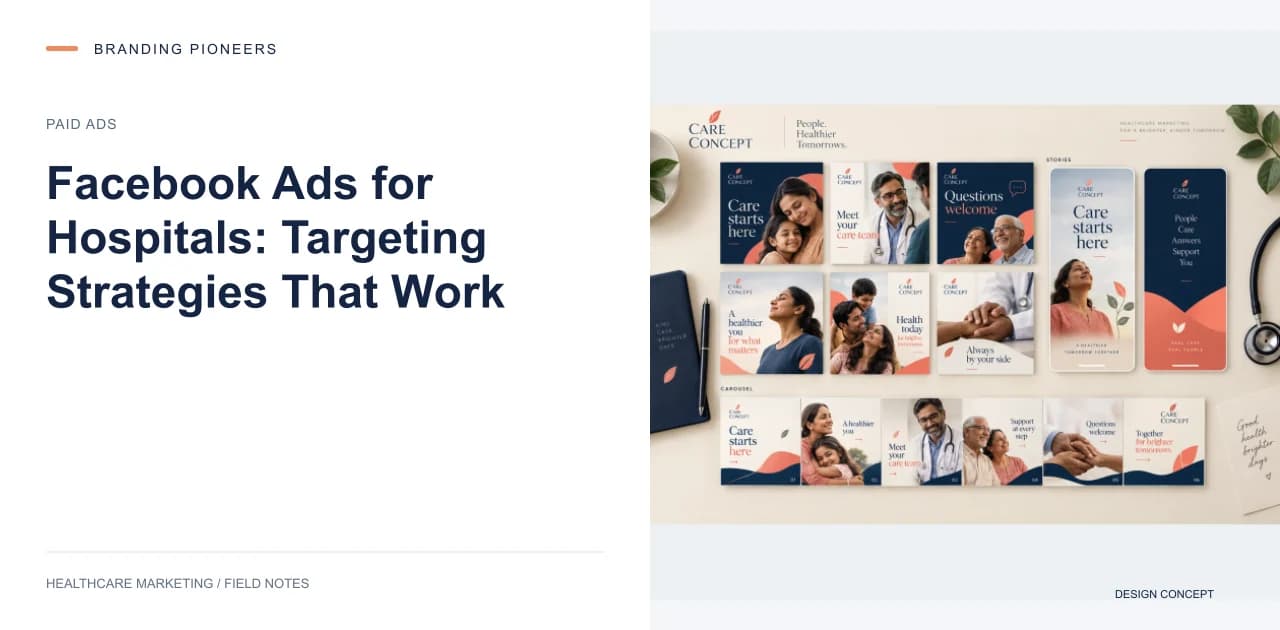
Use carousel format to walk through a topic step by step: "5 Signs You Might Need a Knee Replacement" or "What Happens During an Eye Exam." Each card covers one point with a relevant image. The final card has a clear call to action.
Budget Allocation
Start with 1,500 to 3,000 dollars per month for a single hospital service line. Allocate 60 percent to retargeting and Lookalike audiences, 30 percent to interest-based cold audiences, and 10 percent to testing new creative and audience combinations.
Scale what works. If the fertility clinic campaign delivers qualified leads at 35 dollars each, increase that budget before launching a new service line campaign.
Measuring Hospital Facebook Ad Performance
Track cost per lead, lead-to-appointment rate, and cost per booked appointment. Connect your CRM to Facebook using offline conversion tracking to measure which ad clicks resulted in actual patient appointments.
Most hospitals find that Facebook Ads work best for service lines with longer consideration periods — fertility, joint replacement, cosmetic surgery — where patients research extensively before committing.
Filed underFacebook Ads hospitalshealthcare Facebook advertisingFacebook targeting medicalsocial media ads healthcare

About the author
Arush Thapar
Co-Founder & CTO · Gurugram, India
Arush builds the systems the rest of the company runs on — the patient-acquisition pipelines, the AI chatbots, the analytics that tie a single click to a booked appointment. If a campaign reports a number, it's because something his team built is tracking it.
Free guide · 17 pages
The Patient Acquisition Blueprint
A 90-day plan from first search to booked appointment.