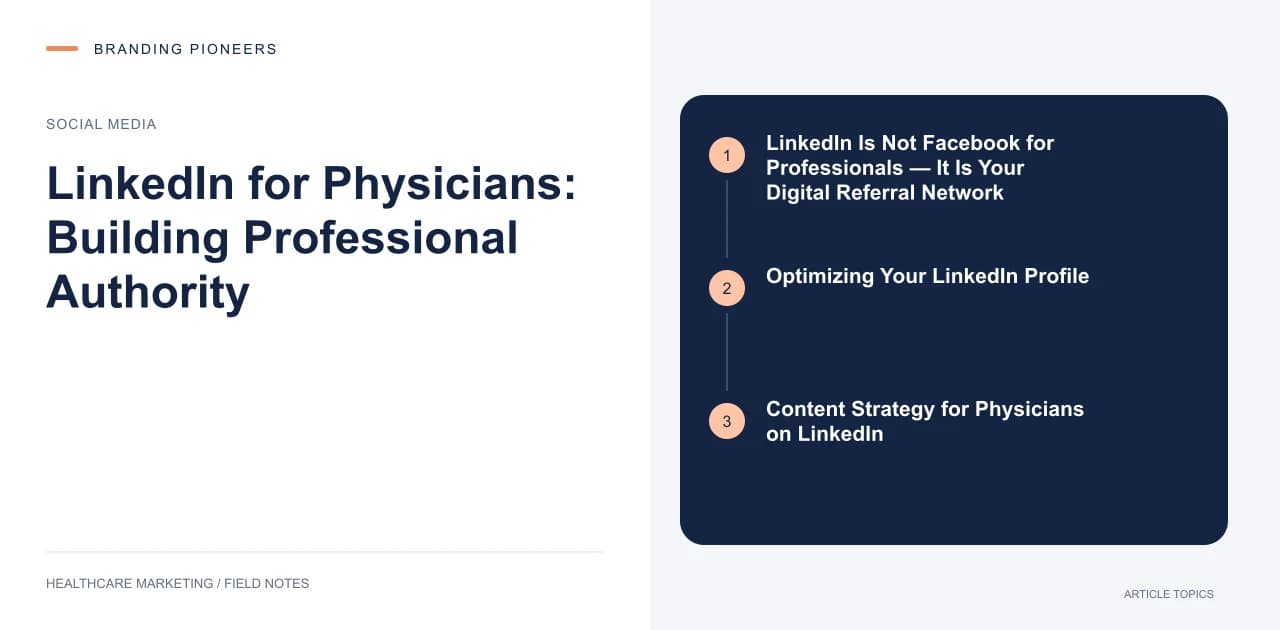
LinkedIn Is Not Facebook for Professionals — It Is Your Digital Referral Network
Most physicians ignore LinkedIn or treat it as an online resume they update when changing jobs. That is a missed opportunity. LinkedIn is where referring physicians research specialists, where hospital administrators evaluate candidates, where health system executives discover thought leaders, and where patients with complex conditions find experts.
A well-maintained LinkedIn presence generates referrals, speaking invitations, media opportunities, and yes — direct patient inquiries. For physicians in competitive specialties, it is one of the highest-ROI marketing activities available.
Optimizing Your LinkedIn Profile
Headline
Your headline is not your job title. It is your value proposition. "Board-Certified Orthopedic Surgeon | Joint Replacement Specialist | Helping Patients Return to Active Lives" is far better than "Orthopedic Surgeon at City Hospital."
Include your specialty, a key differentiator, and a patient-facing benefit. This headline appears in search results, comments, and connection requests — it is your first impression.
About Section
Write your About section in first person. Speak directly to both referring physicians and patients. Open with your clinical focus and experience, include your credentials and notable achievements, mention your approach to patient care, and close with how people can reach you.
Keep it under 300 words but make every sentence count. Include relevant keywords naturally — LinkedIn has its own search algorithm that indexes your profile text.
Featured Section
Pin your best content here: a published article, a conference presentation, a media appearance, or a patient education video. The Featured section is prime real estate that most physicians leave empty.
Experience and Education
List your positions with descriptions that go beyond dates and titles. For each role, mention key accomplishments, procedure volumes, clinical focus areas, and leadership responsibilities.
Content Strategy for Physicians on LinkedIn
Clinical Insights
Share observations from your clinical practice (without patient-identifying information). "Seeing a trend in ACL injuries among weekend athletes in their 40s. Three things I tell every patient about prevention." This type of content positions you as an active, thoughtful clinician.
Case Studies (Anonymized)
Describe interesting or challenging cases, the clinical decision-making process, and outcomes. These demonstrate expertise and invite professional discussion. Other physicians engage with this content because it mirrors their own clinical reasoning process.
Medical Conference Takeaways
Attend a conference and share three to five key insights. Tag the conference and speakers where appropriate. This positions you as someone who stays current and synthesizes new information for your network.
Opinion on Industry Trends
Take a position on healthcare trends: telehealth, AI in diagnostics, value-based care, physician burnout. Thoughtful, well-reasoned opinion posts generate significant engagement because they invite professional dialogue.