The 72-Hour Window Most Hospitals Miss Completely
A patient submits an inquiry form on your website at 11pm on a Tuesday. They are anxious about a knee problem. They have been thinking about it for three months. They just took the step of reaching out.
What happens next in most hospitals: an admin calls back Thursday morning. Voicemail. They try again Friday. The patient has already booked an appointment elsewhere, or they are back in "I'll deal with it later" mode.
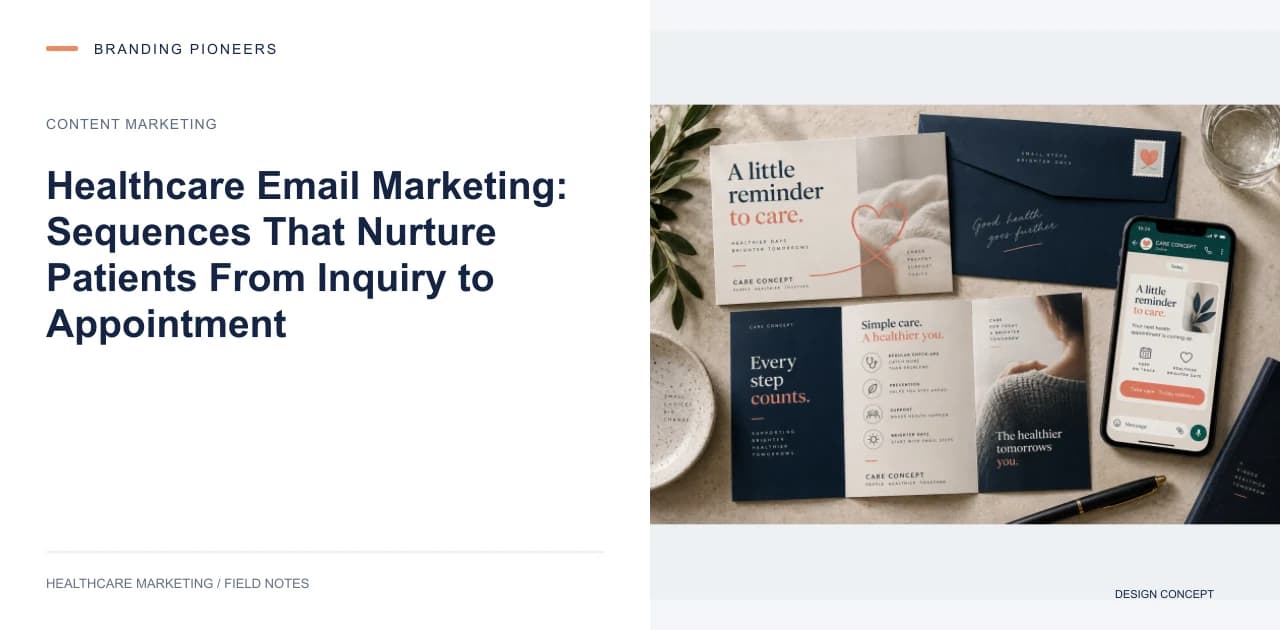
What happens in a hospital with a proper email nurture sequence: an automated email lands in their inbox within 90 seconds. It acknowledges their inquiry. It tells them what to expect next. It shares a relevant article about knee problems. At 8am the next morning, a second email arrives with patient testimonials and doctor profiles. A third email on day three includes an easy booking link with available slots.
In our experience working with healthcare clients over the past two years, practices with no nurture sequence convert only a small share of inquiries to appointments, while practices with a three-email sequence convert roughly three times as many. That is not a small difference — it is the difference between a practice that struggles and one that has a waiting list.
Here is how to build the sequences.
The Technology Stack You Need
You do not need complex marketing automation to start. Mailchimp, Brevo (formerly Sendinblue), or HubSpot CRM (free tier) can handle basic healthcare email sequences. To use email in a way that supports HIPAA, you need a platform willing to sign a BAA (Business Associate Agreement) — Mailchimp Business, Constant Contact, or ActiveCampaign all offer one.
The sequence triggers from your appointment booking system or contact form. When an inquiry comes in, it tags the contact with the relevant condition or specialty and starts the appropriate sequence automatically.
Sequence 1: Post-Inquiry Nurture (No Appointment Yet)
This is your highest-priority sequence. These are warm leads who raised their hand and then went quiet.
Email 1: Immediate (within 90 seconds of inquiry)
Subject line: "We received your inquiry — here is what happens next"
Content: Confirm you received their message. Give a specific timeline for callback (not "we'll be in touch" — "someone from our team will call you between 9am and 6pm tomorrow"). Add one line of reassurance relevant to their condition. Sign off from a real person, not a generic email address.
This email serves two purposes: it confirms the inquiry arrived (patients worry about this) and it sets expectations so they do not book elsewhere out of impatience.
Open rate benchmark: 70 to 85 percent. This is the email they are waiting for.
Email 2: 24 hours later
Subject line: "While you wait: your guide to [condition/procedure]"
Content: A genuinely useful 400-word email about their condition or procedure. Not sales content — educational content. "What to expect from a knee replacement consultation." "The three questions to ask any IVF doctor." "What your MRI report means for back pain."
Include a short video from your relevant specialist if you have one. Link to a long-form article on your website.
This email builds trust and keeps your hospital top of mind. The patient is still evaluating. You are demonstrating expertise before they have even spoken to you.
Open rate benchmark: 45 to 55 percent.
Email 3: 48 to 72 hours later
Subject line: "What to expect at [Hospital Name] for [condition]"
Content: The practical facts that settle a decision. Accreditation status, the treating department's doctors with qualifications and registration numbers, the consultation fee, and what the first visit involves. Direct CTA: "Book your consultation online" with a link to the booking page.
This is the conversion email. The patient is informed (Email 2); now you give them verifiable facts. (Patient testimonials used to go here. In India, NMC's guidelines of 6 October 2026 rule them out for promotion even with consent, Expl. V to para 3.2 and para 6.2; see our NMC guidelines summary.)
Open rate benchmark: 35 to 45 percent. Conversion-to-booking: 12 to 18 percent of this email's recipients.
Sequence 2: Post-Appointment No-Show Prevention
Hospital no-show rates are often surprisingly high. Each no-show is a wasted slot and a missed revenue opportunity. A simple pre-appointment sequence meaningfully cuts no-show rates.
Email 1: Appointment confirmation (immediate)
Full appointment details. Doctor name and photo. Location with Google Maps link. What to bring (past reports, ID, insurance card). What to expect during the visit. Reschedule link if needed.
Email 2: 48 hours before appointment
Subject: "Your appointment is in 2 days — quick prep checklist"
Reminder with details. Three-item preparation checklist. Clear reschedule/cancel option (counterintuitively, giving patients an easy out reduces last-minute no-shows because they reschedule rather than just not showing up).
Email 3: Morning of appointment
Subject: "See you today at [time]"
Brief reminder. Parking or navigation note if relevant. Excited, warm tone. This is the email that converts the wavering patient.