
Language gap kills funnels
English-only websites + chatbots filter out most cross-border intent. Generic translation makes it worse.
Cross-border practices need cross-border infrastructure. We run intake in Hindi, Arabic, French, Tagalog, Swahili — voice, WhatsApp, web — and pipe everything into a single CRM. Booked patients, not language barriers.
The pain you brought
English-only websites + chatbots filter out most cross-border intent. Generic translation makes it worse.
Patient stalls at booking because nobody handles the visa coordination. Drop-off climbs.
Files come in by email + WhatsApp. No structured intake means cycle-eligibility takes weeks.
Our system, fitted
Hindi, Arabic, French, Tagalog, Swahili. Hreflang done right. Geo-routed entry pages per country.
Voice, WhatsApp, web chat in eight languages. Direct CRM write-back. Out-of-hours booking.
NABH (India), JCI (international), ASCI, GDPR for EU referrers. Pre-flight on every campaign.
Receipts

Geographic reach
Geo-routed entry pages

Cross-border clinics
Multilingual funnels live

Arabic creative
Native Arabic creative

Multi-brand · web
Multilingual · hreflang-correct
Why choose us
Six reasons hospitals, clinics, and doctors pick a healthcare-only firm over a generalist agency.
It's all we do. No retail, no fintech — the whole team thinks in patient journeys, clinical trust, and the way people actually choose a doctor.
Receptionists, WhatsApp triage, and attribution built in-house — we answer patients in seconds and tie every click to a booked appointment.
HIPAA-aware handling, ASCI-reviewed creative, and GDPR/DPDP sign-off on every campaign — our standard, not an upcharge or an afterthought.
The senior who pitched you stays on the engagement. No bait-and-switch to juniors learning on your budget.
Patient-level attribution across calls, forms, and walk-ins. Monthly reports show booked patients — not just clicks and impressions.
We name our clients and show the work. Quarterly reviews with the numbers attached, every cycle.

Healthcare-only · since 2016
A team that does one thing well.
Keep reading
The services we run for them, the problems we hear most often, and the receipts behind the work.
How we run it for practices like yours
How we run it for practices like yours
Long-form playbook
Inside Healthcare SEO
Inside Healthcare SEO
Inside Healthcare SEO
Pairs with this engagement
Pairs with this engagement
A specific pain we solve
A specific pain we solve
Common issue in this segment
Common issue in this segment
Launch service launch plan · 9 mo
Doctor brand ivf growth programme · 6 mo
Structured data code, added behind the scenes of a page, that spells out the content for search engines. Healt…
Three page-experience metrics Google tracks: LCP for loading speed, INP for interactivity, and CLS for visual …













Free executive download
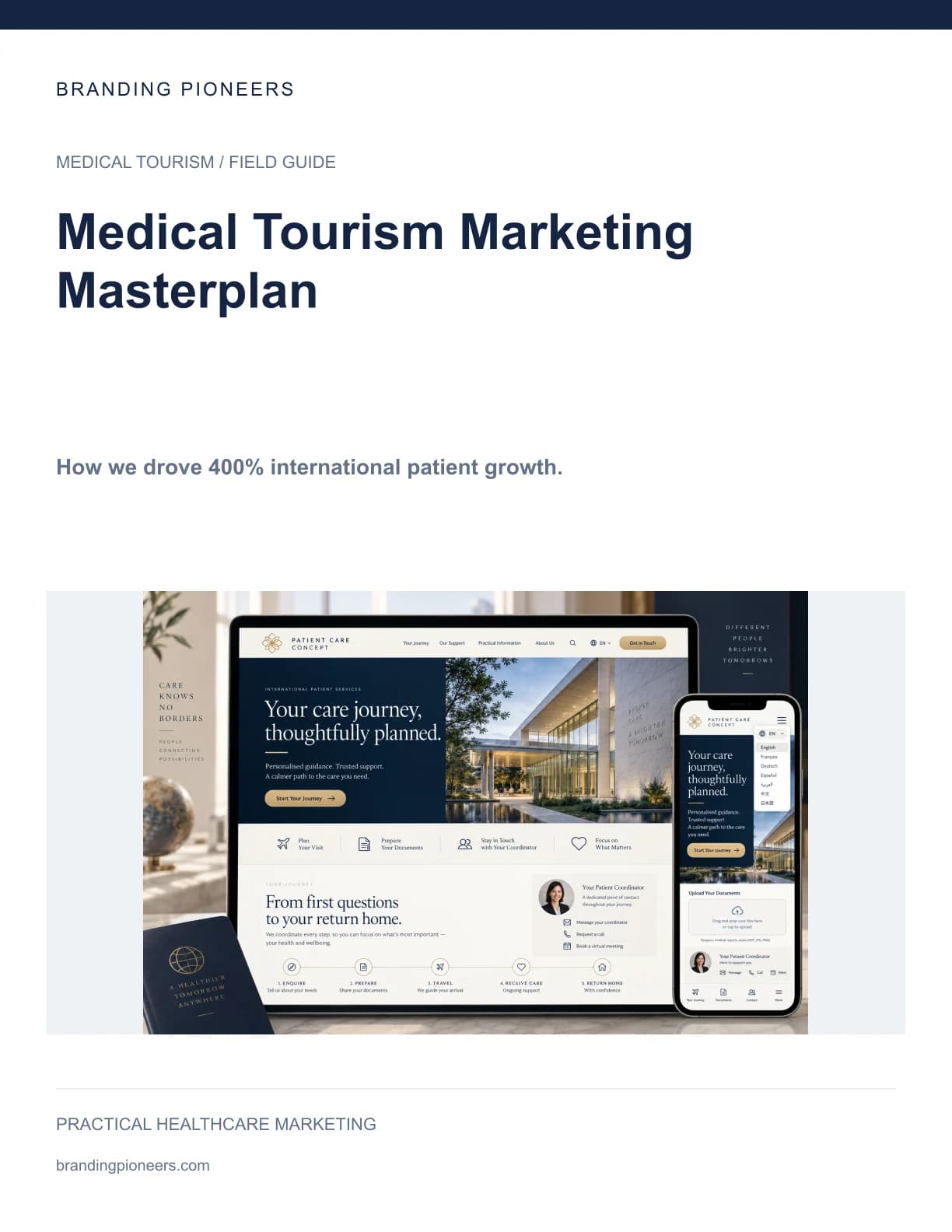
Reaching international patients country by country.
15 pages · Country selection · multilingual pages · WhatsApp-first funnels
Your turn
Reading for facilitators
International patients compare countries before clinics, so the medical tourism lead engine starts with source markets. The work runs on multilingual SEO, multilingual ads and a WhatsApp chatbot for fast replies.
The medical tourism marketing guide and medical tourism statistics cover the market; medical tourism PR builds trust abroad. See the medical tourism case studies for results.
Practical notes & supporting evidence
Start hereEight languages. One booked appointment.
Establish contextUse the published scope and relevant source material
Choose the next stepFollow the linked resource and assign an owner
Medical-tourism enquiries often need coordination before a treatment decision can be made. Explain the information a coordinator needs, the next discussion and the provider’s role without promising suitability or outcomes in marketing copy. Language, document handling and follow-up ownership belong in the brief alongside acquisition channels.
Start with the task a visitor needs to complete. Finding a treatment, checking a clinician’s background, identifying a location and asking for an appointment are related tasks, but they need different information. Make those paths visible in the navigation and on the relevant service pages. A good brief includes the content and the operational destination of each action: who receives the form, what happens after submission and how a visitor obtains help when the first contact route fails.
Desktop screens help explain page hierarchy, but they cannot establish the quality of the mobile experience. Check readable text, tap targets, menu behaviour and form validation on a phone. Long doctor biographies and treatment descriptions should remain easy to scan without hiding important details in decorative interactions. When a collection shows both desktop and mobile artwork, compare the priority of information across them. The mobile layout should preserve useful content rather than simply shrink the desktop composition.
A launch review should cover content ownership, approved contact information, working forms, redirects and the URLs that search engines are expected to index. If a site replaces an existing website, map important old pages to appropriate new destinations. Check titles, descriptions, canonicals and internal links against the actual released URLs. Keep the review list separate from the visual approval: a polished mockup does not prove that a live booking form, analytics event or redirect behaves correctly.
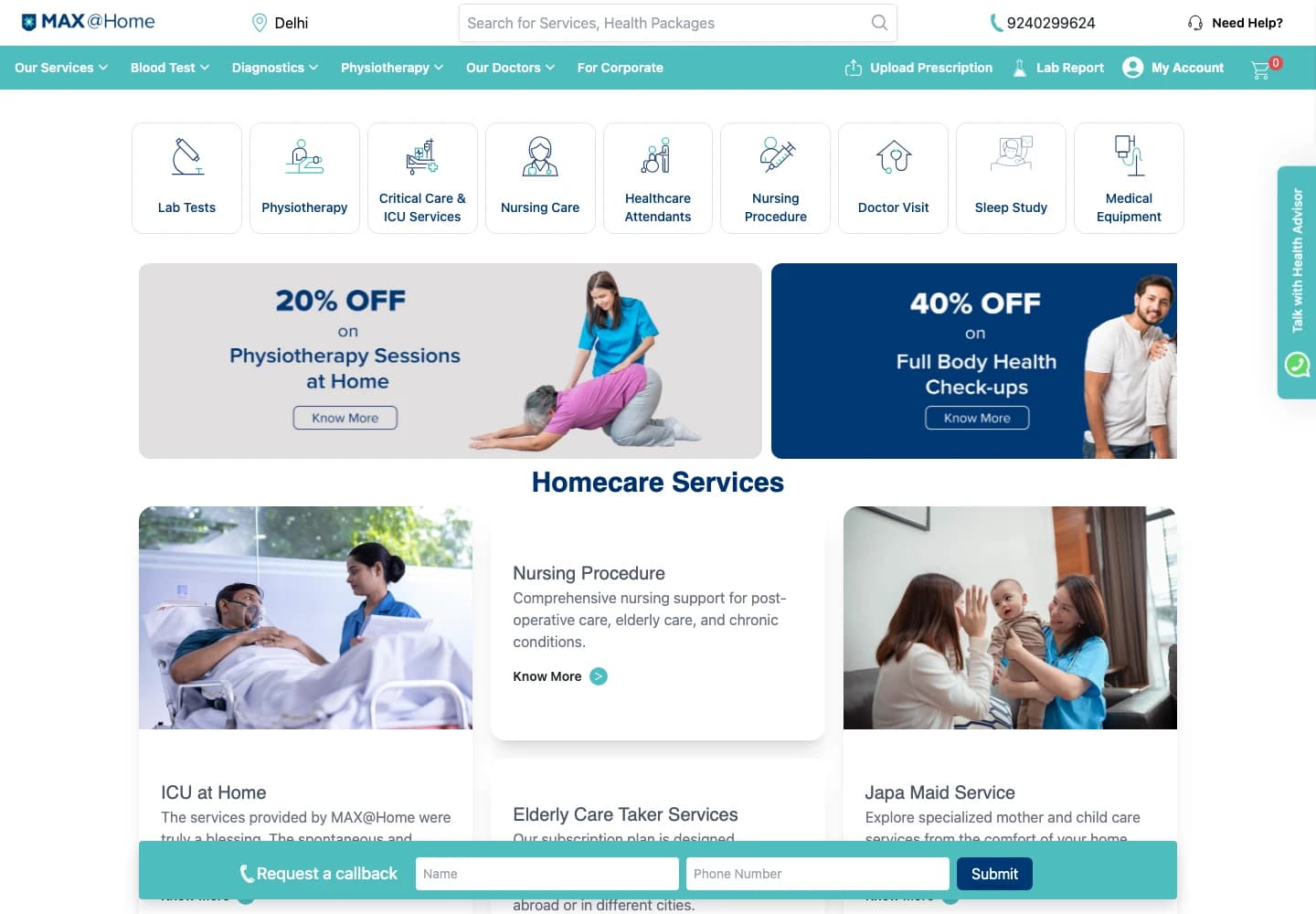
Document the difference between a design study, a delivered website and a live capture. A design study explains a proposed experience. A live capture records what the site looked like when it was captured. Neither alone establishes an improvement in appointment conversion. For an outcome comparison, use a defined period and consistent event definitions, then reconcile digital enquiries with attended appointments where the practice can do so. Performance and accessibility checks should be repeatable after future content edits, not only at the first launch.
Client portfolio · Healthcare websites


