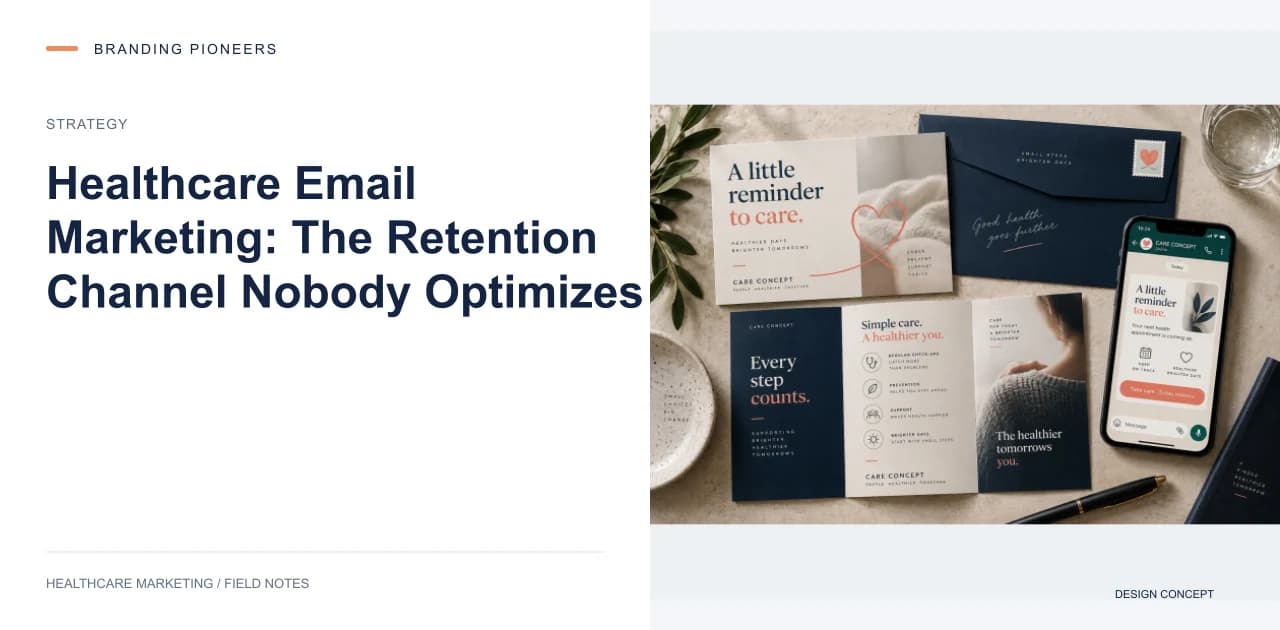
The Forgotten Channel With the Highest ROI
Email marketing delivers an average ROI of 36:1 across industries. In healthcare, the ratio is even higher because the "sale" you are driving — a medical appointment — has inherently high value and the cost of the email is near zero.
Yet 82 percent of healthcare practices have no email marketing program. They spend thousands acquiring patients through ads and SEO, then do nothing to retain those patients or encourage repeat visits. The result: patients drift to competitors, forget to schedule follow-ups, and never discover additional services the practice offers.
Email marketing for healthcare is not about sales — it is about staying connected with patients between visits. A practice that stays in a patient's inbox stays in their mind. When they need care, they think of you first.
The Five Essential Healthcare Email Types
Not every email serves the same purpose. Build your program around these five types:
1. Welcome sequence. Triggered when a new patient books or completes their first visit. A 3-email sequence over 10 days: Email 1 (immediately): "Welcome to [practice name] — what to expect." Email 2 (day 3): "Meet your care team" with doctor bios and photos. Email 3 (day 10): "Resources for your health" with links to relevant educational content.
The welcome sequence sets expectations and builds the relationship from the start. Patients who receive a welcome sequence have 28 percent higher retention at 12 months compared to those who receive no onboarding communication.
2. Appointment reminders and follow-ups. Not technically marketing emails, but they are the most important emails your practice sends. Confirm every appointment via email (complemented by SMS and WhatsApp). Send a post-visit follow-up asking about their experience and providing relevant care instructions.
These transactional emails get opened far more reliably than any marketing email. Use them strategically: include a link to leave a Google review, a mention of related services, or a link to a relevant blog post.
3. Recall and reactivation emails. The most directly revenue-generating email type. Schedule recall emails based on recommended visit intervals: 6-month hygiene recalls for dental patients, annual physical reminders for primary care patients, and follow-up appointment reminders based on treatment plans.
Recall emails recover 15 to 25 percent of lapsed patients who would not have returned otherwise. For a dental practice with 2,000 patients who should visit twice yearly, recovering even 10 percent of lapsed patients represents 200 additional appointments per year.
4. Educational newsletter. Monthly (not weekly — weekly is too frequent for healthcare) email with 2 to 3 pieces of useful health content. Seasonal health tips, condition awareness, prevention advice, and new treatment information. Frame everything as helpful information, not marketing.
The newsletter keeps your practice top-of-mind between visits. Subscribers who engage with your newsletter are 2 to 3 times more likely to book an appointment when they need care compared to patients who receive no communication.
5. Promotional emails. Announce new services, new doctors, special offers, or health events. Send no more than one promotional email per month — more than that and patients start unsubscribing. Always lead with the patient benefit, not the business benefit. "Our new laser treatment usually means a shorter recovery — here is what to expect" is patient-first (and avoids claims like "painless", which India's NMC guidelines bar outright). "We are excited to announce our new laser system" is practice-first.
Building Your Email List Compliantly
In healthcare, email list building requires attention to consent and privacy regulations:
Explicit opt-in. Collect email addresses with clear consent language: "Would you like to receive health tips and appointment reminders via email?" Checkboxes should be unchecked by default — pre-checked boxes are not genuine consent in many jurisdictions.
Registration forms. Include an email opt-in checkbox on your patient registration forms, both digital and paper. Approximately 65 to 75 percent of patients opt in when asked during registration.
Website opt-in. Add a newsletter signup on your website — in the footer, on blog posts, and as a pop-up offering a useful download (a health guide, a preparation checklist, a recovery timeline). Website opt-ins typically represent 5 to 10 percent of unique visitors.
Never purchase email lists. Bought lists have terrible engagement rates, trigger spam filters, and can violate anti-spam regulations. Build your list exclusively from patients and genuine opt-ins.