Picture this: someone searches "IVF treatment cost Pune," finds your clinic, fills in a contact form at 11 PM on a Tuesday, and then goes to sleep. Your team picks it up at 9:30 AM the next morning. By then, the same person has already had a WhatsApp conversation with a clinic that responded within 15 minutes of the inquiry.
You lost that patient not because of your clinical quality, your prices, or your location. You lost because you didn't have a lead nurturing system.
Healthcare leads are not like e-commerce leads. A patient considering joint replacement surgery doesn't decide in 24 hours. They research for 3–8 weeks on average. They talk to family. They second-guess themselves. They get intimidated by the cost. Then they decide — and they choose whichever provider they feel most connected to.
Lead nurturing is how you build that connection systematically, at scale, over the weeks between first inquiry and final decision.
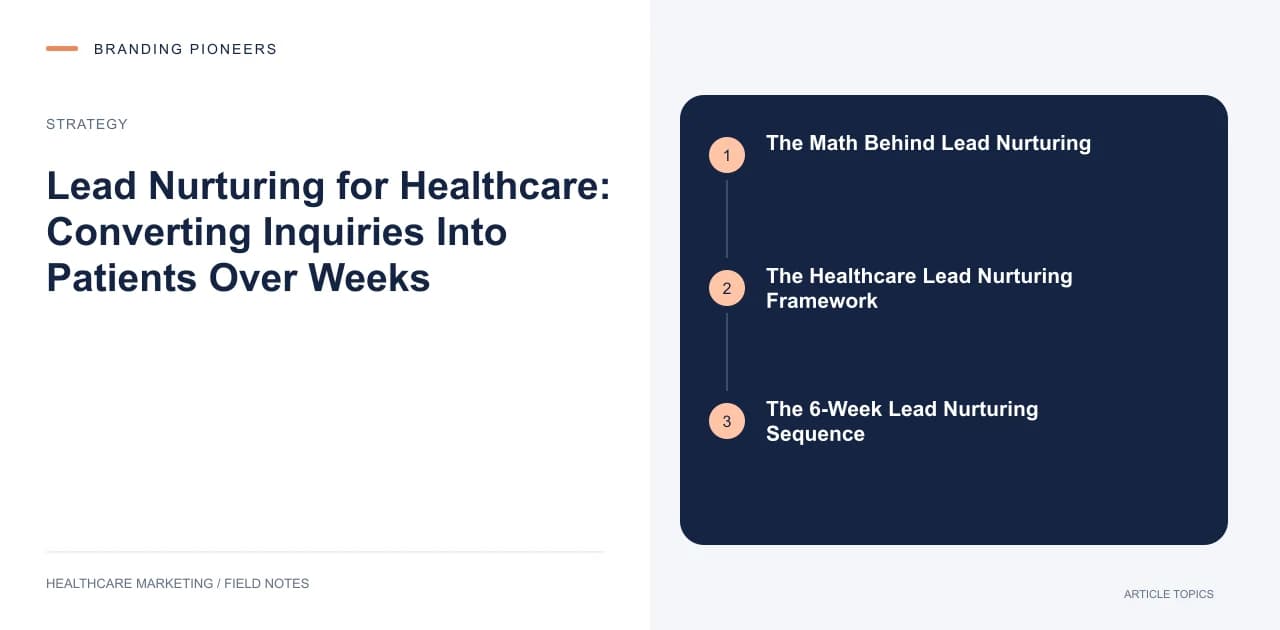
The Math Behind Lead Nurturing
Typical hospital scenario without lead nurturing:
- 500 inquiries per month
- 25% conversion rate (125 patients)
- 375 "lost" leads per month
With proper nurturing:
- Same 500 inquiries
- 40% conversion rate (200 patients)
- 300 lost leads
That's 75 additional patients per month from the same ad spend. At ₹8,000 average revenue per consultation, that's ₹6 lakh additional monthly revenue — just from following up with people who already raised their hand.
Patients who inquire about a procedure and don't immediately book often still make a decision within a few months. The critical question: are you staying in front of them during that window, or have you given up after one unanswered call?
The Healthcare Lead Nurturing Framework
Effective nurturing for healthcare has three components: speed, relevance, and consistency.
Speed: The first response must come within 5 minutes during business hours. Response speed makes a dramatic difference to conversion probability — far more than most teams assume.
Relevance: Every message should relate to what the patient actually asked about. Someone inquiring about orthopaedics should receive orthopaedic content, not a general hospital newsletter.
Consistency: Nurturing works through repeated, relevant touchpoints — not a single follow-up call. The sequence should span 4–8 weeks with 6–12 touchpoints.
The 6-Week Lead Nurturing Sequence
Here's the complete sequence we use for elective procedure leads (IVF, orthopaedics, bariatric surgery, cardiac surgery, ophthalmology):
Day 0: Immediate Response (within 5 minutes)
WhatsApp/SMS: "Hi [Name], thank you for reaching out to [Hospital]. Your inquiry about [Specialty] has been received. Our coordinator [Name] will call you within 30 minutes. Meanwhile, here's a guide that answers most common questions about [Specialty]: [link]"
The link goes to a comprehensive procedure information page, not your homepage. This serves two purposes: it gives the patient useful information immediately, and it keeps them engaged while they wait for the call.
Follow-up call (within 30 minutes): The coordinator calls, introduces themselves by name, and asks: "I see you were asking about [Specialty]. Can you tell me a bit more about what you're looking for?" This is not a sales call. It's a listening call.
Day 1: Doctor Introduction
WhatsApp/Email: Send a brief video message or profile from the specialist who would handle their case. Not a promotional message — a genuine introduction.
"Hi [Name], I'm Dr. [Name], [Specialty] specialist at [Hospital]. I understand you had some questions about [Condition/Procedure]. I've put together a short video explaining the basics of [Procedure] and what patients typically want to know. Happy to answer any specific questions you have — you can reply to this message or ask your coordinator to arrange a call with me."
This is the most powerful single nurturing touchpoint. In our experience, personal doctor outreach at day 1 meaningfully increases conversion rates, more than almost anything else in the sequence.
Day 3: What the Process Looks Like
WhatsApp/Email: Share a short explainer of the care pathway.
"[Name], people considering [Procedure] usually ask what happens between the first consultation and recovery. Dr. [Doctor] recorded this short walkthrough of each step. [Video or guide link]."
Patient stories and video testimonials once filled this slot. In India they no longer can: NMC's 2026 guidelines bar patient testimonials and promotional patient stories, and consent does not change that (Expl. V to para 3.2; para 6.2). A step-by-step explainer, with the doctor's name, qualifications and registration number on it, does the same reassuring job without the risk.
Day 7: Educational Content
Email/WhatsApp: A piece of content specifically relevant to their inquiry.
Examples:
- Orthopaedics lead: "7 Signs You May Need a Knee Replacement (and When to Seek Help)"
- IVF lead: "Understanding Your IVF Cycle: A Week-by-Week Guide for First-Time Patients"
- Cardiac lead: "Bypass Surgery vs Stenting: How Your Doctor Decides Which Is Right for You"
This positions your hospital as the expert source, not just a service provider. Patients who read this kind of content tend to convert at a noticeably higher rate than those who don't.
Day 14: Addressing Objections
Email: Directly address the most common reasons people don't proceed.
For IVF: "We know the two biggest concerns patients have about IVF treatment are cost and success rates. Here are honest answers to both, with our own data."
For orthopaedics: "Many patients worry about the recovery time after knee replacement. Here's what recovery actually looks like month by month, based on our patients' experiences."
Acknowledge the concern directly and address it with data. This is far more effective than ignoring objections and hoping they go away.
Day 21: Coordinator Check-In
WhatsApp (not email): A personal message from the coordinator who spoke to them on Day 0.
"Hi [Name], this is [Coordinator Name] from [Hospital]. I just wanted to check in — have you had a chance to think more about [Specialty/Procedure]? Do you have any questions I can help answer, or would you like to schedule a brief call with Dr. [Doctor]?"
First-name basis, personal, low pressure. The message should not have a CTA to "book now" — the CTA should be to have a conversation.
Day 30: A Clear Next Step
WhatsApp/Email: Make the decision easier with facts, not an offer.
"[Name], in case it helps you plan: a consultation with Dr. [Doctor] costs ₹[fee], and the next available slots are on [dates]. Your coordinator can answer any questions about what the consultation includes."
Free consultations and discounts were once standard at this stage. NMC's 2026 guidelines now bar discounts, limited-period offers and free procedures as inducements, while allowing fees to be disclosed factually (para 8.1(x)). Patients deciding on care want certainty about cost and access, and a plain fee statement gives them that.
Day 45: Reactivation
WhatsApp: If still no response to prior touchpoints:
"Hi [Name], we haven't heard from you in a while. That's completely fine — decisions about your health take time. Whenever you're ready to talk, we're here. If you'd like, we can put together a brief summary of what treatment with us would look like for your specific situation, with no obligation. Just reply 'Yes' and we'll send it over."
This message often gets responses from people who've been quietly lurking.
Day 60: Final Nurture
Email: A comprehensive "last chance without pressure" message.
"[Name], we know healthcare decisions are personal and take time. We'd love to be your choice when you're ready. In the meantime, here's everything you'd want to know about treatment at [Hospital]: [comprehensive link]. If you decide to go elsewhere, we completely understand and wish you the best with your care."
This counterintuitively generous message often triggers conversions from leads that seemed completely cold.
Segmenting Your Nurture Sequences
Not all leads need the same sequence. Segment by:
Procedure complexity: High-value, high-consideration procedures (cardiac surgery, joint replacement, IVF) need longer sequences. Routine procedures (eye check, health checkup) need 3–5 touchpoints maximum.
Engagement level: If someone opens your emails and clicks your links, they're actively considering — increase message frequency slightly and add a stronger CTA earlier. If someone doesn't open anything in the first week, don't increase volume — try a different channel (phone call after email).
Geographic distance: Patients traveling from other cities need different content — accommodation options, travel-friendly scheduling, coordination support.
Setting This Up Without a Marketing Team
Small clinics without dedicated marketing teams can implement a basic nurture sequence with just WhatsApp Business and a coordinator's calendar.
The minimum viable lead nurture for a small clinic:
- Respond to every inquiry within 1 hour with a WhatsApp message (manually or via a BSP auto-reply)
- Follow-up call within 2 hours
- Send a relevant information link 3 days after initial contact
- Check-in call at day 14
This 4-touchpoint sequence alone, consistently executed, typically leads to a meaningful improvement in conversion rates.
If you want help building a lead nurturing system for your hospital — including the automation workflows, content calendar, and team training — talk to Branding Pioneers.