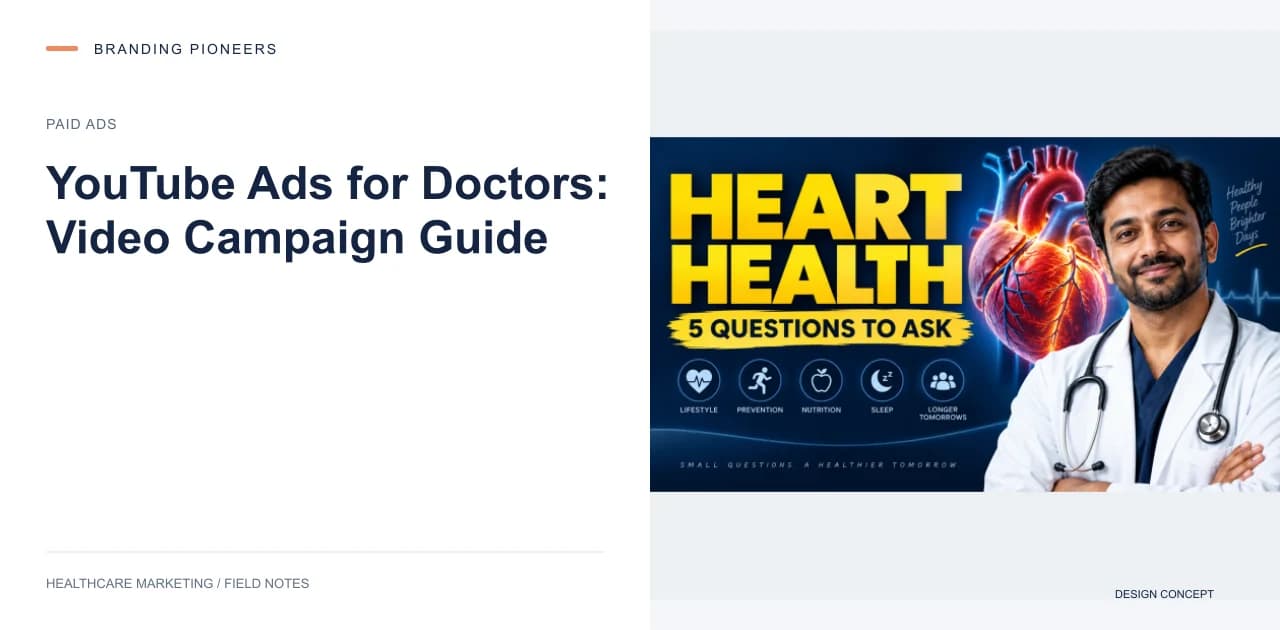
Why YouTube Deserves a Place in Your Ad Budget
YouTube is where patients go to see procedures before they commit. They watch "what to expect during cataract surgery," "dental implant procedure explained," and "day of knee replacement surgery." These are high-intent viewers actively considering treatment.
What makes YouTube uniquely valuable is that video builds trust faster than any other medium. A patient who watches your surgeon explain a procedure for two minutes feels a level of familiarity that no text ad can create. That familiarity dramatically shortens the decision cycle.
YouTube Ads also tend to be significantly cheaper than Google Search Ads for healthcare. While a click on "orthopedic surgeon near me" might cost 12 dollars, a YouTube view typically costs 0.05 to 0.15 dollars.
Campaign Type Selection
Skippable In-Stream Ads
These play before or during other YouTube videos. Viewers can skip after five seconds, and you only pay when they watch at least 30 seconds (or the full ad if shorter). This is the best format for physician introduction videos and procedure explainers.
Discovery Ads
These appear in YouTube search results and as suggested videos. They work like Google Search Ads but for video content. When someone searches "how much do dental implants cost," your ad appears alongside organic results.
Discovery ads are ideal for educational content. They capture patients who are actively searching for information — the highest-intent YouTube audience.
Bumper Ads
Six-second non-skippable ads designed for brand awareness. Use these for retargeting — a brief reminder ad that keeps your practice top of mind for someone who already visited your website.
Video Content That Converts Patients
The Physician Introduction Video (60-90 seconds)
Open with the doctor speaking directly to camera: "I am Dr. Sharma, a board-certified orthopedic surgeon. I have been helping patients get back to active lives for 15 years." Include quick shots of the office, the team, and the doctor interacting with a patient (with consent). Close with a clear call to action.
This video type works because patients choose doctors based on personal connection. Seeing and hearing a doctor for 60 seconds creates more trust than reading an entire website.
The Procedure Explainer (2-4 minutes)
Walk through what the patient can expect before, during, and after a procedure. Use animations or diagrams for the clinical portions. Keep the tone reassuring and informative.
These longer videos work well as Discovery ads because they match the informational search intent. Someone watching a four-minute video about LASIK surgery is a highly qualified lead.
The Patient Testimonial (60-120 seconds)
(Check local rules first: in India, NMC's 2026 guidelines bar doctors from requesting or sharing patient testimonials, even with consent — see our NMC guide; in Australia, AHPRA bans testimonials about clinical aspects; Ontario and Alberta bar physician testimonials; and in the UAE, health ads need DHA, DoH or MOHAP approval before they run.)
A real patient sharing their experience — the problem they had, why they chose your practice, what the experience was like, and how they feel now. These are the highest-converting ad format in healthcare video advertising.
Ensure you have written consent that specifically covers video use in advertising. Keep the production quality good but not overly polished — authenticity matters more than cinematography.