Dermatology Is the Most Competitive Specialty in Urban India
In South Delhi's Greater Kailash, there are 14 dermatology clinics within 2 kilometres. In Bengaluru's Indiranagar, 11. In Mumbai's Andheri, 19.
Every single one of them wants to rank first on Google for "dermatologist near me." Every one of them runs Instagram ads showing skin transformations. And most of them are doing it wrong in ways that cost them ₹40,000 to ₹1,20,000 per month in wasted budget.
Dermatology marketing is a winner-take-most game in the digital channel. The clinic with better SEO, better creative, and better ad targeting captures a disproportionate share of new patients. This guide covers how to be that clinic.
Why Dermatology Is a Unique Marketing Challenge
Visual results tempt visual proof — and that is now the trap. Unlike cardiology or nephrology, patients can see the outcome, so before-and-after photos used to be every skin clinic's main asset. Under the National Medical Commission's guidelines of 6 October 2026 they are out for promotion even with consent, unless used strictly for scientific or educational purposes with anonymised consent (para 6.2, 8.1(v)). The clinics that adapt fastest will win on explanation instead: what a treatment does, who it suits, realistic timelines and risks. Our NMC guidelines summary has the full list of rules.
Search intent is extremely varied. "Dermatologist near me" is one query. But "acne scar treatment cost Delhi," "best treatment for melasma," "laser hair removal side effects," and "what is isotretinoin for acne" are all patients at different funnel stages with different needs.
Cosmetic vs medical dermatology attract different patients. Acne treatment, eczema, and psoriasis patients are medically driven. Laser hair removal, PRP, and skin brightening patients are aesthetic-driven. Your marketing must address both — sometimes separately.
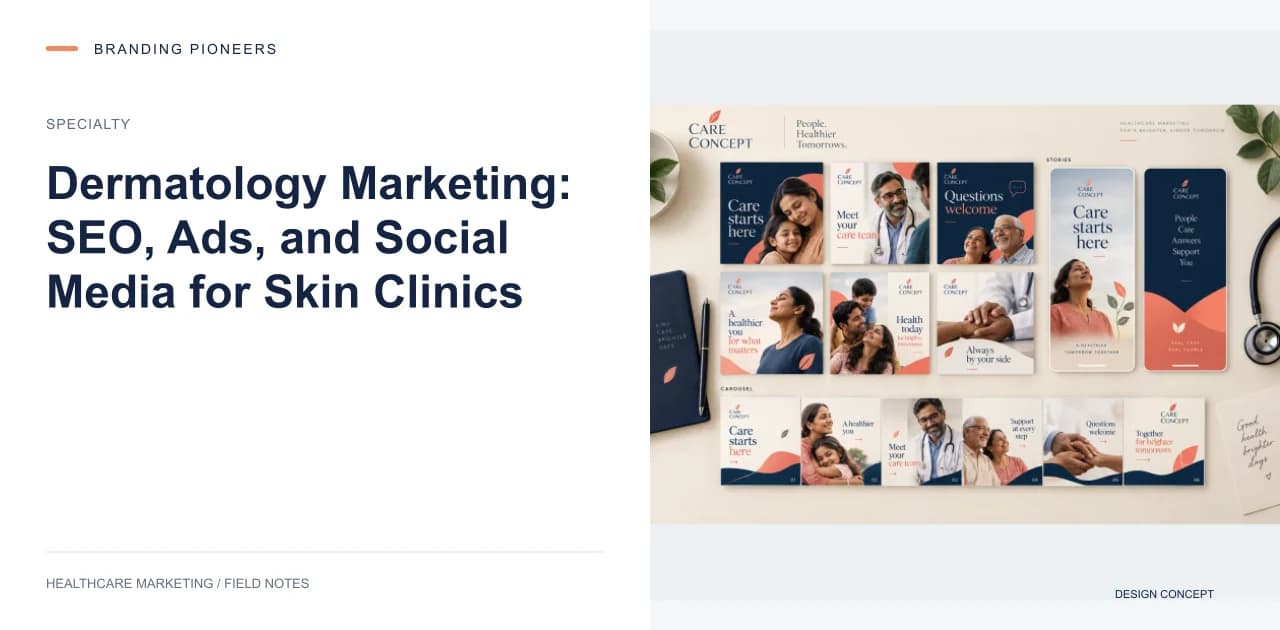
The Instagram factor. Dermatology practices that treat Instagram as an afterthought lose a meaningful share of potential aesthetic patients to clinics with better visual content, regardless of clinical quality.
SEO: How to Rank for Dermatology Searches
The Keyword Architecture
Your website needs content that covers three levels:
Broad intent (awareness):
- "What causes acne scars"
- "Is melasma permanent"
- "Types of eczema and how to tell them apart"
Treatment intent (consideration):
- "Acne scar laser treatment India"
- "Chemical peel vs microdermabrasion for pigmentation"
- "PRP for hair loss — how many sessions needed"
Local intent (decision):
- "Dermatologist in Koramangala"
- "Laser hair removal clinic Bandra"
- "Best skin doctor Gurugram"
Most clinics only have a homepage and a brief "services" page. Building out individual treatment pages and blog content for the first two layers generates organic traffic that converts.
Treatment Pages That Rank
Each treatment needs its own dedicated page, 800 to 1,500 words, covering:
- What the condition or procedure is
- Who is a good candidate
- What to expect during and after treatment
- Recovery timeline
- Cost range (honesty builds trust and reduces pre-qualification calls)
- Diagrams of how the treatment works (no patient photos)
- Doctor explaining in a short video embed, with qualifications and registration number
- FAQ section (15+ questions minimum)
Skin clinics that build out a comprehensive set of treatment pages over several months typically see organic traffic climb sharply, along with a real increase in new patient bookings from organic search.
Local SEO for Multi-Area Clinics
If you have clinics in multiple areas or want to capture patients from neighboring areas, build individual location pages. "Dermatologist in Jubilee Hills," "Skin Clinic in Banjara Hills" — each with unique content about that area and the doctor at that location, with qualifications and registration details.
Google Business Profile
Complete every field. Use the posts feature weekly — share an awareness tip, a procedure spotlight, a change in timings. Upload 30+ photos. Respond to every review. Use the Q&A feature to pre-answer common questions.
Skin clinics with 150+ Google reviews get noticeably more profile clicks than those with under 50. Reviews matter more in dermatology than almost any other specialty because patients make decisions based on visible results, and reviews describe those results. Let them come on their own, though (see the reputation section below).
Google Ads: What Works for Skin Clinics
Campaign Structure
Run separate campaigns for:
- Medical dermatology (acne, eczema, psoriasis, hair loss)
- Cosmetic procedures (laser hair removal, PRP, HydraFacial, skin brightening)
- Anti-aging (Botox, fillers, RF tightening, HIFU)
Why separate? Different keywords, different landing pages, different bidding. Mixing them creates irrelevant matches and wastes budget.
Budget Benchmarks for Delhi/NCR (2026)
| Campaign Type | Monthly Budget | Expected CPL |
|---|---|---|
| Medical derm (acne, eczema) | ₹20,000-₹40,000 | ₹300-₹600 |
| Laser hair removal | ₹15,000-₹35,000 | ₹250-₹500 |
| Anti-aging/Botox | ₹25,000-₹50,000 | ₹400-₹800 |
| Combined | ₹60,000-₹1,25,000 | ₹350-₹650 avg |
These numbers assume well-structured campaigns with tight ad groups, relevant landing pages, and negative keyword lists maintained weekly. Poorly structured campaigns spend far more for the same results.
Landing Pages: The Conversion Layer
Do not send ad clicks to your homepage. Each campaign needs a dedicated landing page with:
- Procedure name prominently in H1
- A plain-language summary of what the treatment does, above the fold
- Short explainer video by the doctor
- Price range stated clearly
- Single CTA (WhatsApp, call, or form — pick one)
- The doctor's qualifications and SMR/NMR registration number
- "Book a consultation" button that repeats throughout the page
Landing pages built this way convert far better than generic homepage landings.