Every hospital has a marketing strategy. Most of them are wrong.
Not wrong because they picked bad tactics. Wrong because they started with tactics instead of strategy. "Let's run Google Ads" is not a strategy. "Let's be on Instagram" is not a strategy. "Let's launch a health blog" is not a strategy.
A strategy answers three questions first:
- Who are we trying to reach, and what do they need?
- What do we want them to do, and how will we know if it's working?
- What is the most effective way to get in front of them with the right message?
Tactics come after you've answered these questions. Not before.
This is how the best-run hospital marketing teams build plans that produce consistent, measurable patient growth. It's also how smaller hospitals can compete with them on smaller budgets.
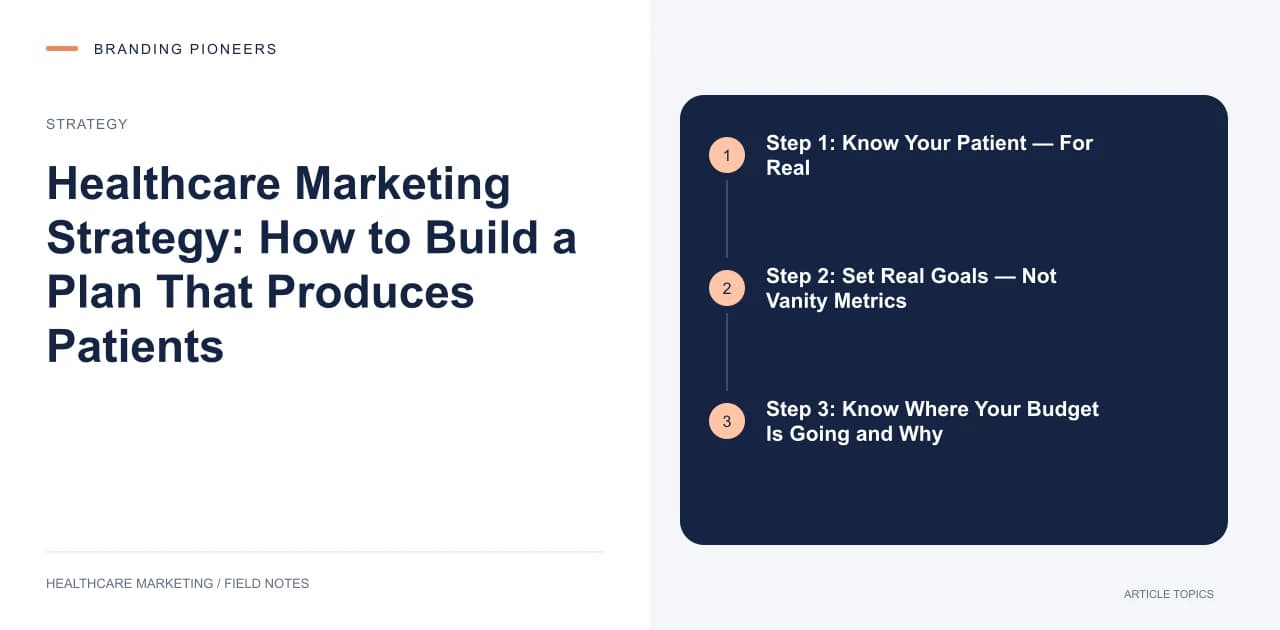
Step 1: Know Your Patient — For Real
Most hospital marketing plans start with "our target audience is patients in Delhi NCR." That's not an audience. That's a geography.
A useful audience definition for marketing looks like this:
Primary audience for our knee replacement program:
- Age: 55–72
- Income: ₹12+ lakh household income (private hospital budget)
- Lives within 25 km of our hospital
- Has been experiencing knee pain for 6+ months
- Has already seen a GP or physiotherapist who hasn't resolved the problem
- Is researching surgical options but is anxious about recovery time and cost
- Primary information sources: Google search, family doctor recommendations, children who research on their behalf
This description tells you:
- Which channels to use (Google Search — they're actively searching; WhatsApp — their adult children will share information via messaging)
- What message to lead with (addressing anxiety about recovery and cost, not promoting cutting-edge technology)
- What content to create (recovery timeline guides, cost transparency pages, surgeon-led videos answering the questions patients of this age actually ask)
- Who influences the decision (adult children — so target 30–45-year-olds researching for parents)
Do this exercise for every specialty you want to grow.
Step 2: Set Real Goals — Not Vanity Metrics
"Increase online presence" is not a goal. "Grow our social following by 20%" is not a useful goal. "Improve website traffic" is not a goal.
Goals for a healthcare marketing strategy should be:
- Number of new patients per month, by specialty
- Cost per patient acquired, by channel
- Revenue attributable to digital marketing
- Patient retention rate (for existing patient programs)
- Conversion rate from inquiry to consultation
Translated example:
Bad goal: "Grow our cardiology department's digital presence."
Good goal: "Acquire 80 new cardiology consultation patients per month from digital channels by Q3 2026, at a maximum CPA of ₹3,500, with a minimum 18% conversion rate from inquiry to booked appointment."
The good goal tells you exactly what success looks like and gives you numbers to track monthly.
Step 3: Know Where Your Budget Is Going and Why
The most common budget mistake in hospital marketing: spending is divided proportionally across channels based on what worked last year (or what the agency recommended) without revisiting whether the allocation still makes sense.
A sound budget allocation starts with your goals and works backward.
Example for a hospital targeting 100 new OPD patients per month from digital:
If your historical average CPA is ₹3,000 and you want 100 patients, you need ₹3 lakh/month in digital spend to hit that goal — assuming you fix nothing. If you improve your website conversion rate from 1.5% to 3.5%, your CPA drops to ~₹1,300. Now you need ₹1.3 lakh to hit the same target.
This is why conversion rate optimization should come before you increase ad spend. Spending ₹80,000 on landing page optimization can save you ₹1.7 lakh per month in ongoing ad costs.
A reasonable channel allocation for a mid-sized hospital starting out:
- Google Search Ads: 35–45% (direct intent, highest quality leads)
- SEO (agency fees + content): 20–25% (long-term, compounding returns)
- Meta Ads (Facebook/Instagram): 10–15% (awareness and retargeting)
- WhatsApp Business setup + automation: 5–10%
- Content production: 10–15%
- Analytics and CRM tools: 5%
Adjust based on your specific performance data. If SEO is producing at ₹800 CPA vs Google Ads at ₹2,800, shift budget from ads to SEO. The data should drive allocation decisions.
Step 4: Choose Channels Based on Your Audience, Not Trends
Instagram Reels are trending. Short-form video is trending. AI chatbots are trending. Influencer marketing is trending.
None of this matters if your audience — a 60-year-old executive in Delhi looking for cardiac surgery — doesn't get health information from Instagram.
Channel selection matrix for healthcare:
| Audience | Best Channels |
|---|---|
| 55+ seeking elective procedures | Google Search, YouTube, family doctor referrals, Google Maps |
| 30–45 for preventive health, women's health | Instagram, Google Search, WhatsApp |
| 25–35 urban professionals | Instagram, YouTube, Google Search |
| Parents seeking pediatric care | Facebook groups, WhatsApp, Google Search, local parenting communities |
| Medical tourists (international) | Google Search, specialized medical tourism platforms, YouTube |
Pick the channels where your specific audience lives. Then do fewer channels better, rather than all channels poorly.