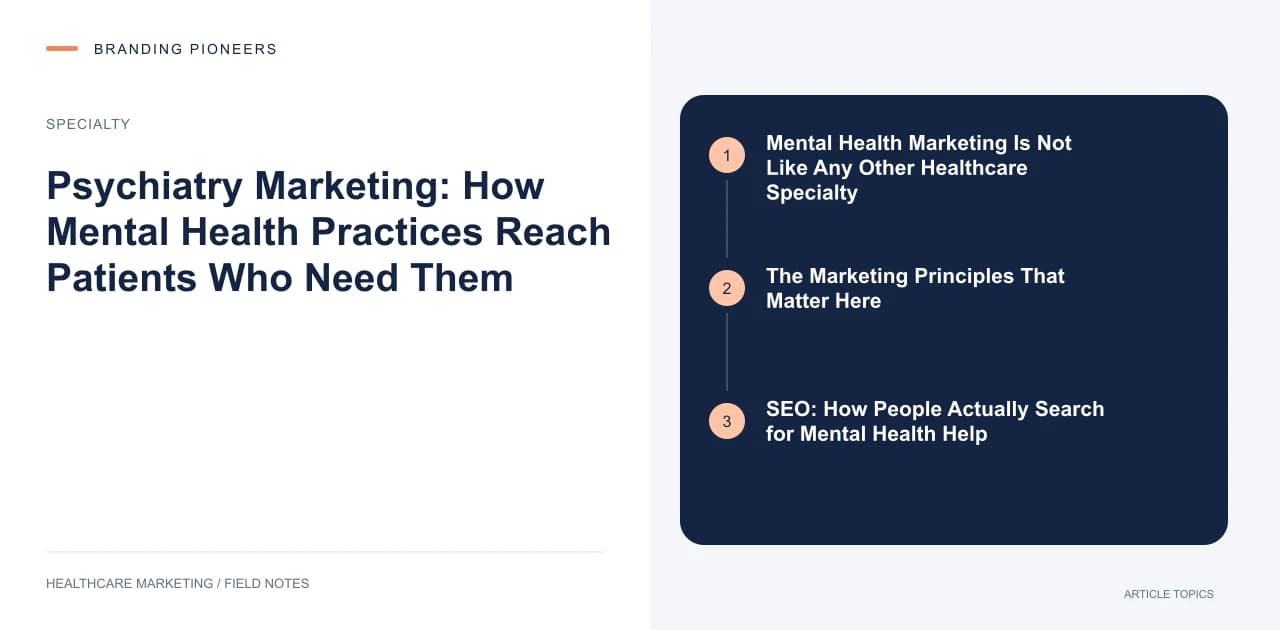
Mental Health Marketing Is Not Like Any Other Healthcare Specialty
When someone Googles "cardiologist Delhi," they have a straightforward medical need. When someone searches "psychiatrist near me" or "anxiety treatment cost India," they are often doing it in secret, feeling shame about needing help, wondering if their problem is "bad enough," terrified of being judged.
The mental health patient journey is unique. The stigma is real — in India, the large majority of people with mental health conditions do not seek professional help. The gap between suffering and booking a psychiatric appointment is enormous, maintained by shame, misinformation, and the absence of approachable, de-stigmatizing information.
Your marketing is either part of the bridge that closes this gap or it is invisible to the people who need you most.
The Marketing Principles That Matter Here
Before any tactic, internalize these:
Destigmatization is a core function of content. Every article, video, and social post that normalizes seeking help reduces the barrier between suffering and appointment.
Language matters profoundly. "Mental health care" is more accessible than "psychiatric treatment." "Speak to a therapist" is less intimidating than "book a psychiatrist consultation." Not because the clinical words are wrong — because accessible language reaches people who are not yet ready for the clinical framing.
Judgment-free communication is non-negotiable. Any marketing that implies the person asking needs to be "fixed" or is defective adds to the stigma you are trying to dissolve.
Privacy in digital experience matters. Mental health searches are among the most private. Retargeting someone who visited your anxiety page with banner ads for weeks feels invasive. Use frequency caps. Avoid intrusive retargeting.
SEO: How People Actually Search for Mental Health Help
The Search Journey
Mental health patients rarely start with "psychiatrist near me." They start with symptom searches:
- "I cannot sleep and feel sad all the time"
- "Why do I feel anxious for no reason"
- "Am I depressed or just tired"
- "Social anxiety symptoms"
- "OCD or just overthinking"
- "My teenager is not talking to anyone"
Then they move to understanding:
- "Difference between psychiatrist and psychologist"
- "Do I need medication for anxiety"
- "CBT therapy for depression — does it work"
- "Online therapy vs in-person — which is better"
Then to action:
- "Psychiatrist near me"
- "Therapist in Delhi"
- "OCD specialist Bengaluru"
- "Depression treatment cost India"
A content strategy that covers all three stages captures patients early and maintains their trust through the journey. Practices that only optimize for local search miss a large share of potential patients.
Content That Converts and Destigmatizes
Condition guides written for the person experiencing them, not for other clinicians:
- "Understanding anxiety: when worry becomes a disorder — and what you can do"
- "Depression is not sadness. Here is what it actually feels like and what helps"
- "OCD myths vs reality: what this condition is and is not"
- "ADHD in adults: why so many people are diagnosed at 30"
- "Bipolar disorder: what life can look like with the right treatment"
These articles should be warm, evidence-based without being clinical, and end with a gentle CTA ("A 20-minute consultation with our team can help you understand what you are experiencing").
Self-assessment tools:
PHQ-9 for depression, GAD-7 for anxiety — embed these as interactive tools on condition pages. Patients who complete a self-assessment and see their score contextualized are significantly more likely to book. Add context: "Your score suggests moderate symptoms that a specialist can help with. Here is how to take the next step."
FAQ content:
- "Is therapy covered by insurance in India?"
- "What happens in a first psychiatry appointment?"
- "How long does treatment usually take?"
- "Can I see a therapist without seeing a psychiatrist first?"
- "Is medication necessary for depression or anxiety?"
Doctor and Therapist Profile Pages
Mental health patients choose their provider very carefully. They want to know:
- Clinical training and therapeutic approach
- Types of conditions treated
- Therapy modalities used (CBT, DBT, EMDR, etc.)
- Personal communication style
- Practical details: availability, session length, cost
A warm, accessible bio — not a dry CV — makes patients feel safer choosing you. Include a brief video introduction if the clinician is comfortable.
Google Ads: Reaching People Actively Seeking Help
Mental health is one of the most sensitive verticals for Google Ads. Google has policies restricting targeting based on mental health conditions. Here is how to run compliant, effective campaigns:
Target by intent, not condition. "Therapist near me" and "Anxiety therapy Delhi" are intent-based searches. Target these. Do not target by audience interest in "mental health" as a profile-based behavioral signal.
Empathetic, accessible ad copy. "Feeling overwhelmed? Talking to a specialist can help. Book a consultation today — confidential and judgment-free." "Anxiety affecting your daily life? Our psychiatrists help you understand and manage it. First appointment available this week."
Landing pages built for anxious visitors. The person clicking a mental health ad is probably nervous. The landing page should immediately reassure: what a first appointment looks like, who the doctors are, that conversations are completely confidential, what privacy protections are in place. Include a warm CTA: "Schedule a 20-minute introductory call."
Budget: ₹15,000 to ₹50,000 per month for an urban psychiatry or therapy practice. CPL: ₹400 to ₹1,200. Expected bookings: 15 to 40 per month.